

What a Wardrobe Foundation Actually Means
A wardrobe foundation isn't a formula - it's a framework. It refers to the clothing items that serve as anchors: pieces you can dress up or down, combine with almost anything else you own, and wear across multiple seasons without them feeling dated or out of place.
The concept is closely related to the capsule wardrobe approach. As explained in our capsule wardrobe guide, the goal isn't minimalism for its own sake - it's intentionality. Fewer, smarter pieces produce more viable outfit combinations than a crowded closet full of items that don't interact well.
What makes a piece foundational comes down to three qualities: versatility (it pairs well with multiple garments), durability (in construction and in style relevance), and fit (it works with your proportions and feels comfortable). A piece that checks all three is genuinely worth making room for.
The Core Pieces and What They Do
Not every wardrobe looks identical - lifestyle, climate, and personal preference all shape what's useful. That said, certain garment categories recur reliably across functional wardrobes because of how well they integrate with others.
A Well-Fitted Pair of Dark Trousers
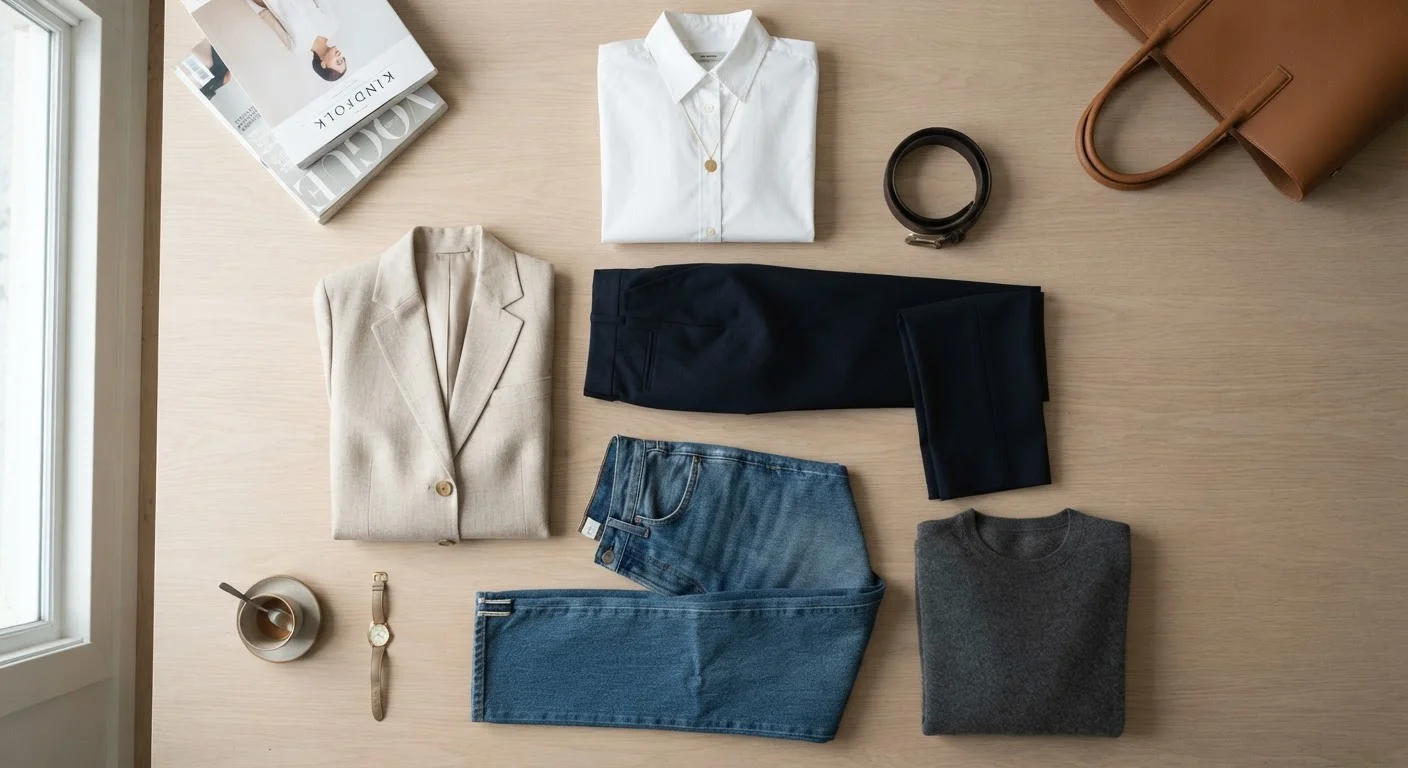
Dark trousers - typically navy, charcoal, or black - function as a bridge piece. They move from casual to business casual depending on what's paired with them. Fabric matters here: a medium-weight wool or structured cotton holds shape better over time than a lightweight synthetic blend. See our fabric guide for a deeper look at how material affects longevity.
A Crisp White or Light-Neutral Button-Down
The button-down earns its place because it layers, tucks, and semi-tucks with equal ease. In a light, breathable fabric it works in warm months; layered under a sweater or jacket, it extends into cooler weather. The key variable is collar structure - a clean, moderately stiff collar reads more polished, which widens the range of occasions it suits.
A Structured Outer Layer
A blazer, tailored jacket, or structured overshirt acts as an instant contextual shifter. Thrown over a plain t-shirt, it elevates a casual outfit without requiring much coordination effort. The dress codes reference explains why this kind of piece is so useful across settings.
Well-Fitting Denim
Denim's longevity in wardrobes isn't accidental. A medium-wash or dark indigo jean in a straight or mid-slim cut reads as versatile without signaling a specific trend era. The fit across the seat and thigh matters more than the exact rise - poor fit there is what makes jeans look dated regardless of wash.
A Neutral Knit or Crewneck Sweater
Knitwear in muted tones - oatmeal, grey, camel, navy - functions as both a layering piece and a standalone top. The role of neutrals more broadly in connecting a wardrobe is covered in our neutral colors article.
Wardrobe foundation
The essential garments that anchor a functional closet - pieces versatile enough to combine with most other items and appropriate across multiple occasions.
Versatility
A garment's ability to work across different outfit combinations, dress codes, and settings without significant modification.
Capsule wardrobe
A curated, intentionally small collection of clothing in which each piece works cohesively with the others, reducing decision fatigue while maximizing outfit options.
Silhouette
The overall shape or outline of a garment as it's worn. A silhouette that remains proportionally consistent across years is often described as timeless.
Bridge piece
A garment that connects different formality levels, making it usable in both casual and more polished contexts depending on how it's styled.
Fit, Fabric, and What 'Timeless' Actually Requires
Foundational pieces fail when the fit is off or the fabric can't hold up. A blazer that pulls across the shoulders, or trousers with excess fabric bunching at the thigh, undermine the versatility that makes these items worth having. Fit is not about adhering to a body-shape formula - our body shape dressing article addresses what those frameworks get right and where they oversimplify.
Timeless is also a word worth scrutinizing. As discussed in why timeless and trendy are not the same thing, enduring style isn't about avoiding all change - it's about choosing pieces whose silhouettes and proportions have demonstrated staying power across multiple decades, not just a few seasons.
Before adding new foundation items, it's worth auditing what you already have. Our closet audit guide offers a structured way to identify what's actually working in your current wardrobe - and what's simply taking up space.
This article is for general informational and educational purposes only and does not constitute personal style or professional wardrobe advice. Individual needs, preferences, and contexts vary.