

Key Takeaways
- Timeless style is defined by longevity, versatility, and resistance to seasonal obsolescence.
- Trendy fashion reflects cultural moments and typically has a shorter wearable lifespan.
- Neither approach is inherently wrong - the distinction helps you make deliberate wardrobe decisions.
- Confusing the two can lead to overspending on pieces with a limited useful life.
- A balanced wardrobe often draws from both categories with clear intention.
Option A
Timeless Style
The enduring foundation that outlasts seasonal cycles.
Best for: Anyone building a wardrobe that functions reliably across years, occasions, and changing tastes.
Option B
Trendy Fashion
The seasonally driven, culturally reactive expression of the moment.
Best for: Those who enjoy participating in current cultural conversations and refreshing their look with low long-term commitment.
If you want to build a reliable, long-lasting wardrobe foundation
Timeless Style
Classic pieces maintain their relevance across seasons and require fewer replacements, making them the more durable investment over time.
If you enjoy experimenting with current aesthetics and cultural moments
Trendy Fashion
Trend-driven pieces let you engage with evolving style conversations without committing to them permanently.
If you frequently buy clothes but rarely feel well-dressed
Timeless Style
Prioritizing versatile, enduring pieces over impulse trend purchases tends to produce a more functional, cohesive wardrobe.
If you want to blend both without overspending
Timeless Style
Anchoring your wardrobe in timeless pieces first gives you room to incorporate a few trend-driven items without losing coherence.
Defining the Terms Clearly
The words timeless and trendy are often used interchangeably in fashion conversations, but they describe fundamentally different relationships between clothing and time. Understanding that distinction is more useful than it might first appear.
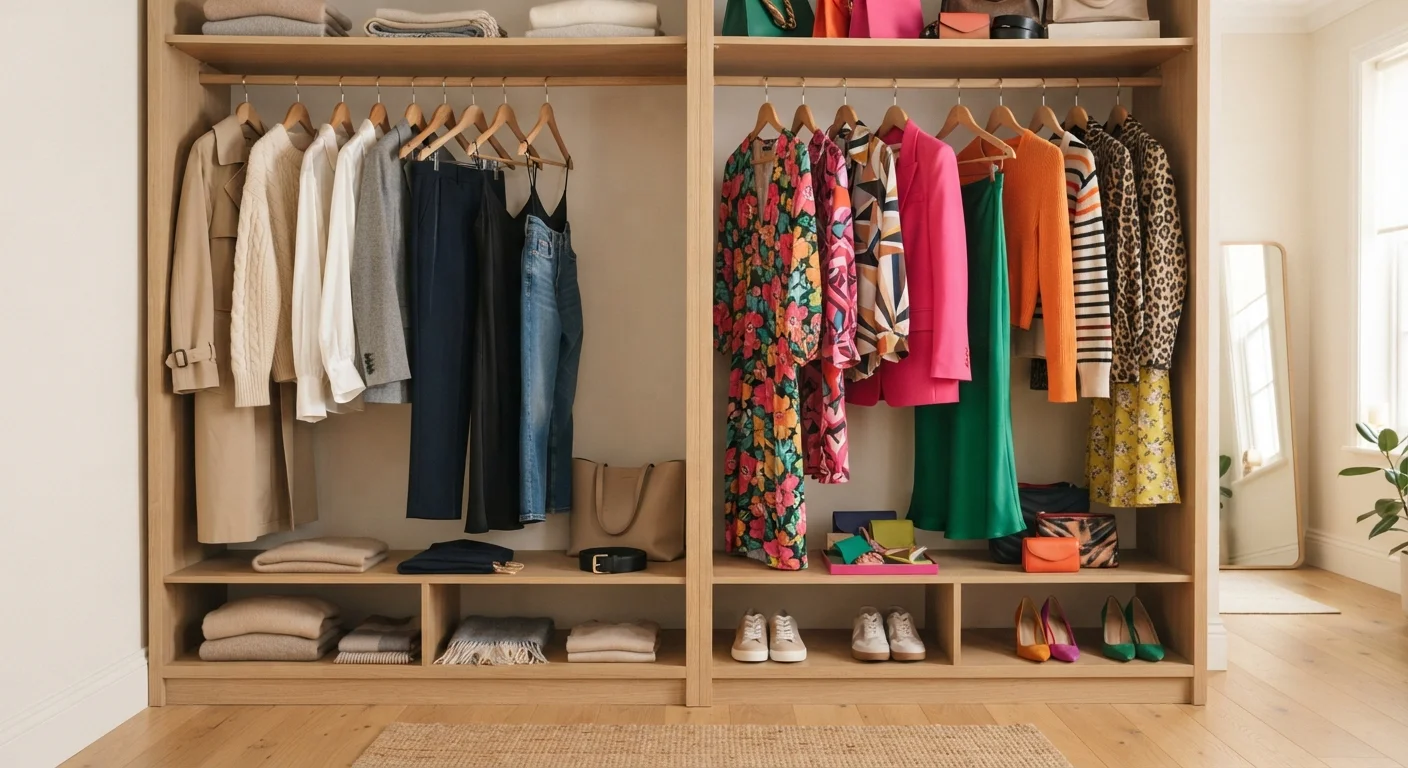
Timeless style refers to garments, silhouettes, and aesthetic principles that maintain their relevance across decades. A well-cut blazer, a straight-leg trouser, a white button-down shirt - these are not immune to minor stylistic evolution, but their core utility and visual coherence persist regardless of what season's runway dictates. Timeless pieces are defined less by what they are and more by what they resist: obsolescence.
Trendy fashion, by contrast, is reactive. It reflects the cultural, social, and aesthetic mood of a specific moment - often amplified by social media cycles, runway interpretations, and mass retail speed. A particular hem length, a novelty print, a silhouette that dominates for two seasons and then disappears - these are trend markers. They are not lesser for being temporary, but their lifespan is built into their nature.
The confusion between the two often starts when something feels so universally appealing in the moment that it seems like it must be permanent. That feeling is worth examining critically before making wardrobe decisions.
| Criterion | Timeless Style | Trendy Fashion |
|---|---|---|
| Lifespan | Years to decades | Typically one to two seasons |
| Defined by | Proportion, versatility, durability | Cultural moment, novelty, visibility |
| Obsolescence risk | Low | High |
| Versatility | Pairs broadly across outfits | Often context- or outfit-specific |
| Spending logic | Higher cost-per-wear justifies more spend | Lower cost-per-wear favors restraint |
| Cultural relevance | Consistent across decades | Peaks sharply, then recedes |
Why the Confusion Is Costly
Mistaking a trend for a timeless piece is one of the most common drivers of wardrobe clutter and buyer's remorse. Impulse buying and trend chasing frequently leave people with closets full of clothes they no longer reach for - not because their taste changed, but because the cultural context that made those pieces feel compelling has moved on.
This is not an argument against trends. It is an argument for clarity. When you buy a trend-driven piece knowing it is trend-driven, you can make a proportional decision - perhaps opting for a lower-cost version with the understanding that its wearable window is limited. When you spend more on what you believe to be a timeless piece, the logic shifts: you are paying for longevity, not novelty.
~60%
Clothing items never worn after purchase
Research from various textile and sustainability organizations consistently suggests a significant proportion of purchased garments go unworn, often linked to impulse or trend-driven buying.
3-5x
Cost-per-wear difference: classic vs. trend pieces
Style educators commonly illustrate that a durable classic worn regularly over years yields a dramatically lower cost-per-wear than a trend piece used only a handful of times.
The practical problem arises when those two decision frameworks get crossed. Spending heavily on a trend piece with timeless expectations, or dismissing genuinely classic garments as boring, both lead to wardrobe inefficiency. Understanding the foundational pieces that anchor a functional wardrobe helps draw that line more clearly.
How to Tell Them Apart in Practice
A few practical questions can help you identify whether a piece leans timeless or trendy before you commit to it.
- Would this have looked dated five years ago, or five years from now? Truly timeless pieces have a quality of looking neither new nor old - they simply look appropriate. If you can clearly situate a garment in a specific recent season, it likely carries trend DNA.
- Does the appeal depend on context? Timeless pieces derive their appeal from proportion, quality, and wearability. Trendy pieces often rely on cultural recognition - they read as current because others recognize them as current. That recognition fades.
- How many things in your existing wardrobe would it work with? Versatility is a hallmark of timeless dressing. A piece that only works in one specific outfit combination is often trend-dependent by design.
Fit is another reliable signal. Because timeless pieces tend to be built around proportions that flatter broadly, they tend to reward attention to fit more than trend pieces do. A poorly fitted classic garment looks worse than a well-fitted trend piece - which is one reason fit matters more than the size label suggests.
Trends Are Not the Enemy
Engaging with fashion trends is a legitimate and enjoyable part of personal expression. The goal of distinguishing timeless from trendy is not to eliminate trend pieces from your wardrobe, but to ensure you are buying them with accurate expectations. A trend piece chosen consciously - and priced accordingly - is a better decision than one mistaken for a lasting investment.
Caring properly for the pieces you do own - timeless or otherwise - extends their useful life considerably. Care habits like correct washing temperatures and proper storage have a measurable effect on how long garments hold their shape and finish.
For those drawn to a more intentional approach, owning fewer pieces you wear more often is a natural extension of prioritizing timeless over trendy - though it requires honest self-assessment about lifestyle and habits.