

Key Takeaways
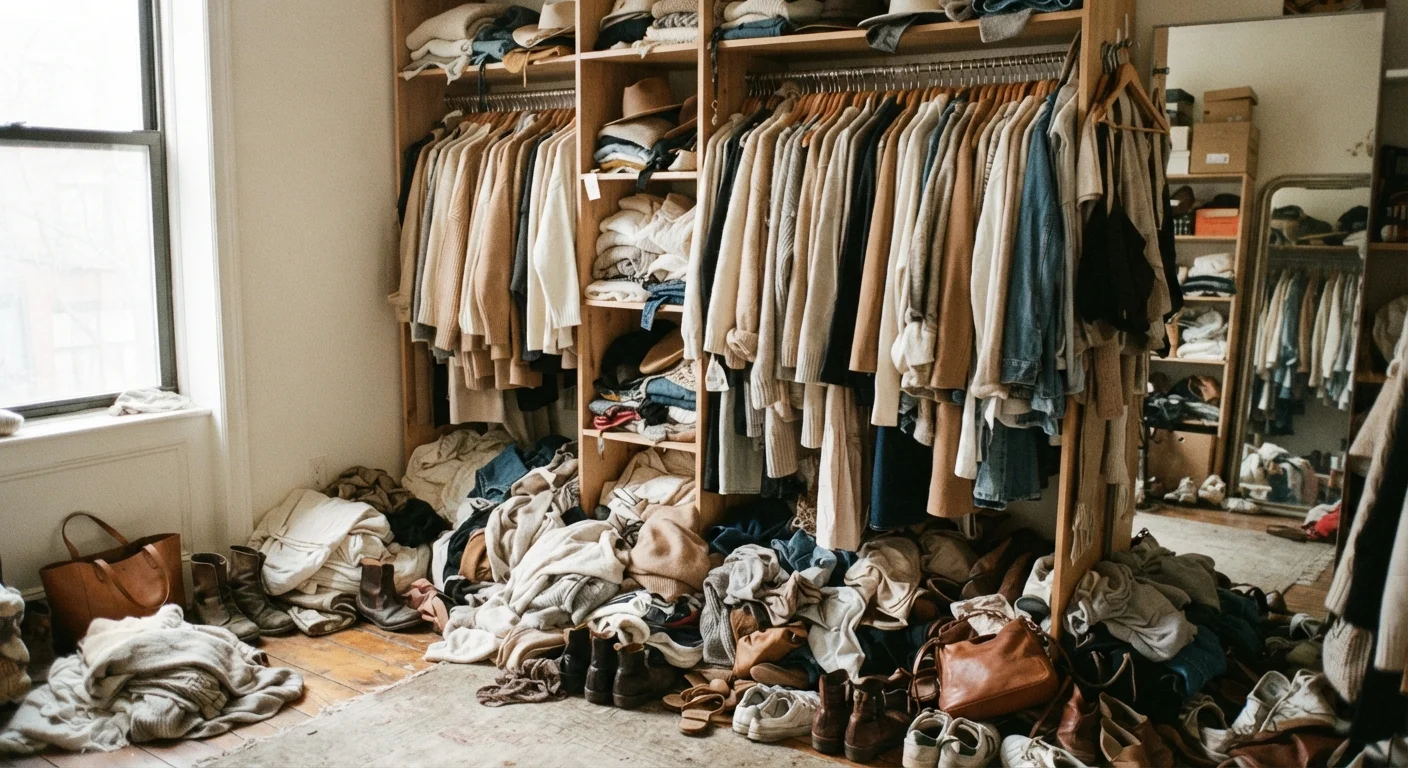
- Impulse purchases and trend-chasing consistently produce closets full of unworn clothes.
- Fit matters more than price, brand, or trend status when evaluating any garment.
- A smaller, intentional wardrobe almost always outperforms a larger, reactive one.
- Personal style develops through self-awareness, not through volume of purchases.
How Shopping Habits Quietly Undermine Personal Style
Most people don't set out to build a wardrobe that doesn't work for them. The process is usually gradual - a sale here, a trend there, a few items bought for occasions that never quite arrived. Over time, shopping behavior quietly takes the wheel, and what you actually wear becomes a narrow subset of what you own.
Understanding why this happens is the first step toward reversing it. The mistakes below are among the most common patterns that lead to closet overwhelm and style drift. Each one has a clear cause and a practical correction.
Buying items because they're on sale rather than because they fill a genuine gap.
Why it happens: Discounts create a sense of urgency and perceived value that can override honest self-assessment. The psychological pull of 'saving money' often crowds out the more relevant question: 'Will I actually wear this?'
Chasing trends without anchoring them to a personal aesthetic.
Why it happens: Trend-forward content is highly visible across social platforms and retail environments, making it easy to conflate 'what's everywhere right now' with 'what suits me.' The distinction between the two rarely gets examined.
Ignoring fit in favor of size labels, price, or aesthetic appeal.
Why it happens: Size standardization is inconsistent across brands, and many people hold fixed assumptions about what size they 'should' be. Garments that technically fit in terms of sizing often don't fit in terms of proportion or silhouette.
Buying aspirationally rather than for your actual daily life.
Why it happens: It's tempting to dress for a version of your life that's slightly more formal, adventurous, or occasion-filled than the one you're currently living. This leads to unworn pieces that feel out of place when you open your closet each morning.
Accumulating without editing - adding new pieces without removing ones that no longer serve you.
Why it happens: Letting go of clothing can feel wasteful, even when items go unworn for years. The result is a closet so dense that getting dressed becomes harder, not easier.
Reclaiming Your Wardrobe With Intention
The antidote to reactive shopping isn't deprivation - it's clarity. When you understand what you actually need, what fits your life, and what flatters your specific proportions, each purchase becomes easier to evaluate against a real standard rather than a fleeting impulse.
Emotional Shopping Can Masquerade as Style Development
Shopping in response to stress, boredom, or social comparison can feel productive in the moment but typically produces purchases that don't align with your actual aesthetic. If you notice shopping spikes during high-stress periods, it's worth pausing before completing a purchase. The wardrobe consequences are secondary - but they're a reliable signal worth paying attention to.
If you're starting from scratch or rebuilding after a wardrobe reset, the principles behind a starter wardrobe offer a structured framework that prioritizes versatility over volume. For those weighing whether fewer pieces can actually do more, the case for a smaller wardrobe explores the tradeoffs honestly.
It's also worth separating enduring style from trend cycles before committing to any purchase. Understanding the difference between timeless and trendy can reframe how you evaluate what's genuinely worth adding to your closet. And once you've made considered purchases, good garment care habits ensure they hold up long enough to earn their place.