

Key Takeaways
- Washing clothes at lower temperatures preserves fabric structure and color over time.
- How you dry a garment matters as much as how you wash it.
- Proper storage prevents distortion, pilling, and premature wear.
- Reading care labels is the single most underused habit in clothing maintenance.
- Fewer washes - when appropriate - reduce fiber breakdown significantly.
Why Clothing Care Is a Style Fundamental
A well-chosen garment that deteriorates after a season is no bargain. Yet the gap between clothes that age gracefully and those that fall apart often comes down to a handful of consistent care habits - not the price tag. Understanding how washing, drying, and storage each affect fabric integrity puts you in control of how long your wardrobe actually lasts.
This connects directly to how you build a wardrobe in the first place. If you're investing in foundational pieces that anchor your everyday dressing, it makes practical sense to protect that investment through good care. The habits below are straightforward, low-effort, and grounded in how fabrics actually behave.
Core Practices for Making Clothes Last
These recommendations apply across a wide range of garment types. Adjust specifics based on fabric composition - something worth understanding in more depth through our guide on how fabric composition affects durability and care.
Always check the care label before washing any garment
Care labels encode the manufacturer's tested guidance for that specific fabric blend. Ignoring them - even occasionally - risks shrinkage, color loss, or structural damage that can't be reversed. Labels use standardized symbols recognized across the industry.
Wash most garments in cold water on a gentle cycle
Hot water breaks down elastic fibers, causes natural materials to shrink, and accelerates color fading. Cold water cleans effectively for everyday soiling and is considerably gentler on fabric structure over repeated cycles.
Air-dry knits and structured garments flat rather than hanging
Hanging wet knitwear causes gravity to stretch and distort the fabric, particularly at the shoulders and hem. Laying pieces flat on a clean towel preserves the garment's original shape and prevents the neck and armholes from deforming.
Turn dark and brightly colored garments inside out before washing
The agitation of a wash cycle causes surface friction that strips dye from fabric fibers. Washing inside out keeps the external face - the side you see - protected from that friction, significantly slowing visible fading.
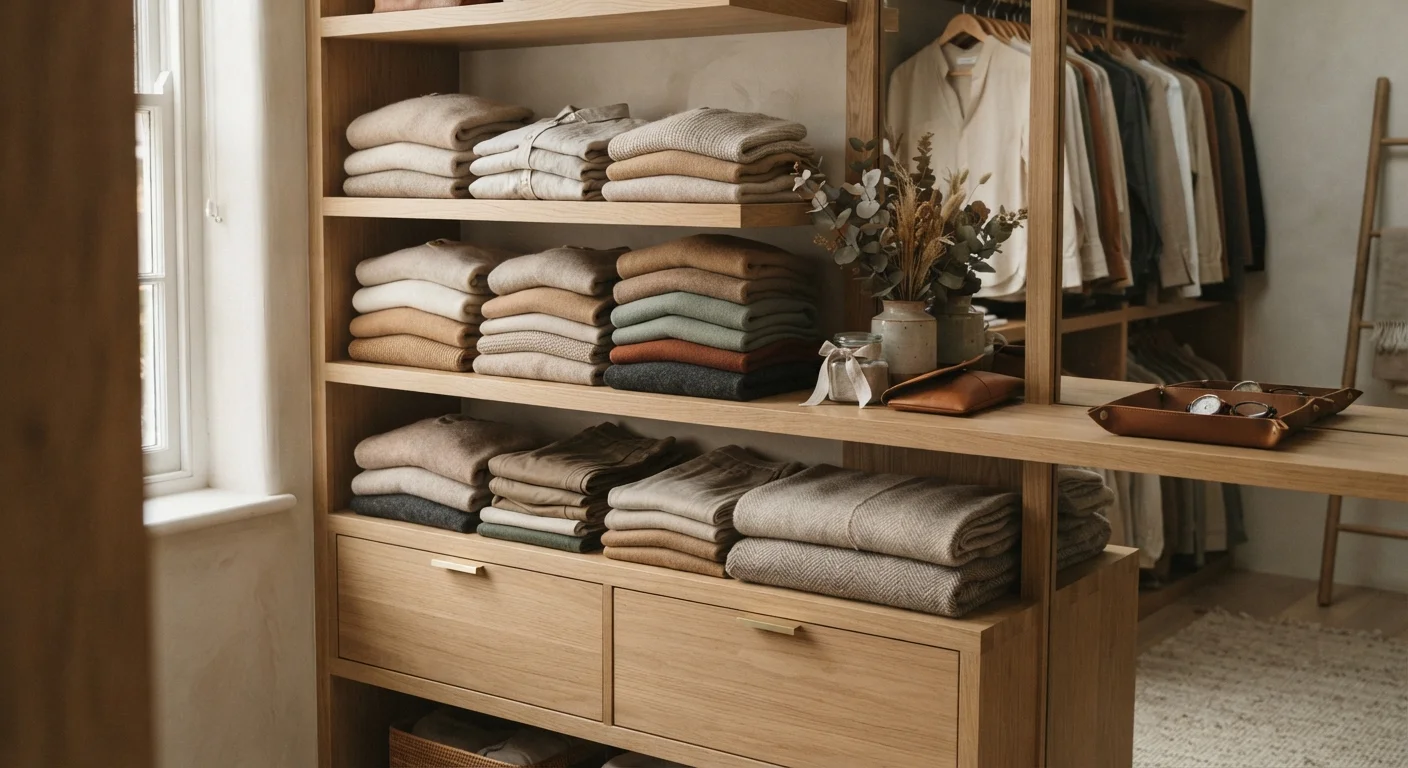
Store folded knits and heavy garments on shelves rather than hangers
Heavier materials - wool, chunky cotton, cashmere - will stretch and distort under their own weight when hung over time. Folding and stacking preserves the garment's shape and reduces stress on the fabric.
Use a mesh laundry bag for delicate fabrics and items with embellishments
Delicate fabrics, lace, beading, and thin straps are vulnerable to snagging on other garments or the drum during agitation. A mesh bag contains and cushions these items while still allowing effective cleaning.
Quick Wins You Can Apply Today
You don't need to overhaul your entire laundry routine at once. Start with these immediately actionable steps - each one reduces unnecessary wear with minimal effort.
Extending the life of your clothing also aligns with a broader principle: buying less and wearing more. Fewer replacements means less decision fatigue and a more intentional relationship with what you own.
When 'Dry Clean Only' Means It
Some garments - particularly those with structured interlinings, fused seams, or delicate surface treatments - are genuinely not safe for home washing. For these items, the 'dry clean only' label reflects a real structural limitation, not just a conservative suggestion. When in doubt, spot-test an inconspicuous area or consult a professional cleaner before washing at home.
A Note on Frequency and Judgment
Not every garment needs washing after every wear. Outerwear, structured blazers, denim, and knitwear often benefit from airing out rather than laundering. Over-washing accelerates fiber breakdown, fades color, and distorts fit - particularly for natural materials like wool, linen, and silk.
Spot-clean when possible, use a fabric-safe refreshing spray for odor, and reserve full washes for items that genuinely need them. If you're reassessing which pieces in your wardrobe are worth caring for at all, a structured closet audit can help you identify what's earning its place.
“The best thing you can do for your clothes is wear them thoughtfully and wash them less. Most garments are laundered far more often than they need to be, and that friction is what ages them prematurely.”
— Tim Gunn, Fashion educator and author
Ultimately, clothing longevity is less about any single product or technique and more about consistency. The wardrobe that holds up over years is the one that's regularly - but thoughtfully - maintained.