

Key Takeaways
- Fabric composition is listed on every garment care label as a fiber percentage breakdown.
- Natural fibers like cotton and wool breathe well; synthetics like polyester resist wrinkles and retain shape.
- Blended fabrics are engineered to combine the strengths of multiple fiber types.
- Fiber type directly determines washing temperature, drying method, and ironing requirements.
- Understanding fabric helps you predict how a garment will feel, fit, and age before you buy it.
Fabric Composition
Fabric composition refers to the fiber or blend of fibers used to construct a textile. It determines how a garment feels against the skin, how it drapes on the body, how it holds up through repeated wear and washing, and what care it requires. This information is listed on every garment's care label, typically expressed as a percentage breakdown of each fiber type.
Fibers fall into two broad categories: natural (derived from plants or animals, such as cotton, linen, wool, and silk) and synthetic (manufactured from petroleum-based polymers, such as polyester, nylon, and acrylic). Blended fabrics combine fibers from both categories to engineer specific performance properties.
Why Fabric Composition Is Worth Paying Attention To
Most people assess a garment by how it looks on a hanger - color, cut, silhouette. Fabric composition often goes unexamined until something goes wrong: a sweater pills after two washes, a shirt loses its shape, a pair of trousers wrinkles beyond recovery on a short flight. Understanding what a garment is made of before you commit to it shifts that dynamic entirely.
Fabric is functional. It determines thermal properties, moisture management, durability, and how the garment moves with or against the body. It also shapes care requirements - wool and silk demand more deliberate handling than polyester. For anyone trying to build a wardrobe with longevity in mind, fabric literacy is foundational. See our guide to wardrobe foundations for context on how material quality factors into versatile, lasting pieces.
~54%
Global fiber production that is synthetic
According to Textile Exchange's Preferred Fiber & Materials Market Report, synthetic fibers - primarily polyester - account for the majority of global fiber output.
~24%
Share of global fiber production from cotton
Cotton remains the most widely used natural fiber worldwide, per Textile Exchange industry data.
3-5x
Lifespan increase with proper garment care
Industry guidance from textile care organizations suggests that following recommended care instructions can significantly extend a garment's usable life compared to incorrect laundering.
Natural Fibers: Strengths, Limitations, and Everyday Use
Cotton is the most widely used natural fiber globally. It's breathable, absorbent, and soft against skin - qualities that make it well-suited for warm-weather clothing and everyday basics. Its main limitations are a tendency to wrinkle and the possibility of shrinking if washed in hot water. Heavier cotton weaves, like denim and canvas, are significantly more durable than lightweight jersey.
Wool is a high-performing natural fiber with exceptional temperature-regulating properties. It insulates in cold conditions while remaining breathable - a combination synthetics rarely replicate effectively. Fine merino wool is soft enough for direct skin contact, while coarser wool blends are better suited to outerwear and structured garments. Wool requires careful washing: most varieties should be hand washed or dry cleaned to prevent felting and shrinkage.
Linen, derived from the flax plant, is stronger than cotton and exceptionally breathable - making it one of the most practical choices for warm climates. It wrinkles readily, which some regard as a characteristic rather than a flaw, and softens noticeably over time with repeated washing.
Silk is a protein-based fiber with a distinctive smooth hand and natural sheen. It regulates temperature reasonably well and drapes fluidly, but it's sensitive to sunlight, perspiration, and heat, and generally requires hand washing or dry cleaning.
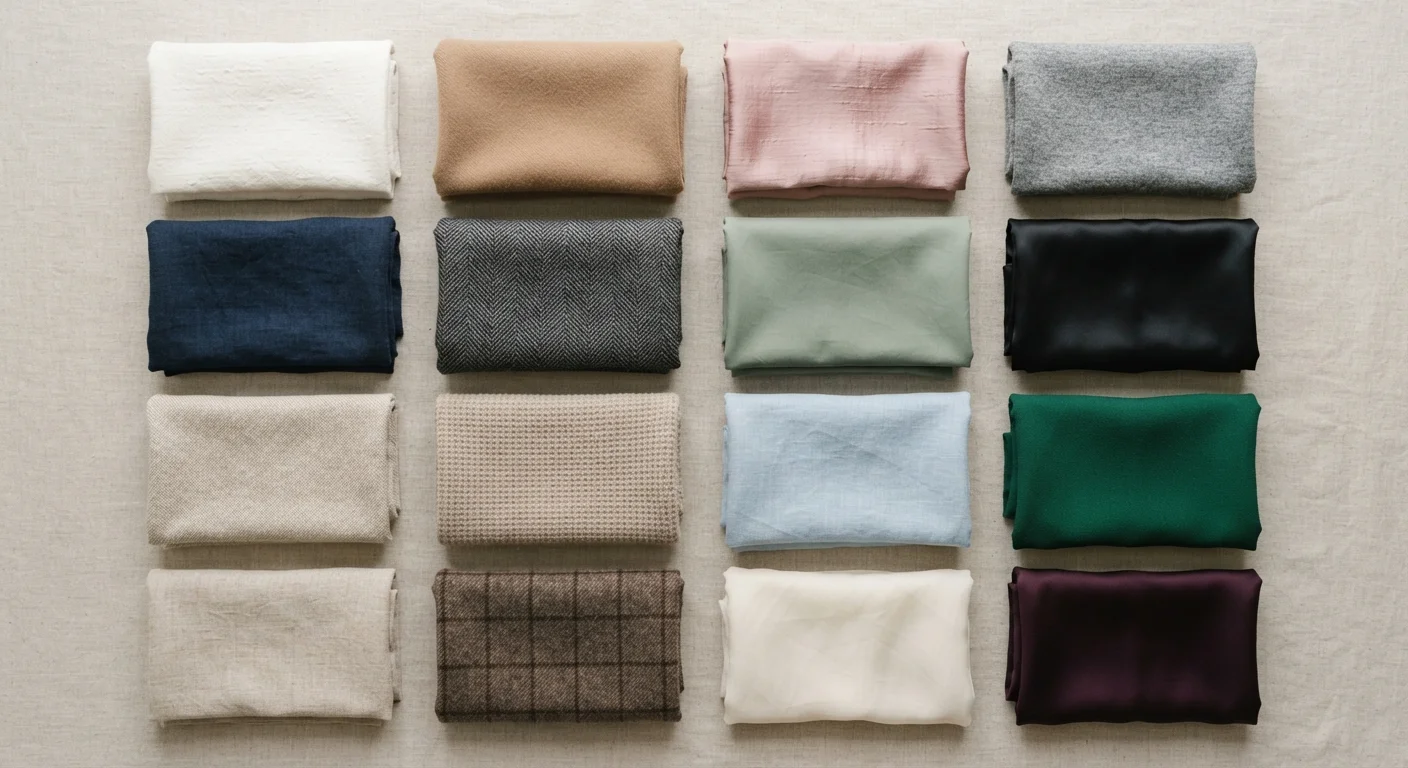
Natural fibers and synthetic fabrics each have distinct performance profiles - understanding both helps you select the right material for each type of garment.
Read the Care Label Before You Buy
The care label is accessible before purchase - not just afterward. Checking it in the store or reading the product description online gives you an accurate preview of what ongoing care will look like. If a garment requires dry cleaning only and that doesn't fit your routine, fabric composition tells you that upfront.
Synthetic and Blended Fabrics: Engineered Performance
Polyester is the dominant synthetic fiber in global textile production. It resists wrinkles, retains its shape, dries quickly, and holds color well - all practical advantages. Its primary drawback is breathability: polyester traps heat and moisture against the skin, which can be uncomfortable in warm conditions. It is, however, widely used in activewear and travel clothing precisely because of its durability and ease of care.
Nylon shares several properties with polyester but is generally stronger and more abrasion-resistant, making it a common choice for outerwear, hosiery, and bags. Acrylic is often used as a lower-cost alternative to wool in knitwear, though it lacks wool's breathability and temperature-regulation properties and tends to pill more readily.
Viscose (also called rayon) occupies an interesting middle ground: it's derived from cellulose, making it semi-synthetic, and it drapes similarly to natural fibers while being less expensive than silk. It absorbs moisture readily and can weaken when wet, requiring careful laundering.
Blended fabrics - such as cotton-polyester or wool-nylon combinations - are engineered to balance competing properties. A cotton-polyester shirt, for example, offers more wrinkle resistance than pure cotton while retaining some breathability. Reading the percentage breakdown on the care label tells you which fiber dominates and, by extension, which properties to expect.
How Fabric Affects Care, Fit, and Longevity
Fabric composition is the single most important factor in determining how a garment should be cared for. Washing wool in hot water, tumble-drying silk, or using high heat on polyester can permanently damage the fiber structure. Care labels exist precisely to communicate these requirements - and following them consistently is the most reliable way to extend the life of your clothing.
Fabric also influences how a garment fits and continues to fit over time. Woven fabrics (such as dress shirts and denim) hold their dimensions more consistently than knits, which can stretch or relax with wear. Natural fibers like cotton and linen may shrink slightly in the first few washes, while synthetics remain dimensionally stable. This matters particularly for tailored garments, where fit precision is part of their function. For a deeper look at why fit matters more than the size label, see our article on fit versus size.
For practical strategies to preserve your garments regardless of fabric type, explore care habits that extend clothing longevity.
“Fabric is the foundation of any garment. Cut and construction matter, but if the material doesn't perform the way it needs to for its intended use, no amount of tailoring will compensate.”
— Tim Gunn, Fashion educator and author