

Key Takeaways
- Natural fibers like cotton, wool, and linen excel in breathability, comfort, and moisture management.
- Synthetic fabrics such as polyester and nylon offer superior durability, stretch retention, and moisture-wicking in activewear.
- Neither category is universally superior - the best choice depends on the garment's intended use and care context.
- Blended fabrics often combine the strengths of both categories, making them a practical middle ground.
- Understanding fiber content helps you make smarter wardrobe decisions and extend the life of your clothes.
Our Verdict
Natural fibers and synthetic fabrics are genuinely complementary rather than competing categories. Natural fibers tend to reward everyday comfort and temperature regulation, while synthetics deliver performance, resilience, and shape retention in demanding conditions. The most informed approach is selecting fabric based on what a garment actually needs to do.
| Best for | Recommended |
|---|---|
| Everyday comfort, warm-weather clothing, and sensitive skin | Natural Fibers (cotton, linen) |
| Cold-weather layering and moisture management during activity | Natural Fibers (wool, especially merino) |
| Activewear, athletic gear, and high-abrasion applications | Synthetic Fabrics (polyester, nylon) |
| Versatile everyday wear balancing comfort and durability | Blended Fabrics |
Why Fiber Content Matters More Than You Might Think
Most people check a price tag before they check a care label - but the fiber content of a garment shapes how it feels against your skin, how long it holds up, how it responds to heat, and how it behaves after dozens of washes. Understanding what your clothes are actually made of is a foundational skill for building a wardrobe that works. For a deeper primer on this topic, see our guide to fabric composition.
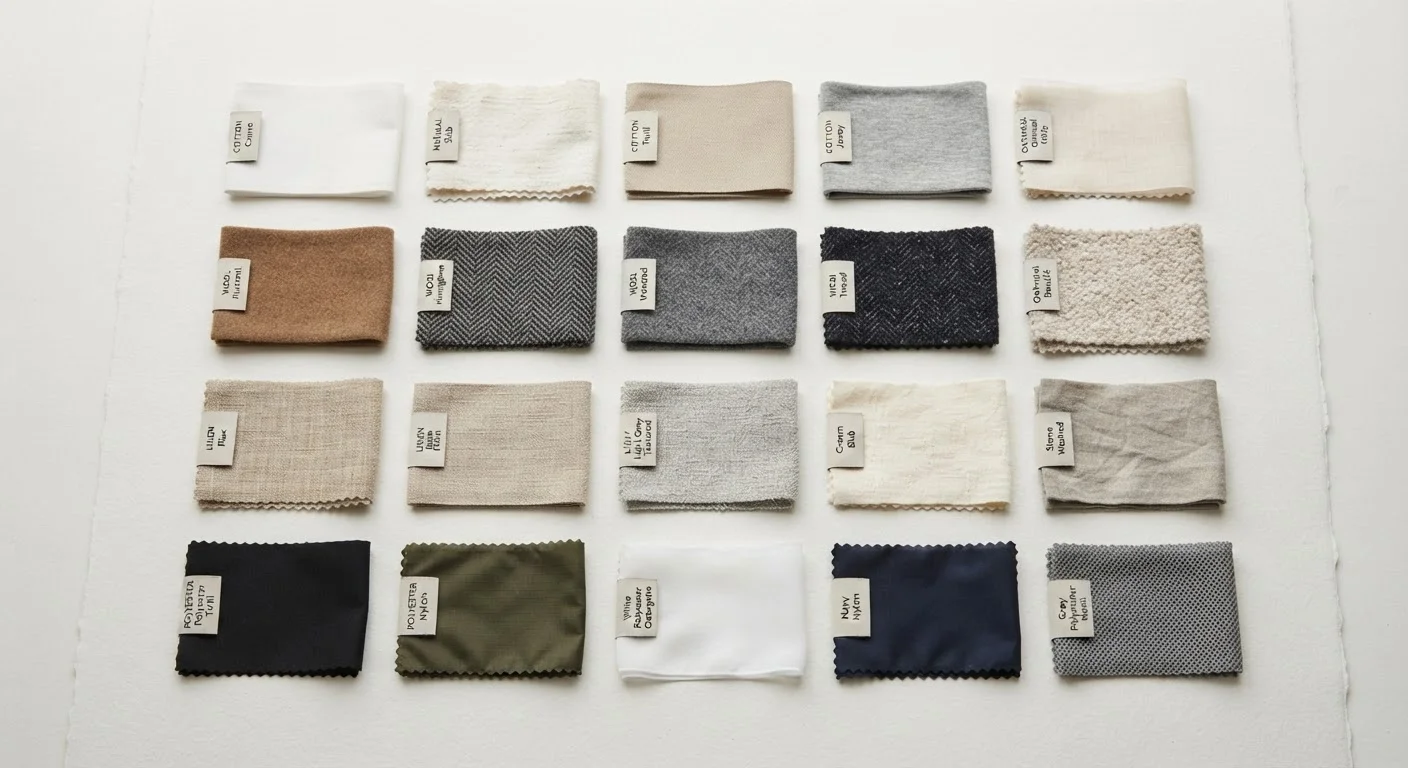
At the broadest level, textiles fall into two categories: natural fibers, derived from plant or animal sources, and synthetic fabrics, engineered from petroleum-based polymers. Both categories include a wide range of materials with genuinely different properties - and the right choice depends entirely on what you need a garment to do.
What Natural Fibers Do Well
Natural fibers - cotton, wool, linen, silk, and cashmere among them - are prized for properties that synthetic processes have historically struggled to replicate fully.
- Breathability: Cotton and linen allow air to circulate freely, making them reliable choices for warm climates and close-fitting garments. Linen in particular wicks moisture away from the body efficiently.
- Temperature regulation: Wool is one of the most effective natural insulators available. It traps air in its fiber structure while also managing moisture, keeping wearers warm without overheating - a property that has made merino wool popular for both cold-weather layering and athletic base layers.
- Comfort against skin: Many people with sensitive skin find natural fibers, particularly fine-grade cotton and silk, less irritating than synthetics.
- Biodegradability: Natural fibers break down over time in ways that most synthetics do not, which has environmental implications worth considering.
The trade-off is that natural fibers typically require more careful laundering, may shrink with heat, and can be more prone to wrinkling. Wool is susceptible to moth damage in storage. These factors don't diminish their value - they simply call for attentive care. The habits outlined in this guide to extending garment life apply especially well to natural-fiber pieces.
| Natural Fibers | Synthetic Fabrics | |
|---|---|---|
| Breathability | High (especially cotton, linen) | Lower in most constructions |
| Moisture management | Good; wool excellent for wicking | Engineered wicking excels in activewear |
| Durability | Moderate; varies by fiber | High; nylon and polyester are very resilient |
| Shape retention | Can shrink or stretch with washing | Excellent; resists shrinking and distortion |
| Care requirements | Often more delicate; varies by fiber | Generally machine-washable and low-maintenance |
| Environmental profile | Biodegradable; farming has land/water impact | Microplastic shedding; petroleum-derived |
| Skin comfort | Often preferred by sensitive skin | Can trap heat; may cause irritation for some |
What Synthetic Fabrics Do Well
Synthetic fabrics - polyester, nylon, acrylic, spandex, and their blended derivatives - were engineered to solve specific limitations of natural materials, and they do so effectively in several contexts.
- Durability and abrasion resistance: Nylon is exceptionally strong relative to its weight, making it a practical choice for outerwear, bags, and garments that take sustained wear. Polyester resists stretching and shrinking far better than most natural fibers.
- Moisture management in performance contexts: Engineered synthetic weaves can pull sweat away from the skin surface and disperse it across a larger area for faster evaporation - a property that makes them standard in athletic wear.
- Shape retention: Polyester blends hold their structure through repeated washing and drying without the shrinkage or distortion that can affect natural fibers.
- Lower production cost: Synthetics are generally less expensive to manufacture at scale, which is reflected in their prevalence in fast fashion.
Check the Fabric Composition Before You Buy
The fiber content label is one of the most useful - and most overlooked - pieces of information on any garment. A quick check before purchase tells you how the fabric will feel over time, how it should be washed, and whether it's suited to how you actually plan to use it. This single habit can prevent a lot of wardrobe disappointment.
The limitations of synthetics are real: they tend to trap heat in non-athletic contexts, can generate static, and - importantly - shed microplastic fibers during washing. Acrylic and polyester garments may also retain odors over time more than natural fibers do.
Blends: The Practical Middle Ground
Many contemporary garments combine both fiber types to capture the advantages of each. A cotton-polyester blend, for instance, resists wrinkling and shrinkage better than 100% cotton while retaining some of its softness and breathability. Wool blended with nylon - common in sock construction - gains abrasion resistance without losing insulating properties.
Blends represent a sensible approach for everyday garments where you want reasonable durability alongside comfort. The key is reading the fiber percentages: a fabric labeled 95% polyester and 5% cotton behaves almost entirely like a synthetic, while a 60/40 cotton-poly blend sits meaningfully between the two categories.
Just as different tools are suited to different tasks - a principle that applies across domains from motor oil selection to network infrastructure - the same logic governs fabric choice. There is no universally superior option, only better-matched ones.