

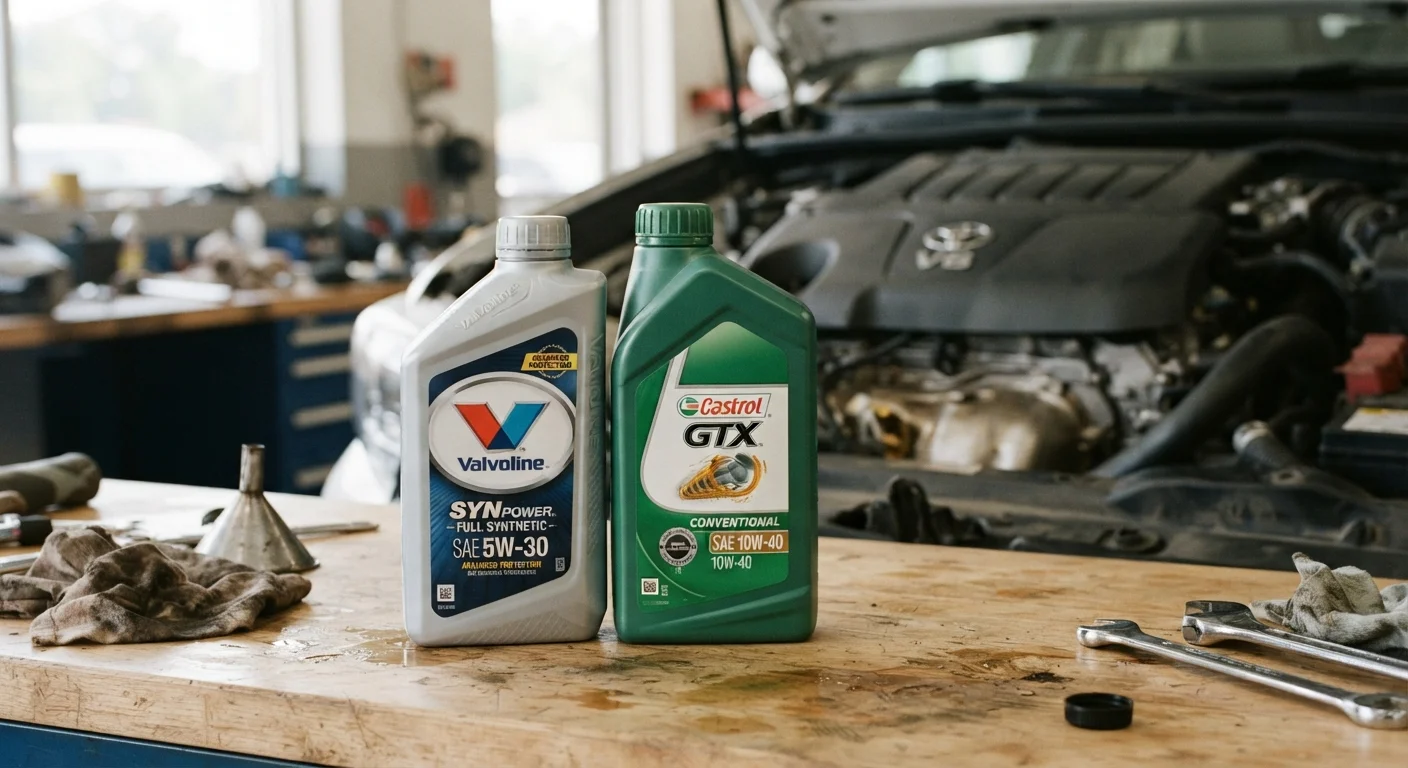
Key Takeaways
- Synthetic oil is chemically engineered for more uniform molecules, offering better protection under temperature extremes.
- Conventional oil is refined from crude petroleum and remains a reliable option for many older or simpler engines.
- Synthetic oil typically allows longer change intervals - often 7,500 to 15,000 miles - compared to conventional's 3,000-5,000 miles.
- Your owner's manual is the authoritative source for which oil type and viscosity your specific engine requires.
- Switching from conventional to synthetic in a high-mileage engine warrants a conversation with a qualified mechanic.
Option A
Synthetic Motor Oil
The engineered, high-performance option built for modern demands.
Best for: Drivers of newer vehicles, those in extreme climates, or anyone who wants longer intervals between oil changes.
Option B
Conventional Motor Oil
The time-tested, petroleum-based standard used for decades.
Best for: Owners of older, lower-mileage vehicles with simple engines who follow standard service schedules.
If you drive a newer vehicle with a turbocharged or high-performance engine
Synthetic Motor Oil
Modern engines with tighter tolerances and turbochargers generate intense heat. Synthetic oil's stability under thermal stress provides more consistent protection.
If you own an older vehicle with a straightforward, naturally aspirated engine
Conventional Motor Oil
Many older engines were designed around conventional oil's properties. If the vehicle runs well and your manual permits it, conventional remains adequate.
If you drive in extreme cold or hot climates regularly
Synthetic Motor Oil
Synthetic oil flows more readily at low temperatures and resists breakdown at high temperatures, maintaining a more protective film across a wider range.
If you want to extend the time between oil changes
Synthetic Motor Oil
Synthetic oil generally supports longer service intervals, though you should always defer to your manufacturer's recommendations rather than assuming a fixed schedule.
If you're on a tight maintenance budget and drive modest mileage
Conventional Motor Oil
Conventional oil costs less per quart. If your vehicle is suited to it and you follow the recommended interval, it can be a practical and cost-effective choice.
How Each Oil Is Made - and Why It Matters
Motor oil's primary job is to lubricate engine components, reduce friction, carry away heat, and suspend contaminants until the next oil change. Both synthetic and conventional oils accomplish this - but through meaningfully different formulations.
Conventional motor oil is refined directly from crude petroleum. The refining process removes many impurities, but natural crude contains molecules of varying sizes and shapes. That variability means conventional oil can be less uniform in how it performs across temperature swings.
Synthetic motor oil starts with either a petroleum base or other chemical compounds and is then engineered at the molecular level. The result is a more uniform structure that resists breakdown, flows more consistently in cold weather, and holds its viscosity better in extreme heat. Synthetic also typically contains more sophisticated additive packages to fight oxidation, deposits, and wear.
For a broader look at how oil fits into your vehicle's overall fluid picture, see Fluid Checks Every Driver Should Know How to Do.
| Criterion | Synthetic Motor Oil | Conventional Motor Oil |
|---|---|---|
| Source | Engineered chemical compounds | Refined crude petroleum |
| Molecular uniformity | High - consistent structure | Lower - natural variation |
| Typical change interval | 7,500-15,000 miles | 3,000-5,000 miles |
| Cold-weather flow | Flows readily at low temps | Can thicken more in cold |
| Heat resistance | Resists breakdown at high temps | More prone to thinning/oxidation |
| Cost per quart | Higher | Lower |
| Suited to older engines | Usually yes, with caveats | Often the familiar choice |
| Required by some manufacturers | Yes - many modern engines | Rarely specified as required |
Performance, Change Intervals, and Cost Considerations
One of the most practical differences between the two oil types is how long they last in service. Conventional oil is generally recommended for change intervals of 3,000-5,000 miles, though many modern vehicles with conventional oil can go longer - always check your owner's manual. Synthetic oil typically supports intervals of 7,500-15,000 miles, depending on the vehicle and driving conditions.
~75%
US motor oil market: synthetic share
Industry estimates suggest synthetic and synthetic-blend oils now account for a significant majority of motor oil sold in the United States, reflecting widespread adoption in modern vehicles.
0W-20
Increasingly common OEM viscosity spec
Many automakers now specify low-viscosity grades like 0W-20, which are almost exclusively available as full synthetics, reflecting the industry's shift toward tighter engine tolerances.
2x-3x
Typical synthetic price premium over conventional
Synthetic oil typically costs two to three times more per quart than conventional, though longer change intervals can offset some of that difference over time.
That longer interval partially offsets synthetic oil's higher per-quart price. However, the math isn't universal - vehicles that burn oil, have older seals, or see hard use may still require more frequent attention regardless of oil type. A common myth worth dispelling: you don't need to change oil every 3,000 miles in most modern vehicles. Car Maintenance Myths That Cost Drivers Time and Money covers this in more detail.
If you're weighing time-based versus mileage-based schedules, the Time-Based vs. Mileage-Based Service Intervals guide explains how both factors interact.
What Your Owner's Manual Actually Says
The single most reliable guide to which oil your car needs is the owner's manual. Manufacturers specify not only whether synthetic or conventional is acceptable, but also the required viscosity grade - for example, 5W-30 or 0W-20. Using the wrong viscosity can affect fuel economy and engine protection regardless of oil type.
Some vehicles - particularly many turbocharged, European, or performance-oriented models - explicitly require full synthetic. Using conventional oil in these engines may void warranty protections or leave components inadequately protected. Others allow either type, giving drivers a genuine choice. See Routine Maintenance Schedules: What Your Owner's Manual Is Actually Telling You for a broader breakdown of how to read manufacturer service guidance.
Synthetic Blends: A Middle-Ground Option
Synthetic blend oils combine a conventional base oil with a portion of synthetic. They offer better performance than straight conventional - particularly in temperature extremes - at a lower price than full synthetic. Blends are a common factory fill in many trucks and SUVs. If your manual permits a blend, it can be a reasonable compromise. Always verify compatibility with your specific vehicle.
High-mileage vehicles - generally those over 75,000 miles - occupy a nuanced middle ground. Some mechanics recommend staying with whatever oil type the engine has run on for most of its life. If you're considering switching oil types on a high-mileage engine, consult a qualified mechanic before making the change.
For a wider perspective on owner decisions, the Car Ownership hub covers financing, insurance, and ongoing maintenance considerations in one place.