
Routine Maintenance Schedules: What Your Owner's Manual Is Actually Telling You

Key Takeaways
- Your owner's manual contains manufacturer-tested service intervals specific to your engine and driving conditions.
- Skipping scheduled maintenance compounds costs - a missed oil change can eventually lead to engine damage.
- Many intervals are both mileage- and time-based; whichever threshold comes first applies.
- "Severe" driving conditions accelerate wear and shorten recommended service intervals significantly.
- Tracking your maintenance history protects resale value and helps catch recurring problems early.
Why the Owner's Manual Is Your Primary Source
Every vehicle's maintenance requirements differ by engine type, transmission, fluid specifications, and intended use. The owner's manual isn't generic advice - it's the result of thousands of engineering hours spent validating exactly when components need attention on your specific vehicle. Marketing stickers, shop recommendations, and general rules of thumb can all deviate from what your manufacturer actually specifies.
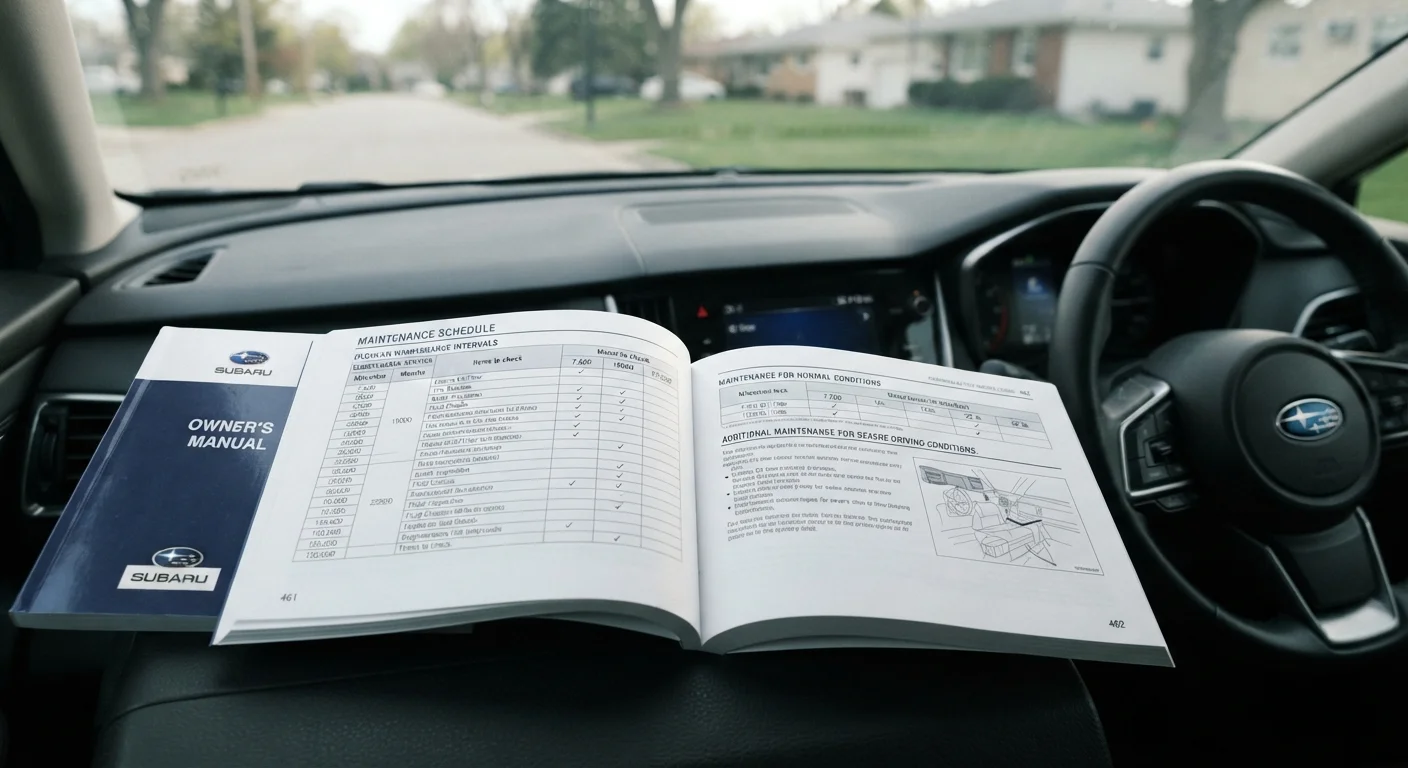
The manual typically contains two maintenance schedules: one for normal driving and one for severe conditions. Severe conditions include frequent short trips under five miles, stop-and-go city driving, towing or hauling, dusty environments, and extreme temperatures. Many US drivers who consider themselves typical commuters actually qualify as severe-condition drivers. If that describes you, your intervals are shorter than you might assume. See how time and mileage intervals interact for a fuller breakdown.
Normal vs. Severe: Which Schedule Applies to You?
The owner's manual's 'severe' category often surprises drivers. Trips under five miles where the engine doesn't fully warm up, extended idling, and driving in extreme heat or cold all qualify. Review both schedules in your manual and honestly assess your daily driving before deciding which interval to follow. When in doubt, the more conservative schedule is the lower-risk choice.
Core Service Intervals Decoded
The following services form the backbone of virtually every manufacturer's maintenance schedule. Understanding what each one does - and what happens when it's skipped - makes the intervals feel less arbitrary.
Follow the oil change interval specified in your manual, not the generic 3,000-mile rule.
Modern synthetic oils and engine tolerances have extended oil life well beyond older recommendations for most vehicles. Using the correct interval prevents unnecessary expense while ensuring oil doesn't degrade to the point of causing wear. Overly frequent changes are wasteful; overly infrequent ones risk sludge and engine damage.
Rotate tires on the schedule your manual specifies, typically every 5,000-7,500 miles.
Front and rear tires wear at different rates depending on drivetrain and weight distribution. Regular rotation equalizes wear across all four tires, extending their usable life and maintaining consistent handling and braking performance. Uneven wear patterns can also signal alignment or suspension issues worth addressing.
Inspect and replace brake pads before wear indicators make metal-to-metal contact.
Most pads include audible wear indicators that squeal when thickness drops to a minimum safe level. Acting at that point - rather than waiting for grinding - protects rotors from scoring and preserves braking effectiveness. Ignoring the warning transforms a straightforward pad swap into a more expensive rotor replacement.
Replace engine air and cabin air filters at the intervals your manual recommends.
A clogged engine air filter restricts airflow to the combustion chamber, reducing efficiency and potentially increasing fuel consumption. Cabin air filters protect occupants from dust, pollen, and pollutants; a blocked filter strains the HVAC blower motor. Neither filter is expensive, but both are easy to overlook.
Flush and replace coolant according to the manufacturer's specified interval.
Coolant (antifreeze) degrades over time, losing its ability to prevent corrosion inside the cooling system and regulate temperature effectively. Neglected coolant can corrode the radiator, water pump, and heater core - components far more expensive to replace than the fluid itself.
The Financial Case for Staying on Schedule
Deferred maintenance rarely saves money. A skipped coolant flush might cost $150 to perform; an overheated engine due to degraded coolant can cost several thousand dollars in repairs. This compounding pattern applies across services: worn brake pads that aren't replaced score into rotors, turning a $200 pad replacement into a $600 rotor-and-pad job.
~$80
Typical cost of a brake pad replacement
Waiting until rotors are scored can push the same job past $400 per axle, according to general repair cost estimates from automotive service industry sources.
5-15%
Potential fuel efficiency loss from a clogged air filter
The U.S. Department of Energy notes that fixing a faulty oxygen sensor alone can improve fuel economy by up to 40%, illustrating how neglected components affect efficiency.
Several overlooked maintenance tasks - cabin air filters, fuel injectors, and transmission fluid - follow the same pattern: inexpensive to maintain, costly to neglect. If a shop recommends additional work beyond your scheduled visit, see how to recognize upselling before authorizing anything.
Putting It Into Practice
The most reliable maintenance system is one you'll actually follow. Start by pulling your owner's manual and noting the next three service milestones based on your current odometer reading. Record them somewhere visible - a phone calendar reminder works well.
Keeping a maintenance log creates a paper trail that protects resale value and helps you spot patterns, such as tires wearing unevenly or fluid levels dropping faster than expected. If you're buying a used vehicle, a vehicle history report can reveal whether previous owners followed the schedule - a meaningful indicator of long-term reliability. For tasks you're considering handling yourself, weigh the risks and skill requirements carefully before proceeding.