

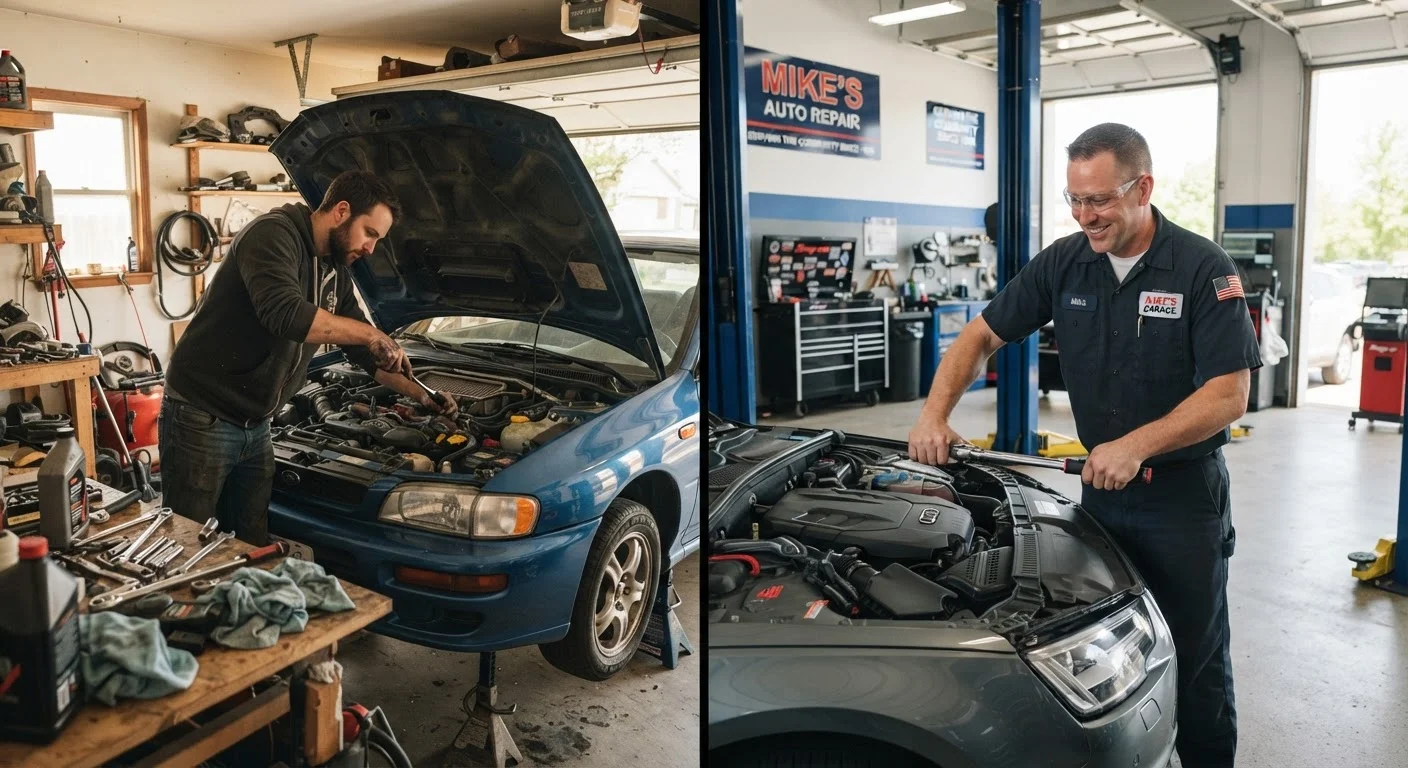
Key Takeaways
- Simple tasks like air filter swaps and wiper replacements are generally safe for home mechanics.
- Brake systems, suspension work, and airbag-related repairs carry serious safety risks if done incorrectly.
- DIY can reduce labor costs, but mistakes may cost more to fix than professional service would have.
- Your owner's manual and a reliable repair database are essential references before attempting any task.
- Warranty coverage and liability are legitimate factors when deciding whether to DIY or use a shop.
Significant savings on labor costs
Labor often represents the majority of a repair bill. Handling simple maintenance yourself eliminates that charge entirely for tasks within your skill level.
Greater control over parts quality
When you source your own parts, you can choose the grade and brand rather than relying solely on whatever a shop stocks at its markup.
Builds familiarity with your vehicle
Regular hands-on maintenance helps you notice developing issues - unusual wear, fluid leaks, or corrosion - before they escalate.
Flexible scheduling on your own time
You're not waiting for an appointment or arranging alternative transportation while your car sits in a queue.
Safety-critical errors can have severe consequences
Mistakes on brakes, steering, or suspension can compromise vehicle control at speed. These are not tasks where a trial-and-error approach is acceptable.
Mistakes may cost more than professional service
A DIY error that requires a mechanic to diagnose and correct can result in a higher total bill than simply having the shop do the job from the start.
Specialized tools add upfront cost
Some jobs - brake bleeding, wheel bearing replacement, timing belt service - require equipment that may not be cost-effective to purchase for a single use.
Modern vehicles are increasingly complex
Advanced electronics, integrated driver-assistance systems, and hybrid/EV components often require manufacturer-level diagnostic tools and software that home mechanics do not have access to.
Potential warranty implications
Depending on your vehicle's warranty terms, certain DIY repairs - if performed incorrectly or with non-approved parts - may create complications in warranty claims.
Our Verdict
DIY maintenance is a practical, cost-effective choice for straightforward tasks that don't involve safety-critical systems. For anything involving brakes, steering, fuel systems, or advanced electronics, professional service is the wiser call - the risk of an error outweighs the savings. A hybrid approach, doing what you confidently can and outsourcing the rest, tends to serve most drivers well.
Drivers who are comfortable with basic tools and want to reduce routine maintenance costs, while recognizing the limits of home repair for complex or safety-critical work.
Setting the Stage: What Kind of Job Is It?
Before reaching for a wrench or calling a shop, the most useful question isn't can I do this? - it's what's at stake if something goes wrong? Vehicle maintenance tasks fall along a spectrum from low-complexity and low-risk to technically demanding and potentially dangerous. Where a job sits on that spectrum should drive your decision more than cost alone.
Tasks like replacing a cabin air filter, swapping wiper blades, or checking and topping off fluids require minimal tools and carry little risk of causing vehicle damage or personal injury. On the other end, jobs involving brake hydraulics, suspension geometry, or high-voltage hybrid components can produce serious - sometimes life-threatening - consequences if performed without the right knowledge and equipment.
A good starting point is your owner's manual. It describes service intervals and sometimes clarifies which tasks are genuinely owner-serviceable. For a broader picture of what your car needs and when, see Your Car's Maintenance Schedule, Explained.
Significant savings on labor costs
Labor often represents the majority of a repair bill. Handling simple maintenance yourself eliminates that charge entirely for tasks within your skill level.
Greater control over parts quality
When you source your own parts, you can choose the grade and brand rather than relying solely on whatever a shop stocks at its markup.
Builds familiarity with your vehicle
Regular hands-on maintenance helps you notice developing issues - unusual wear, fluid leaks, or corrosion - before they escalate.
Flexible scheduling on your own time
You're not waiting for an appointment or arranging alternative transportation while your car sits in a queue.
The Real Costs - and Savings - of Going DIY
Labor typically accounts for the largest share of a shop repair bill, often ranging from 50% to 70% of the total cost depending on the job. For straightforward maintenance, skipping that labor charge is a legitimate financial benefit. An oil change, for example, requires only basic supplies and modest mechanical confidence - the savings are real and the risk is low.
However, the economics shift quickly once complexity increases. A DIY mistake on a brake job, for instance, may require a professional to diagnose and undo the error before completing the repair correctly - potentially costing more than the original shop visit would have. There's also the hidden cost of tools: a first-time brake caliper job may require specialized hardware you'll use once.
50-70%
Share of repair bill typically attributed to labor
Industry estimates consistently show labor accounts for the majority of most automotive repair invoices, making it the primary cost DIY eliminates.
~$100-$150
Typical hourly shop labor rate in the US
Labor rates vary significantly by region, shop type, and vehicle brand, but this range reflects commonly cited averages for independent repair shops.
It's also worth factoring in warranty considerations. On newer vehicles, certain repairs performed outside a dealership or certified shop may affect warranty coverage, depending on the terms and applicable law. When in doubt, review your warranty documentation before proceeding with DIY work.
Tasks That Generally Suit Home Mechanics
Several routine maintenance items are widely considered manageable for home mechanics with basic tools and a reliable repair reference such as a factory service manual or a reputable vehicle-specific database:
- Engine and cabin air filter replacement - typically requires no tools and takes under 15 minutes.
- Wiper blade replacement - straightforward on most vehicles.
- Battery replacement - manageable on most non-hybrid vehicles; some modern cars require a reset procedure after replacement.
- Fluid top-offs (washer fluid, coolant reservoir, power steering) - low risk when using manufacturer-specified fluids.
- Tire pressure checks and inflation - essential and easy with a quality gauge.
- Light bulb replacement - varies by vehicle; some modern designs require more disassembly than expected.
For a broader list of maintenance items that often go unaddressed, overlooked maintenance tasks that quietly affect your car's performance is worth reviewing before your next service cycle.
Service Intervals Still Apply to DIY Work
Doing your own maintenance doesn't change when service is due - it only changes who performs it. Whether you change your own oil or have a shop do it, the interval your manufacturer recommends still applies. For a detailed look at how time-based and mileage-based intervals interact, see Time-Based vs. Mileage-Based Service Intervals. Keeping accurate records of DIY service is especially important for warranty purposes and resale documentation.
When Professional Service Is the Wiser Choice
Some repairs fall outside what a home mechanic should reasonably attempt, not because the person isn't capable of learning, but because the margin for error is too narrow and the consequences of getting it wrong are too serious.
Safety-critical errors can have severe consequences
Mistakes on brakes, steering, or suspension can compromise vehicle control at speed. These are not tasks where a trial-and-error approach is acceptable.
Mistakes may cost more than professional service
A DIY error that requires a mechanic to diagnose and correct can result in a higher total bill than simply having the shop do the job from the start.
Specialized tools add upfront cost
Some jobs - brake bleeding, wheel bearing replacement, timing belt service - require equipment that may not be cost-effective to purchase for a single use.
Modern vehicles are increasingly complex
Advanced electronics, integrated driver-assistance systems, and hybrid/EV components often require manufacturer-level diagnostic tools and software that home mechanics do not have access to.
Potential warranty implications
Depending on your vehicle's warranty terms, certain DIY repairs - if performed incorrectly or with non-approved parts - may create complications in warranty claims.
Brake system repairs - including pad and rotor replacement - are technically within reach for experienced home mechanics, but hydraulic components, bleeding procedures, and proper torque specs leave little room for error. Steering and suspension work affects vehicle handling in ways that won't always be obvious until the vehicle is at highway speed. Airbag systems carry a live electrical charge even when the ignition is off and can deploy unexpectedly if disturbed improperly.
Advanced diagnostics also favor the shop. A check-engine light can reflect dozens of different fault codes, and misinterpreting one can lead to replacing a part that wasn't the root cause. Professional shops have scan tools, technical service bulletins, and experienced pattern recognition that home mechanics typically don't.
If you ever feel uncertain about the fairness of a repair recommendation, warning signs your mechanic is upselling unnecessary repairs offers practical guidance on evaluating what a shop is telling you.