

Key Takeaways
- Your owner's manual is the authoritative source for your vehicle's specific maintenance schedule.
- Service intervals are expressed in mileage, time, or both - whichever comes first typically applies.
- Skipping routine maintenance rarely saves money and often leads to larger, more expensive repairs.
- Driving conditions - stop-and-go traffic, extreme temperatures, towing - can shorten recommended intervals.
- Keeping a maintenance record protects resale value and helps spot recurring issues early.
Vehicle Maintenance Schedule
A vehicle maintenance schedule is a manufacturer-recommended plan that specifies which services your car needs and when - typically based on mileage, time elapsed, or both. It covers everything from oil changes and filter replacements to brake inspections and fluid flushes. Following this schedule helps keep your vehicle running reliably and can prevent costly repairs from developing unnoticed.
Modern vehicles often use an onboard maintenance reminder system (sometimes called an oil life monitor or service interval indicator) that calculates service needs based on real driving data rather than fixed mileage alone.
What a Maintenance Schedule Actually Is
Every vehicle that rolls off an assembly line comes with a manufacturer-developed maintenance schedule - a structured plan outlining the specific services your car requires and how often. Think of it as the vehicle's own care roadmap, developed through engineering data and durability testing specific to that make and model.
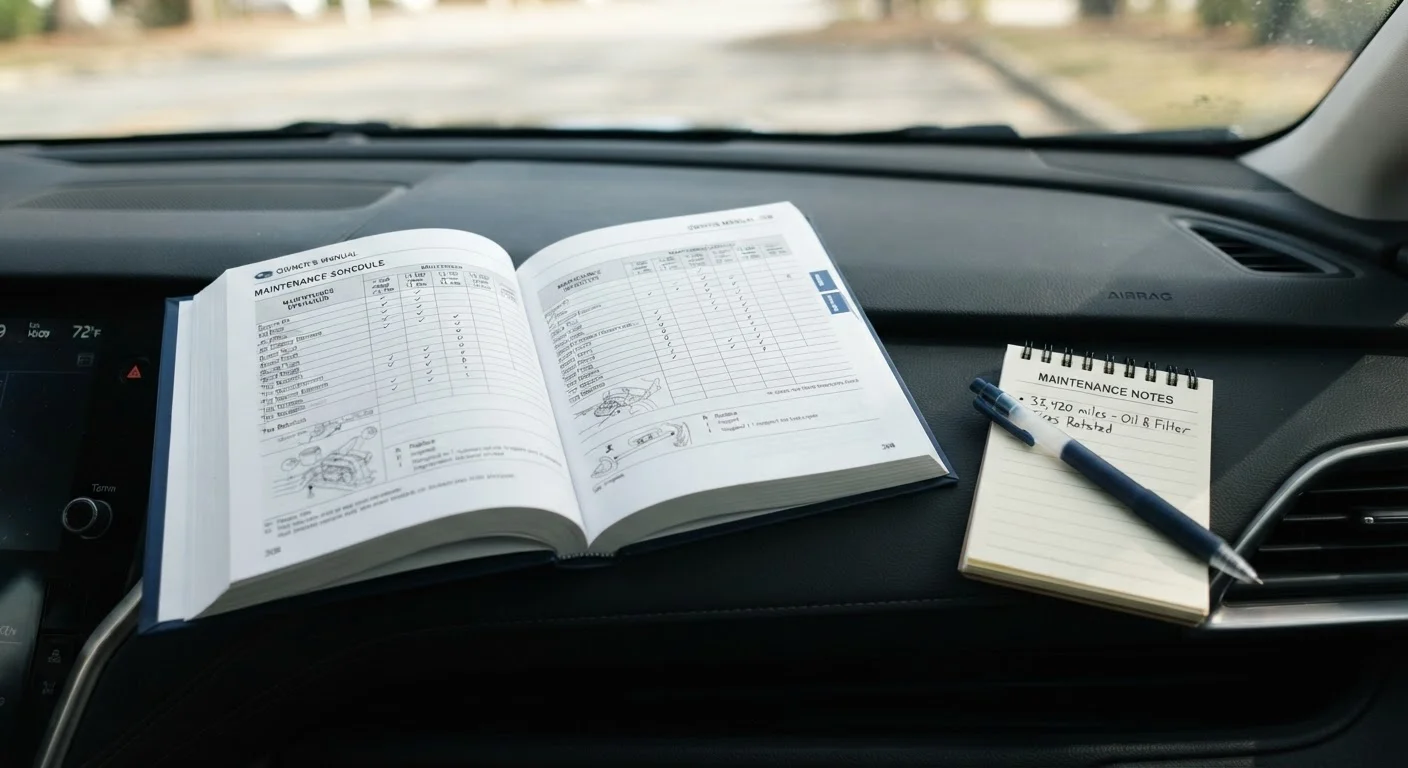
These schedules are typically found in the owner's manual under headings like "Scheduled Maintenance" or "Service Intervals." They list tasks - oil and filter changes, tire rotations, brake inspections, fluid checks, spark plug replacements - alongside the mileage or time thresholds at which each should occur. For a deeper look at decoding these mileage-based intervals, see what your owner's manual is actually telling you.
It's worth noting that many modern vehicles also include dashboard-based maintenance reminder systems. These onboard monitors use driving data - engine temperatures, trip lengths, load - to estimate when service is actually needed, rather than counting down from a fixed mileage figure.
Your Owner's Manual Takes Priority
Generic service advice - from online forums, quick-lube shops, or well-meaning friends - may not match what your specific vehicle actually needs. Manufacturer recommendations in your owner's manual are based on engineering data for your exact powertrain, fluids, and components. When in doubt, the manual is the authoritative source.
Why Intervals Are Set the Way They Are
Manufacturers establish service intervals based on how long components and fluids can perform effectively under normal operating conditions before degradation becomes a concern. Oil, for instance, breaks down from heat cycling and contamination over time; leaving it too long reduces its ability to lubricate engine parts adequately. Coolant, transmission fluid, and brake fluid similarly degrade and absorb moisture, which changes their performance characteristics.
Intervals are expressed in mileage, elapsed time, or both - and drivers are generally advised to follow whichever limit arrives first. A vehicle that sits mostly parked still needs time-based service because fluids age chemically even when the engine isn't running.
~$1,200
Average annual vehicle maintenance cost per AAA estimates
AAA's vehicle ownership cost studies consistently show routine maintenance as a predictable annual expense for average US drivers.
35%
Drivers who admit to delaying recommended maintenance
Consumer surveys conducted by automotive industry organizations have found a significant share of drivers regularly postpone scheduled services.
Driving pattern also matters significantly. Short city trips, towing, or operating in temperature extremes can accelerate wear on components. Many owner's manuals include a separate "severe duty" or "special operating conditions" schedule for drivers whose habits fall into these categories.
The Core Services Found in Most Schedules
While every vehicle is different, most maintenance schedules share a common set of recurring services:
- Engine oil and filter: One of the most frequent tasks. Intervals vary widely - from roughly 3,000 miles on older vehicles using conventional oil to 7,500-10,000 miles or more with modern full-synthetic formulations. Always defer to your owner's manual rather than generic rules of thumb. See common maintenance myths for why the "every 3,000 miles" rule is outdated for many vehicles.
- Tire rotation: Typically every 5,000-7,500 miles. Even tread wear extends tire life and preserves handling. Tire pressure, tread, and rotation basics covers what drivers should understand about this service.
- Brake inspection: Usually recommended annually or at set mileage points. Brake pad thickness and rotor condition are checked to ensure stopping performance.
- Air and cabin filters: Engine air filters affect combustion efficiency; cabin air filters affect interior air quality. Both are often overlooked. Overlooked maintenance tasks explores why these matter.
- Fluid checks and flushes: Coolant, transmission, brake, and power steering fluids all have service intervals. Ignoring them can lead to significant mechanical issues.
- Spark plugs and belts: Longer-interval items - often 30,000 to 100,000 miles depending on vehicle - but critical when they come due.
Set a Simple Reminder System
After each service, note the next due mileage or date in your phone's calendar or a reminder app. Some drivers place a small sticker on the windshield corner noting the next oil change milestone. Consistent reminders are the most reliable way to avoid accidentally lapsing on scheduled services.
Staying on Top of Your Schedule
Knowing your maintenance schedule is one thing; acting on it consistently is another. A few practical approaches help drivers stay ahead of service milestones.
First, read the relevant section of your owner's manual once - even briefly. Understanding what's due and when removes ambiguity and helps you evaluate service recommendations more confidently. You'll also be better positioned to recognize if a shop recommends something ahead of schedule.
Second, keep a record of every service performed, including the date, mileage, what was done, and who performed it. This log becomes valuable when selling the vehicle and helps you track patterns. Keeping a vehicle maintenance log offers a practical framework for setting this up.
Third, adjust your expectations seasonally. Changing weather conditions place different demands on your vehicle, from battery performance in cold weather to cooling system load in summer heat. Seasonal car care guidance is a useful complement to your standard maintenance schedule.
Finally, don't ignore warning lights. A check engine light or service indicator shouldn't be dismissed - these are the vehicle's way of flagging that attention is needed outside the normal schedule.