

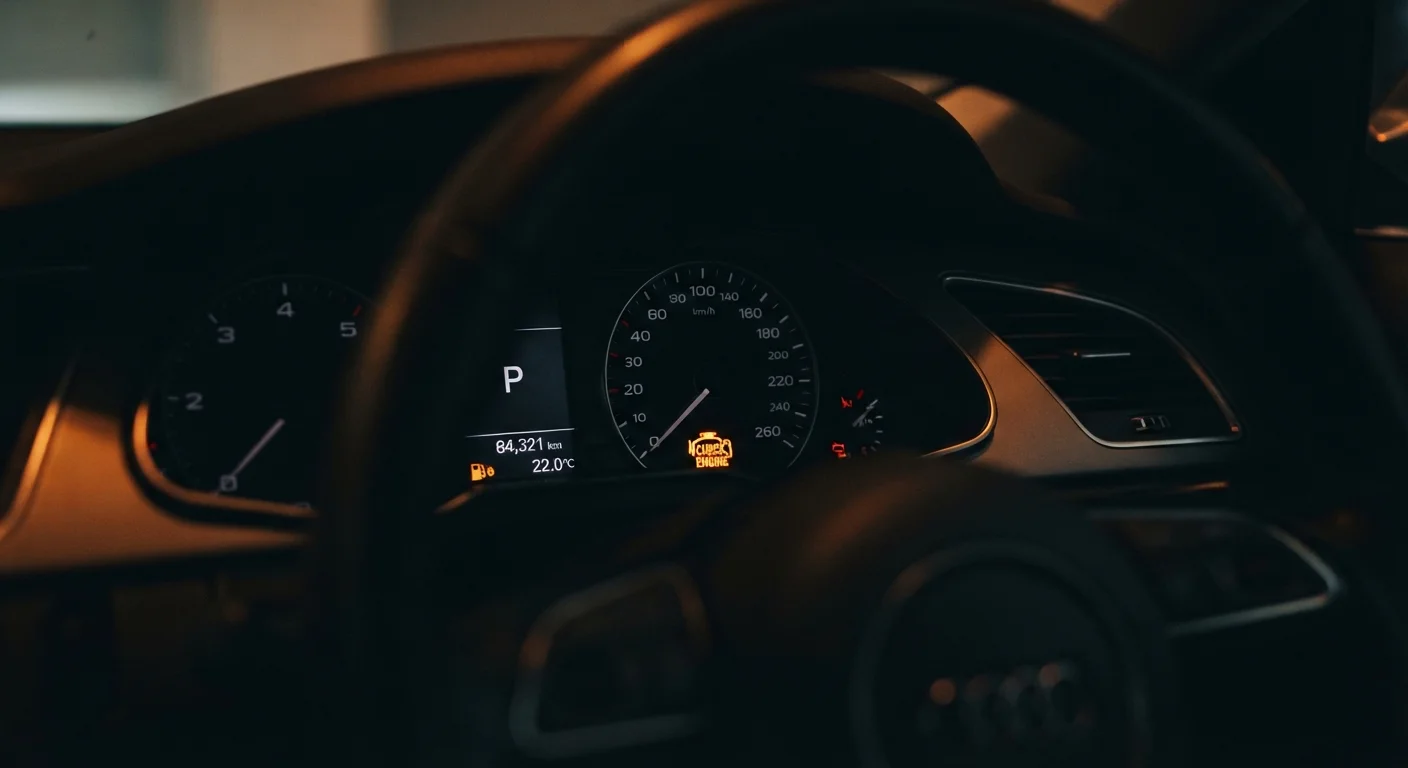
Key Takeaways
- The check engine light alone cannot tell you what is wrong - a scan tool is required to retrieve the stored fault code.
- A steady light often means a non-urgent issue, while a flashing light signals a potentially serious problem requiring prompt attention.
- Hundreds of different fault codes exist, ranging from a loose gas cap to misfiring cylinders.
- Many auto parts retailers offer free OBD-II code reads, giving you information before you visit a mechanic.
- Clearing the code without fixing the underlying issue will cause the light to return.
Check Engine Light (MIL)
The check engine light - formally called the Malfunction Indicator Lamp (MIL) - is a warning signal triggered by your vehicle's onboard diagnostic system when it detects a problem in the engine, transmission, emissions system, or related components. It does not specify a single issue; instead, it stores a standardized fault code that a scan tool can retrieve and interpret. Think of it as your car flagging that something needs attention, not necessarily that a breakdown is imminent.
Modern vehicles use the OBD-II (On-Board Diagnostics, second generation) protocol, standardized across all cars sold in the US after 1996, which generates Diagnostic Trouble Codes (DTCs) that pinpoint the system or sensor where the fault was detected.
How the Onboard Diagnostic System Works
Every car sold in the United States after 1996 is equipped with an OBD-II system - a standardized network of sensors and control modules that continuously monitor engine performance, emissions output, and dozens of other parameters. When a sensor reading falls outside acceptable limits, the system logs a Diagnostic Trouble Code (DTC) and illuminates the check engine light on your dashboard.
DTCs follow a structured format. The letter at the start identifies the system: P for powertrain, B for body, C for chassis, and U for network communication. The numbers that follow narrow down the specific fault. A code like P0300, for example, points to a random or multiple cylinder misfire in the engine.
Importantly, the code identifies where a problem was detected - not necessarily why it happened. That distinction matters when talking to a mechanic. See our dashboard warning lights guide for a broader look at what other indicator lights signal.
400+
Distinct OBD-II fault codes in common use
The SAE and ISO standards define hundreds of standardized Diagnostic Trouble Codes covering powertrain, emissions, and body systems across all OBD-II compliant vehicles.
~1 in 3
Vehicles on US roads with an active check engine light
Automotive data aggregators have repeatedly estimated that roughly a third of vehicles in operation carry an unaddressed check engine condition at any given time.
Steady vs. Flashing: The Urgency Difference
The behavior of the check engine light carries meaning beyond its mere presence. A steady, solid light typically indicates a stored fault that the system has logged but does not consider immediately catastrophic - a faulty oxygen sensor or evaporative emissions leak, for instance. You should schedule a diagnostic appointment within a few days, but you are unlikely to cause immediate damage by driving carefully to a shop.
A flashing or blinking check engine light is a different matter. This pattern generally indicates an active engine misfire - unburned fuel entering the exhaust - which can rapidly overheat and destroy the catalytic converter, an expensive component to replace. If you see a flashing light, reduce engine load, avoid hard acceleration, and have the vehicle inspected as soon as possible.
Check Your Gas Cap First
Before booking a diagnostic appointment, make sure your gas cap is fully tightened - it should click into place. A loose cap is one of the most common check engine triggers and costs nothing to fix. Drive through a few normal cycles after tightening; if the light clears, you may have solved it yourself.
Common Causes and What They Mean for Your Wallet
The range of faults that can trigger a check engine light is genuinely broad. Some of the most frequently encountered include:
- Loose or faulty gas cap: Inexpensive to fix; tighten or replace the cap.
- Oxygen sensor failure: Affects fuel efficiency and emissions; moderately priced repair.
- Catalytic converter failure: Often costly; usually a downstream consequence of a neglected misfire or sensor issue.
- Mass airflow sensor fault: Affects fuel trim and performance; a common sensor replacement.
- Spark plug or ignition coil fault: Can cause misfires; typically a straightforward repair when caught early.
- Evaporative emissions system leak: Often traced to a faulty purge valve or fuel tank pressure sensor.
Understanding the code is only the first step. A code reading tells you which system triggered the fault; a qualified mechanic performs the actual diagnosis to confirm the root cause before recommending repairs. Keeping up with scheduled service - outlined in our car maintenance schedule explainer - can prevent many of these faults from developing in the first place.
Reading the Code and Deciding Your Next Step
Getting the fault code is straightforward. Many auto parts retailers offer free OBD-II scans in their parking lots using a handheld reader plugged into the diagnostic port - typically located under the dashboard near the steering column. You can also purchase an inexpensive Bluetooth OBD-II adapter that pairs with a smartphone app for ongoing monitoring.
Once you have the code, research what system it affects and use that information to have an informed conversation with your mechanic. Knowing that a P0442 points to a small evaporative emissions leak, for example, helps you understand whether the proposed repair is proportionate. Our guide on spotting unnecessary repair upsells can help you evaluate the advice you receive.
One important caution: simply clearing the code with a scan tool does not fix the underlying problem. The light will return if the fault condition persists. Additionally, resetting codes shortly before an emissions inspection can cause the OBD-II readiness monitors to show as incomplete, which may itself result in a test failure.
For overall vehicle health, pairing diagnostic awareness with routine checks - including monitoring your essential fluids - gives you a much clearer picture of where your car stands before a small issue becomes an expensive one.
“The check engine light is not your enemy - it is your car's way of asking for attention before a small problem becomes a large one. The worst thing a driver can do is ignore it indefinitely.”
— Automotive Service Excellence (ASE), National Institute for Automotive Service Excellence, technician certification body