

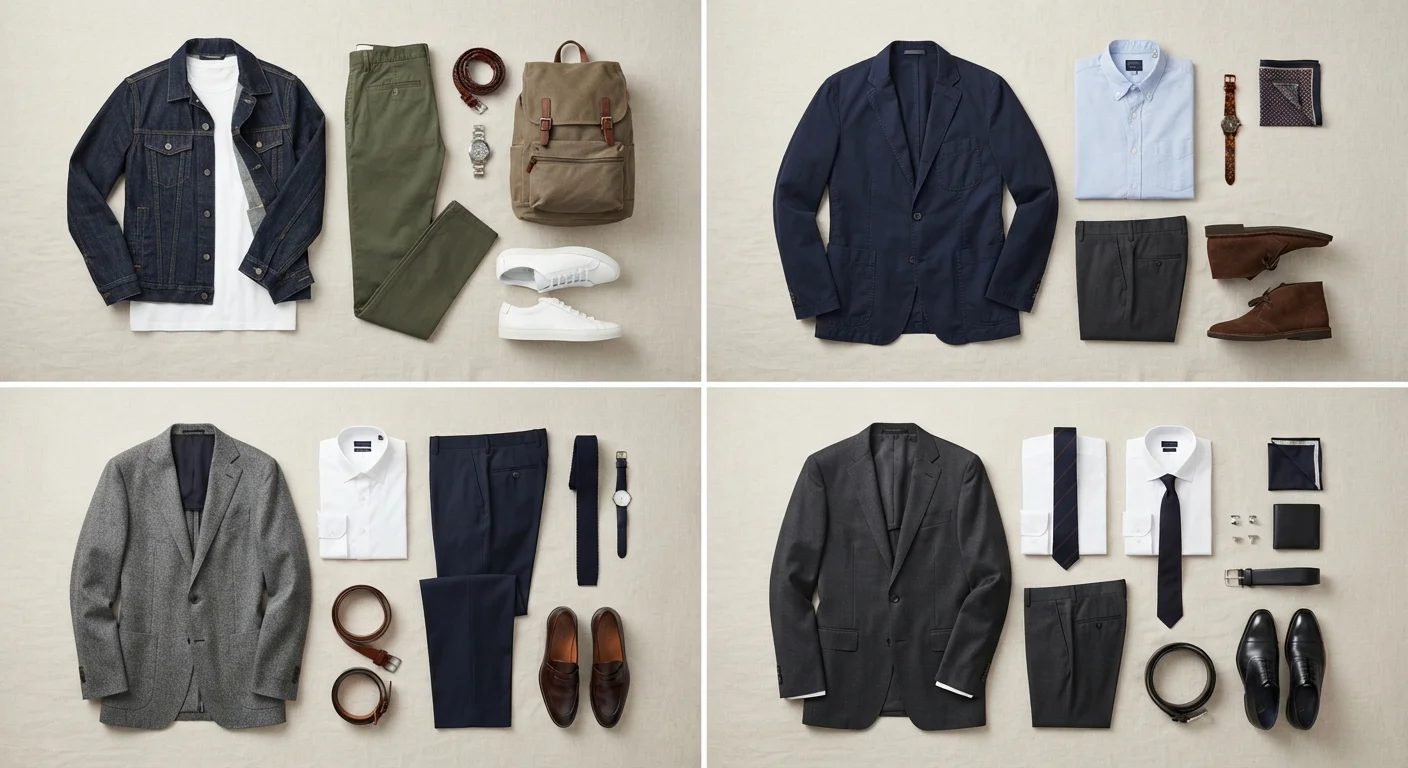
| Casual | Jeans, t-shirts, sneakers - clean and well-fitting |
| Smart Casual | Dark jeans or chinos, collared tops, clean leather shoes |
| Business Casual | Tailored trousers, blazers, polished shoes - no denim |
| Formal / Black Tie | Suits, tuxedos, evening gowns - maximum polish |
| When in doubt | Dress one tier above your estimate |
| Universal rule | Fit matters more than fabric cost at every tier |
Why Dress Codes Still Matter
Dress codes communicate social context - they tell you what a setting expects and signal that you've read the room. While fashion has moved toward greater flexibility, the underlying tiers still carry real meaning. Wearing the wrong level of formality, in either direction, can undermine how you're perceived in professional, social, or formal environments.
The four main tiers - casual, smart casual, business casual, and formal - each occupy a distinct register. Understanding them isn't about rigid rules; it's about having a reliable reference framework so you can adapt confidently to any situation. See our guide to wardrobe foundations for the core pieces that support dressing across all four levels.
| Casual | Jeans, t-shirts, sneakers - clean and well-fitting |
| Smart Casual | Dark jeans or chinos, collared tops, clean leather shoes |
| Business Casual | Tailored trousers, blazers, polished shoes - no denim |
| Formal / Black Tie | Suits, tuxedos, evening gowns - maximum polish |
| When in doubt | Dress one tier above your estimate |
| Universal rule | Fit matters more than fabric cost at every tier |
The Four Tiers Explained
Casual
Casual dress is the lowest-formality tier - appropriate for everyday errands, relaxed social gatherings, and informal home settings. It permits jeans, t-shirts, sneakers, hoodies, and similar relaxed pieces. The key qualifier is that items should still be clean, well-fitting, and in good repair. Casual does not mean sloppy or unkempt.
Smart Casual
Smart casual sits between casual and business casual - relaxed enough for social dinners and creative workplaces, but polished enough to read as intentional. Think dark, well-cut jeans paired with a button-down or blouse, clean leather or suede shoes, and considered accessories. Avoid overly athletic pieces or anything visibly distressed. Smart casual rewards attention to fit and fabric quality above all else.
Business Casual
Business casual is the dominant standard in professional environments that don't require a suit. It typically includes tailored trousers or chinos, collared shirts or blouses, blazers, and closed-toe leather or polished shoes. Dresses and skirts in modest lengths work well for this tier. Denim is generally excluded, though some workplaces with relaxed cultures accept dark, structured denim. When in doubt, default to more structure rather than less.
Formal / Black Tie
Formal dress - whether business formal or social black tie - signals the highest tier. Business formal means a suit and tie for men, and a suit, tailored dress, or pantsuit for women. Black tie calls for a tuxedo or dark evening suit for men, and a floor-length or cocktail-length gown for women. This tier is not the place to experiment - clarity and polish are the priorities.
Dress code
A set of expectations governing the formality and style of clothing appropriate for a specific setting or occasion. Dress codes may be explicitly stated on invitations or implicitly understood from context.
Smart casual
A middle-ground dress code that blends relaxed and polished elements. It requires more intentionality than everyday casual wear while stopping short of business or formal attire.
Business casual
A professional dress standard that removes the requirement for a suit or tie while maintaining a neat, polished appearance. Tailored pieces, collared shirts, and closed-toe shoes are typical.
Black tie
The most formal social dress code, traditionally requiring a tuxedo for men and a formal gown for women. It is typically specified on invitations for evening events.
Formality tier
A relative ranking of dress codes from least to most formal: casual, smart casual, business casual, and formal. Each tier carries distinct expectations around clothing choices, fit, and occasion.
Common Mistakes and How to Avoid Them
The most frequent errors fall into two categories: underdressing and misreading venue signals. An invitation that says "smart casual" for a rooftop event is not a green light for shorts and flip-flops. Equally, "business casual" at a client meeting doesn't mean wearing the same outfit you'd wear to a weekend brunch.
Decoding Ambiguous Invitations
Terms like "festive attire," "garden party," or "resort casual" don't map neatly to a standard tier. In these cases, consider the venue type, time of day, and host culture. A midday outdoor wedding and a late-evening cocktail party both require thought even when the stated code sounds relaxed. When genuinely uncertain, a quick message to the host is never inappropriate.
When an invitation or venue is ambiguous, the safest strategy is to dress one tier above what you think is required. Arriving slightly overdressed is almost always more recoverable than the reverse. If you're unsure about your existing wardrobe's versatility across tiers, a structured closet audit can help you identify what you have and what you actually need.
Fit remains the single most important variable at every tier. A well-fitted outfit in modest fabric will outperform an expensive one that doesn't sit correctly. For a broader look at how to approach dressing for your specific proportions, our article on body-shape dressing principles offers a balanced, practical perspective.
1 in 3
Workers unsure what their workplace dress code means
Surveys from workplace research organizations consistently find that many employees find dress code language ambiguous or poorly defined by employers.
~70%
Of first impressions influenced by appearance
Research in social psychology suggests a significant portion of initial judgments are formed within seconds, with clothing and grooming playing a notable role.