

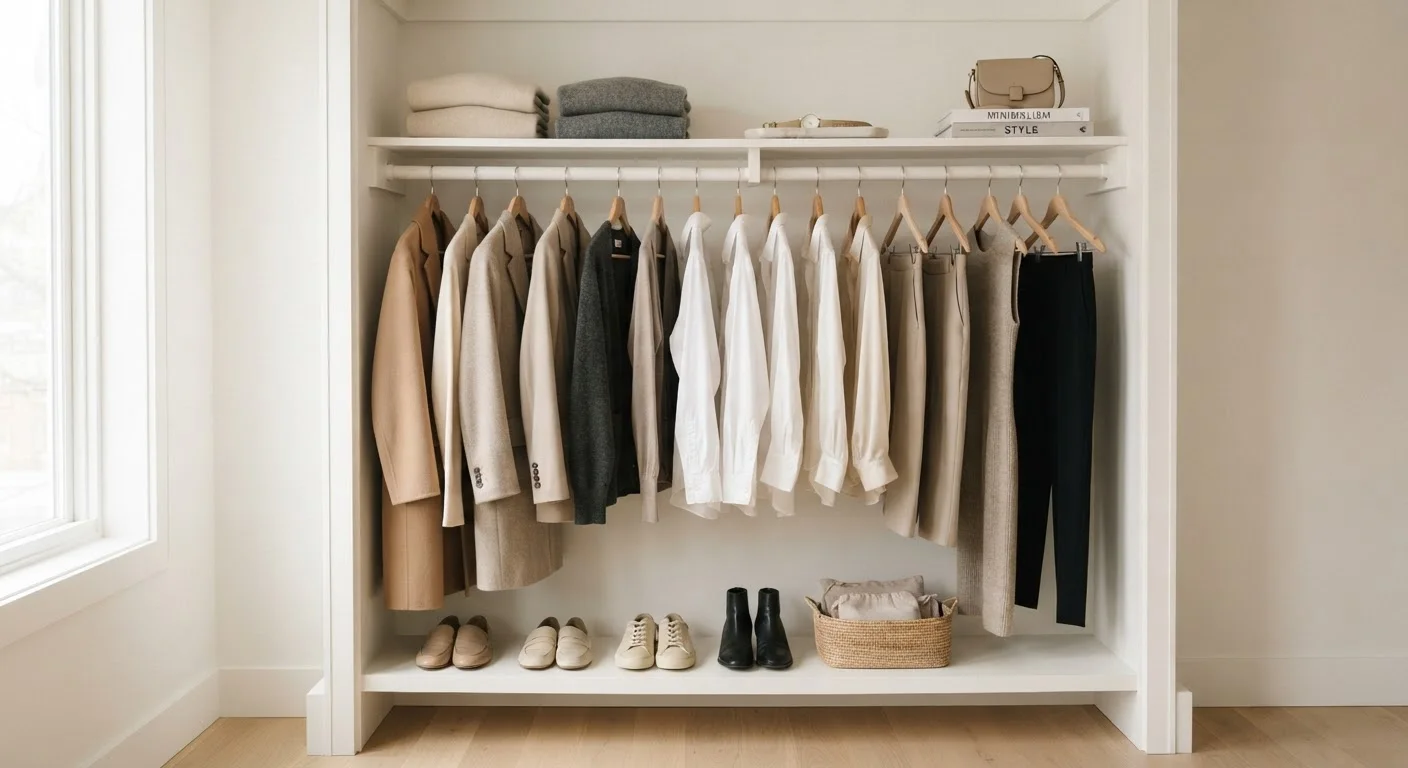
Key Takeaways
- A capsule wardrobe emphasizes fewer, more versatile pieces over a high volume of rarely worn items.
- Cohesive color palettes and classic silhouettes are what make a capsule wardrobe function effectively.
- The approach reduces daily decision fatigue and can curb unnecessary spending over time.
- Building one starts with an honest assessment of your current closet and actual lifestyle needs.
- Quality and fit matter more than quantity when every piece needs to carry more weight.
Capsule Wardrobe
A capsule wardrobe is a curated collection of a limited number of clothing pieces - typically between 25 and 50 - that work together cohesively across multiple outfits. The items are chosen for their versatility, quality, and longevity rather than trend relevance. The goal is a closet where nearly everything pairs well with everything else, reducing decision fatigue and impulse purchases.
The concept was popularized by London boutique owner Susie Faux in the 1970s and later expanded by designer Donna Karan in the 1980s, though the underlying logic of wardrobe editing predates both.
The Core Idea Behind a Capsule Wardrobe
At its simplest, a capsule wardrobe operates on a single organizing principle: every item you own should be able to work with multiple other items. Rather than accumulating clothing piece by piece in response to sales, trends, or impulse, a capsule wardrobe is designed from the inside out - starting with intentional choices about color, silhouette, and function.
The practical result is a closet where virtually any top pairs with any bottom, where layers add depth rather than conflict, and where getting dressed becomes a lower-effort, more consistent experience. It's a structural approach to style, not a minimalist aesthetic imposed on your personality.
A Framework, Not a Formula
A capsule wardrobe is a set of organizing principles, not a rigid system with a fixed item count or required color palette. Some people build effective capsules with 35 pieces; others need 60 based on climate variation or professional requirements. The goal is intentionality, not adherence to a specific number. Adapt the concept to your actual life rather than conforming your life to a template.
For a deeper look at how shopping habits can quietly undermine personal style, see how impulse buying affects your wardrobe.
What Makes It Work: Cohesion Over Volume
The mechanics of a capsule wardrobe rely on three elements working in combination: a limited, harmonious color palette; silhouettes that flatter across contexts; and a bias toward quality over quantity.
Color cohesion is often the most underestimated factor. When your wardrobe centers on two or three neutral tones with one or two accent colors, mixing and matching becomes intuitive. Patterns and textures can still play a role, but they're selected to coordinate rather than compete.
Silhouette consistency means choosing cuts and proportions that balance well across items. A relaxed trouser that works with a fitted knit and a structured blazer is doing more work than three separate occasion-specific pants.
Quality over quantity is practical, not aspirational. When a piece appears in more outfit combinations, it gets worn more often - which makes durability a direct function of value. Wardrobe foundation pieces tend to have this multi-context utility built in.
~20%
Clothes worn regularly from the average wardrobe
Industry estimates and consumer studies consistently suggest that most people wear a small fraction of what they own on a regular basis.
25-50
Typical capsule wardrobe item count
Most capsule wardrobe frameworks recommend this range as the practical threshold for cohesion without scarcity.
Why It Reduces Decision Fatigue
Research in behavioral psychology has long documented that the mental cost of making choices accumulates across a day - a phenomenon commonly called decision fatigue. Clothing choices, while low-stakes, contribute to this accumulation when a closet is full of items that don't coordinate.
A capsule wardrobe reduces this friction by narrowing the decision field without narrowing the outcome. Because pieces are pre-selected for compatibility, the cognitive load shifts from "what goes with what?" to "which combination fits today?" - a significantly smaller problem to solve each morning.
Start With What You Already Own
Before adding anything new, spend time with your existing wardrobe. Pull out only the items you've worn in the past three months and see how they interact. This exercise often reveals a natural capsule already forming - and highlights exactly what's missing without guesswork.
This benefit extends beyond time savings. When getting dressed feels more resolved, it's one less source of low-grade daily stress - and that compounds meaningfully over time.
Building One: Where to Begin
The most effective starting point is an honest audit of your current wardrobe - not a shopping list. Identifying which pieces you actually reach for, which ones create coordination problems, and which sit unworn for months gives you a real picture of what's working and what isn't. A structured closet audit can help make that process more systematic.
From there, define your actual lifestyle - not the life you imagine wearing those clothes in. If your days are primarily casual, your capsule should reflect that. If you move between formal and informal contexts regularly, your foundation pieces need to bridge both.
If you're starting largely from scratch, building a starter wardrobe from the ground up offers a practical framework for prioritizing early purchases without overcomplicating the process.