

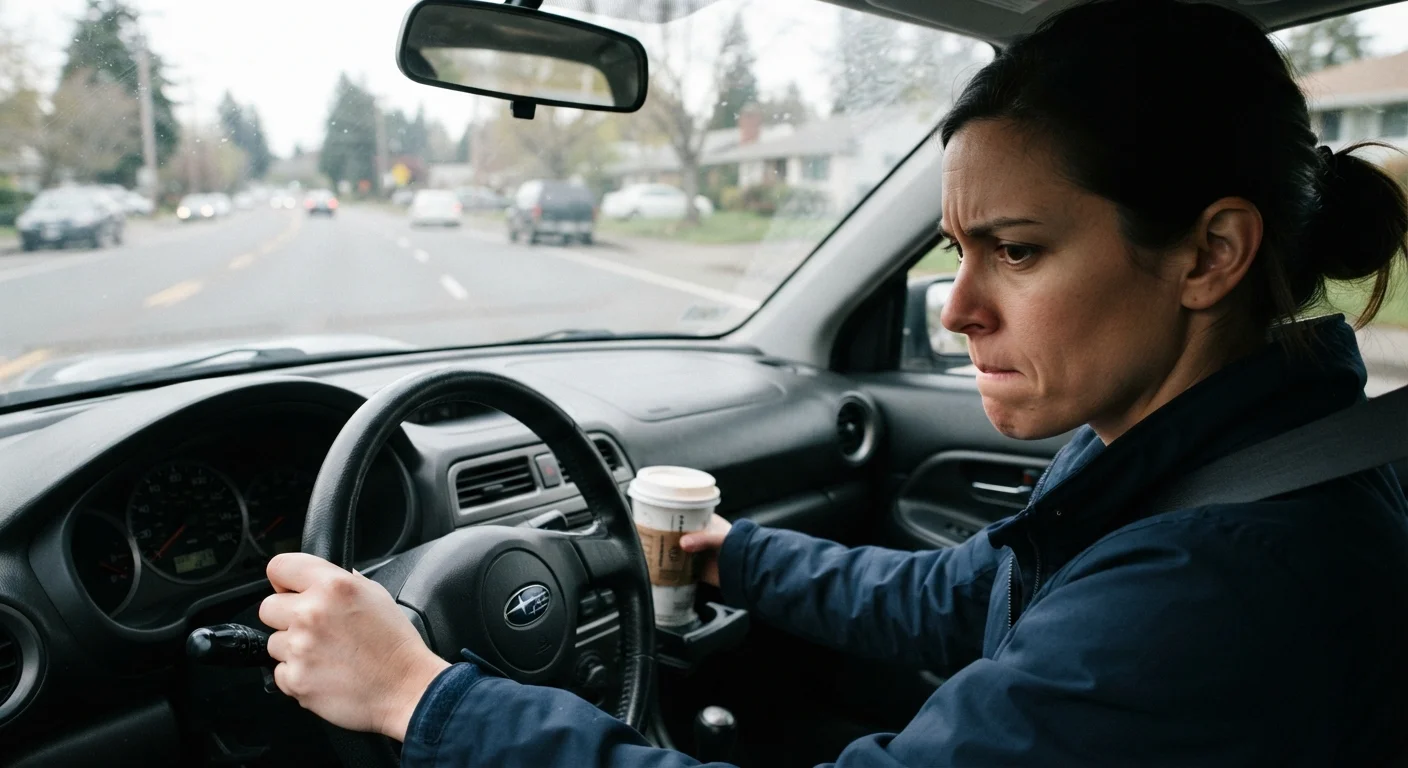
Key Takeaways
- Phone use is only one category of distraction - cognitive, visual, and manual forms all degrade driving performance.
- Passengers, music, eating, and internal mental states are among the most underappreciated sources of driver inattention.
- Even hands-free technology can impose significant cognitive load that reduces situational awareness.
- Building intentional pre-drive habits can reduce many of these distractions before they become risks.
The Distraction Problem Is Bigger Than the Headlines Suggest
Most public awareness campaigns focus on smartphone use, and for good reason - it combines visual, manual, and cognitive distraction simultaneously. But phone-focused messaging can leave drivers with a false sense of security once the device is pocketed. Research from the National Highway Traffic Safety Administration (NHTSA) consistently identifies a broad range of inattention sources contributing to crashes, many of which receive far less public attention.
Driver distraction is typically grouped into three categories: visual (eyes off the road), manual (hands off the wheel), and cognitive (mind off the task of driving). Many everyday behaviors trigger more than one at once - which is precisely what makes them hazardous in ways drivers often fail to recognize. Understanding the full landscape of distraction is a foundation for defensive driving habits that go beyond simply putting the phone away.
All Three Distraction Types Matter
Safety researchers distinguish between visual (eyes off road), manual (hands off wheel), and cognitive (mind off driving) distraction. A behavior does not need to involve a phone - or even a physical action - to meaningfully impair driving performance. Cognitive distraction in particular is easy to overlook because drivers may appear outwardly attentive while their mental attention is elsewhere.
Common but Overlooked Attention Drains
Passengers and Conversation
Talking with passengers is so normalized that most drivers never consider it a risk. Yet research has repeatedly shown that engaging, emotionally involving conversations - arguments, serious discussions, excited storytelling - impose meaningful cognitive load. Unlike phone calls, passengers can usually modulate their demands when traffic conditions worsen, which offers some mitigation, but this self-regulation is inconsistent, particularly with younger passengers or in the context of group dynamics in the vehicle.
Drivers with children or teenagers in the car are particularly vulnerable to distraction from passenger behavior. The instinct to turn and look at a backseat passenger adds a visual component that significantly elevates risk.
Emotionally involving conversations impose cognitive load even when both hands are on the wheel.
Eating and Drinking at the Wheel
Consuming food or beverages while driving is manual and cognitive distraction combined. Unwrapping packaging, managing a dripping item, or reacting to a spill each demand attention at the exact moment it may be needed for a roadway event. Studies from organizations such as the AAA Foundation for Traffic Safety have identified eating and drinking as a meaningful contributor to near-crash events.
The risk is not limited to messy foods - even sipping from a travel mug requires a hand off the wheel and a brief visual check. Scheduling adequate time before a trip to eat, or pulling off the road briefly, removes the risk entirely rather than managing it.
A spilled drink can trigger a hands-off, eyes-off reaction at the worst possible moment.
In-Vehicle Technology and Infotainment Systems
Modern vehicle infotainment systems - touchscreens, voice controls, navigation interfaces - are frequently assumed to be safer than a handheld phone. The reality is more nuanced. Research from the AAA Foundation has found that interacting with some built-in systems demands more cognitive load than a handheld call, with visual-manual tasks extending driver inattention for several seconds after the interaction ends.
Voice commands are often presented as a hands-free solution, but they still generate cognitive distraction. Drivers using voice-controlled systems can miss visual cues - pedestrians, changing signals, merging vehicles - even with eyes technically on the road, a phenomenon sometimes called inattention blindness.
Eyes on the road does not guarantee attention on the road - infotainment voice controls still divide the mind.
Music, Podcasts, and Audio Content
Audio content exists on a spectrum of cognitive demand. Calm, familiar music at moderate volume has a relatively low distraction burden for most drivers. By contrast, emotionally stimulating music at high volume can elevate arousal in ways that affect speed regulation and following distance. Podcasts, audiobooks, and talk radio introduce language processing - a higher-order cognitive task - that narrows attentional resources available for the driving environment.
The practical takeaway is not to avoid audio, but to be conscious of what is playing and to lower engagement or volume when road conditions demand more focus - dense traffic, adverse weather, or unfamiliar routes.
Language-heavy audio content competes with the cognitive processing that safe driving requires.
Internal Cognitive States: Daydreaming and Mind-Wandering
No external trigger is required for a driver to become seriously distracted. Mind-wandering - the brain's tendency to drift toward self-generated thought rather than the immediate environment - is one of the most common yet least discussed sources of inattention. NHTSA data has identified generally distracted or lost in thought as a leading cognitive distraction category in crash data, often ranking above phone use in certain analyses.
Stress, preoccupation, or emotional distress intensifies this effect. A driver rehearsing a difficult conversation or processing bad news may appear fully functional while their situational awareness is substantially degraded. This is a dimension of driver attention that connects to broader mental wellness - the Mind & Mental Health hub offers resources on managing stress that can carry real-world benefits behind the wheel.
Being 'lost in thought' is among the most common - and least acknowledged - causes of driver inattention.
Roadside Events and Rubbernecking
External visual distractions - a crash scene, flashing lights, a striking billboard, or a pedestrian incident - pull a driver's gaze away from the road ahead. This behavior, often called rubbernecking, is responsible for secondary crashes as trailing vehicles slow unexpectedly or drivers veer toward whatever has captured their attention.
The impulse to look is natural and largely involuntary; human vision is drawn to movement, novelty, and potential threat. Recognizing this tendency allows drivers to consciously redirect focus and maintain safe following distances in areas where roadside events are present. It is also a reminder that vehicle condition matters - reliable brakes and responsive steering are essential when a driver needs to react quickly in these situations.
Rubbernecking is an involuntary visual pull - recognizing it is the first step to countering it.
Start Every Drive With a Reset
Before shifting into drive, spend 30 seconds completing any adjustments: mirrors, climate controls, navigation destination, and audio selection. This pre-drive routine addresses the most common in-vehicle distraction triggers before they can compete with traffic demands. Consistency is what makes it effective - treat it as part of starting the vehicle, not an optional step.
Building Habits That Address the Full Picture
Awareness alone does not automatically change behavior - habit formation does. A practical starting point is a brief pre-drive routine: adjust mirrors, set navigation, select music, and secure food or drinks before pulling away from the curb. This eliminates the temptation to multitask once in motion.
It is also worth recognizing that distraction is often compounded by other impairments. Fatigue, for instance, lowers the cognitive bandwidth available to filter out distractions - meaning a tired driver is more vulnerable to all of the sources below, not just sleepiness itself. Our companion piece on how fatigue impairs driving covers that overlap in depth. Similarly, reduced visibility after dark narrows the margin for error that distraction can cause; night driving habits become especially important when attention is already taxed.
The goal is not perfection but intentionality - treating the act of driving as the primary task, not a background activity happening while life continues around you.