

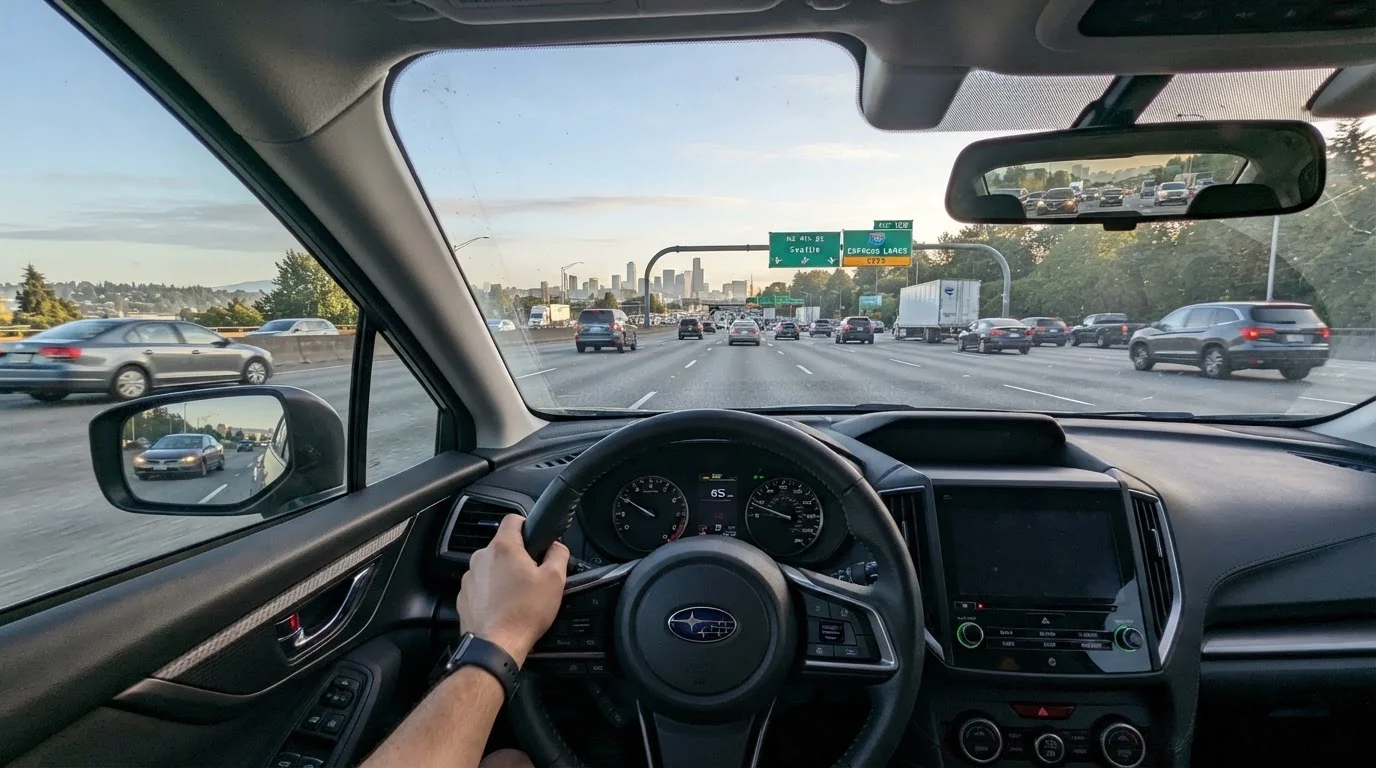
Key Takeaways
- Defensive driving is a proactive mindset, not just cautious speed or following distance.
- Scanning ahead and managing space around your vehicle are its two most critical habits.
- Driver impairment - including fatigue - undermines defensive driving ability significantly.
- Vehicle condition directly affects how well defensive techniques translate to outcomes.
- Formal defensive driving courses are available in all US states and recognized by many insurers.
Defensive Driving
Defensive driving is a set of skills and habits that help drivers anticipate hazards, respond to unpredictable conditions, and reduce the risk of collisions - regardless of what other drivers or road conditions do. It goes beyond following traffic laws; it means actively managing your environment behind the wheel. The goal is to create time and space to react safely before a problem becomes a crash.
Defensive driving principles are codified in programs recognized by the National Safety Council (NSC) and the American Automobile Association (AAA), and completing an approved course can sometimes qualify drivers for insurance discounts - though outcomes vary by insurer and state.
More Than Caution: What Defensive Driving Actually Is
Most drivers think of defensive driving as simply "going slow" or "being careful." In practice, it is a structured approach to operating a vehicle that emphasizes anticipation over reaction. A defensive driver does not wait for a hazard to appear and then respond - they continuously read the road, predict potential problems, and position themselves to avoid those problems before they develop.
The core premise is that you cannot control other drivers, road surfaces, weather, or mechanical failures - but you can control your own awareness, positioning, and decision-making. That shift in responsibility is what separates defensive driving from ordinary rule-following.
Defensive Driving Is Not Passive Driving
A common misconception is that defensive drivers are slow or overly hesitant. In reality, defensive driving often means making confident, assertive decisions - changing lanes decisively, maintaining appropriate highway speeds, and communicating clearly with signals. Hesitancy or unpredictability can itself create hazards for other road users.
It is worth distinguishing defensive driving from both passive driving (which can mean being overly hesitant or unpredictable) and aggressive driving (which reduces everyone's margin for error). Defensive driving is assertive and deliberate - not timid or reckless.
The Core Principles in Practice
Defensive driving is built on a handful of habits that, practiced consistently, significantly change how a driver interacts with road risk.
- Scanning ahead: Look 10-15 seconds down the road - roughly a city block in urban driving, farther on highways. This gives your brain time to process developing situations rather than reacting to sudden ones.
- Managing space: Keep a cushion around all sides of your vehicle. The 3-second following distance rule (extend to 4-6 seconds in rain or low visibility) is a baseline, not a maximum.
- Eliminating distractions: Phones, navigation adjustments, and conversations all pull attention away from the road. Defensive driving demands that your primary task remains the road.
- Anticipating others' errors: Assume the driver ahead may brake suddenly, that a pedestrian may step off the curb, or that a merging vehicle didn't see you. This is not paranoia - it is calculated readiness.
- Adjusting to conditions: Speed limits are set for ideal conditions. Rain, fog, glare, heavy traffic, and fatigue all demand speed and following-distance adjustments beyond the posted limit.
Build the Habit Before You Need It
Defensive driving habits are most useful when they are automatic - not when you have to think about them under stress. Practice scanning ahead, checking mirrors every 5-8 seconds, and adjusting following distance on every drive, not just when conditions feel risky. Consistency is what converts knowledge into actual safety.
How Vehicle Condition Affects Defensive Driving
Technique only goes so far if the vehicle itself cannot respond reliably. Tire condition is particularly critical - worn tread or improper inflation extends stopping distances and reduces handling in emergencies. See our guide to tire pressure, tread, and rotation for the maintenance basics every driver should know.
Dashboard warning lights are another layer of awareness. A vehicle pulling to one side, a brake warning light, or a tire pressure indicator are all signals that your safety margin is already narrowed before you encounter a hazard. Our dashboard warning lights reference explains which indicators require immediate attention.
~94%
Crashes with human behavior as a factor
The National Highway Traffic Safety Administration (NHTSA) has attributed roughly 94% of serious crashes primarily to human choices or errors, underscoring why driver behavior - not just road design - is the central safety variable.
3 sec
Minimum recommended following distance
The National Safety Council recommends a minimum 3-second following distance under normal conditions, increasing to 4-6 seconds in rain, fog, or reduced visibility.
~1 in 6
Fatal crashes involving drowsy driving
The AAA Foundation for Traffic Safety estimates that drowsy driving is a factor in roughly 1 in 6 fatal crashes in the US, though the figure may be underreported due to detection challenges.
Impairment, Fatigue, and the Limits of Good Intentions
Even a driver who understands every defensive driving principle can fail to apply them if they are impaired. Fatigue is one of the most underestimated factors - it degrades reaction time, narrows attention, and impairs judgment in ways that closely parallel alcohol intoxication, yet drivers frequently underestimate how tired they actually are. Our article on how fatigue impairs driving covers the warning signs in detail.
Conditions like low light introduce separate challenges. The visual demands of night driving require specific adjustments to speed, headlight use, and following distance that go beyond standard defensive habits.
Defensive driving is also a skill that benefits from formal instruction. Structured courses - offered through the NSC, AAA, and state-approved programs - provide feedback and scenario training that self-guided practice alone cannot replicate. For drivers still building foundational skills, building confidence beyond the license test offers a practical starting point.