

Key Takeaways
- A brief squeal after sitting overnight is usually harmless surface rust burning off the rotors.
- Continuous squealing while braking typically means worn brake pads triggering their built-in wear indicator.
- Grinding sounds suggest metal-on-metal contact - a situation requiring immediate professional inspection.
- Ignoring brake noise can escalate a minor pad replacement into a far more expensive rotor or caliper repair.
- Not all brake noise is dangerous, but a qualified mechanic should evaluate any sound that persists.
What Brake Noise Is Actually Telling You
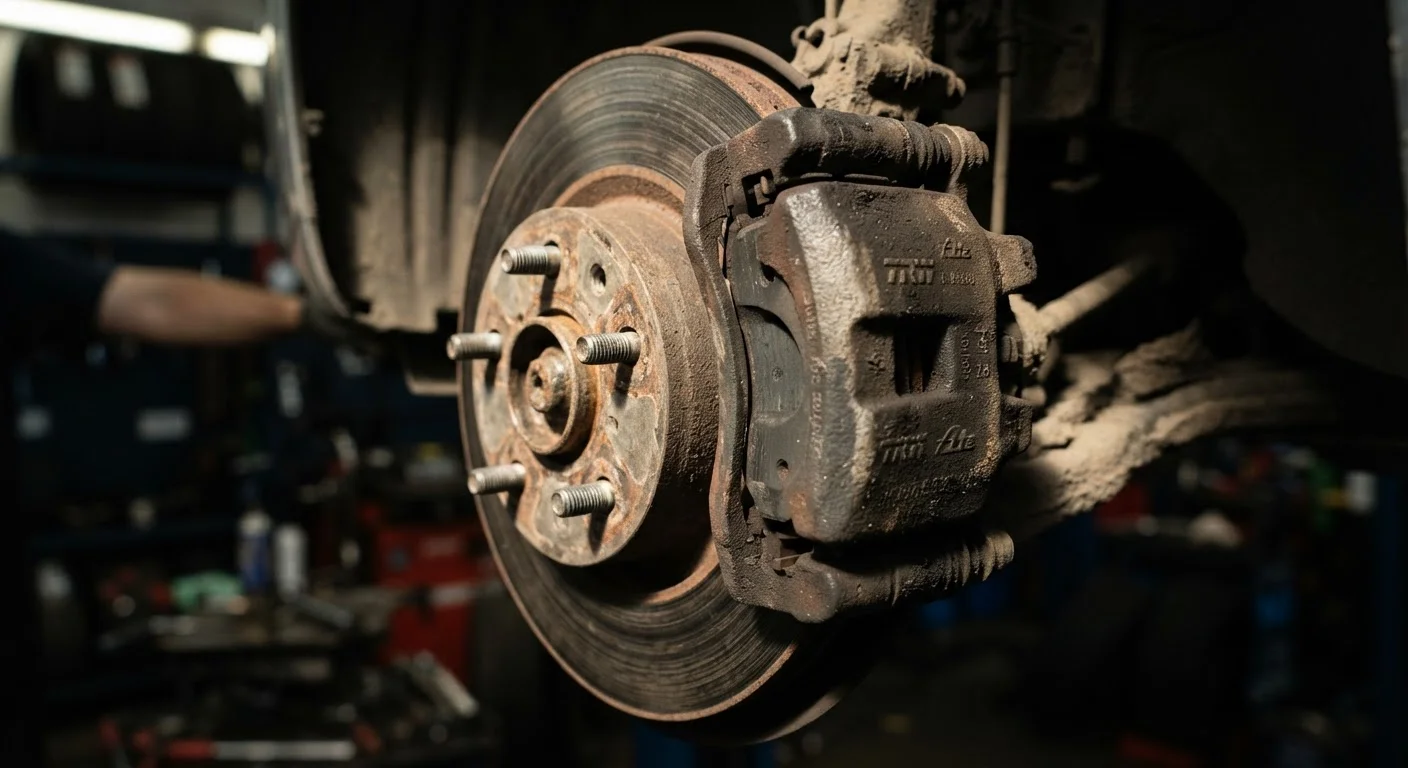
Brakes are designed to make noise when something is wrong - that's intentional engineering, not a flaw. Most modern brake pads include a small metal tab called a wear indicator. When the friction material wears down to a critical threshold, that tab contacts the rotor and produces the high-pitched squeal many drivers recognize. Think of it as a built-in alert system.
However, not every squeal signals danger. A light screech during the first few stops of the morning - especially after rain or overnight parking - is often just surface rust on the rotor face. It typically clears within a stop or two. The distinction that matters most: occasional and brief versus consistent and persistent.
Grinding, on the other hand, is a different category entirely. That low, harsh sound usually means the pads are fully depleted and metal is contacting metal. At that stage, the rotor itself may be getting damaged, and stopping distances can increase. This warrants prompt attention from a mechanic - not a wait-and-see approach.
Don't Silence the Symptom
It can be tempting to turn up the radio when brakes squeal. Noise that persists across multiple drives over several days is not background noise - it's a maintenance signal. Delaying inspection rarely saves money; it usually increases repair scope and cost.
Common Mistakes Drivers Make With Brake Noise
Brake-related errors tend to follow predictable patterns. Most stem from misreading the signal, delaying action, or overcorrecting. Recognizing these mistakes early can protect both your safety and your wallet.
Assuming all brake noise is normal and ignoring it indefinitely.
Why it happens: Drivers often recall a time when a squeal went away on its own - usually the morning rust scenario - and apply that logic to every subsequent noise.
Waiting until brakes grind before scheduling service.
Why it happens: Without a clear cost or timeline associated with squealing, many drivers postpone the appointment, hoping the noise is minor.
Confusing brake noise with other suspension or wheel-bearing sounds.
Why it happens: Worn wheel bearings and loose brake dust shields can mimic brake squeal, leading drivers to either ignore genuine brake wear or chase the wrong repair.
Skipping brake inspections during routine oil changes or tire rotations.
Why it happens: Drivers focus on the scheduled service at hand and don't think to request a brake check unless a noise is already present.
Applying aftermarket sprays or lubricants to silence the noise without diagnosing the cause.
Why it happens: Products marketed to quiet brake squeal are widely available, and drivers understandably prefer a quick fix over an uncertain repair bill.
Staying informed also means knowing how brake service fits into your broader upkeep routine. The brake inspection intervals in your owner's manual exist for good reason - they're calibrated to typical wear rates for your specific vehicle.
When to Stop Driving and Seek Help Immediately
Some brake symptoms cross the line from "schedule a service" into "stop driving now." If you notice any of the following, pull over safely and arrange a tow or professional inspection before continuing to drive:
- Grinding that gets worse under braking pressure - rotor damage may already be occurring.
- A pulsating or vibrating brake pedal - can indicate warped rotors or a brake system imbalance.
- The vehicle pulling sharply to one side when braking - may point to a stuck caliper or uneven pad wear.
- A soft or spongy pedal that sinks toward the floor - a potential sign of brake fluid loss or air in the hydraulic lines.
These are not symptoms to monitor over several days. Your vehicle's braking system is its most critical safety mechanism, and degraded performance has direct consequences for stopping distance.
If a shop recommends brake work and the diagnosis feels unclear, it helps to know how to distinguish legitimate recommendations from unnecessary upsells. An informed driver asks questions - and a trustworthy shop welcomes them.
Grinding Brakes Are a Safety Emergency
If your brakes are grinding consistently, the friction material is likely gone and metal components are contacting each other directly. This condition can compromise your ability to stop safely and should be evaluated by a qualified mechanic as soon as possible - not deferred until a convenient appointment slot opens up.
Brake maintenance doesn't exist in isolation. Keeping track of all your vehicle's service intervals - including brakes, tires, and fluids - is easier when you understand what your car's maintenance schedule actually means. And if a dashboard warning light appears alongside brake noise, consult this plain-language guide to dashboard warning lights to interpret what your vehicle is communicating.