

Key Takeaways
- Most puppies and kittens need vet visits every 3-4 weeks until around 16 weeks of age for their vaccine series.
- Core vaccines, parasite prevention, and a baseline physical exam are the three pillars of first-year care.
- Spaying or neutering timing should be discussed with your vet, as recommendations vary by species, breed, and size.
- Microchipping significantly increases the chance of reuniting with a lost pet.
- Preventive care in year one costs far less than treating illnesses that could have been caught early.
Start here
Why the First Year Sets the Foundation
Next
The First Wellness Visit: What to Expect
Then
Core Vaccines and the Puppy or Kitten Series
Essential
Parasite Prevention From Day One
Important milestone
Spay, Neuter, and Microchipping
Ongoing
Building Healthy Habits Beyond the Clinic
Why the First Year Sets the Foundation
The decisions you make in your pet's first twelve months - when they start vaccines, whether they're screened for parasites, how early you establish a vet relationship - shape their long-term health trajectory in concrete ways. This isn't about being an anxious pet parent; it's about understanding that puppies and kittens have immune systems still learning to protect them, and that many preventable conditions are far easier and less costly to avoid than to treat.
Think of the first year as building a medical baseline. Your veterinarian gets to know your pet's normal weight, heart rate, coat condition, and temperament. That context makes it easier to detect subtle changes later. For guidance on how that baseline evolves over your pet's life, see our guide to nutrition across life stages - because health and diet are closely linked from day one.
Core vaccines
Vaccines recommended for all pets of a given species, regardless of lifestyle, because the diseases they protect against are serious, widespread, or transmissible to humans.
Non-core vaccines
Optional vaccines recommended based on a pet's specific lifestyle, environment, or risk - for example, Lyme disease vaccine for dogs with tick exposure.
Maternal antibodies
Protective proteins passed from a mother to her offspring through milk. They provide early immunity but fade over weeks, which is why a series of vaccines is needed.
Body condition score (BCS)
A standardized scale (usually 1-9) vets use to assess whether a pet is underweight, at an ideal weight, or overweight based on visual and physical cues.
Heartworm
A parasitic worm transmitted by mosquitoes that lives in the heart and pulmonary arteries of dogs and, less commonly, cats. Preventable with monthly medication; difficult and costly to treat.
Microchip
A tiny electronic chip implanted under a pet's skin that carries a unique ID number linked to owner contact information in a national registry.
The First Wellness Visit: What to Expect
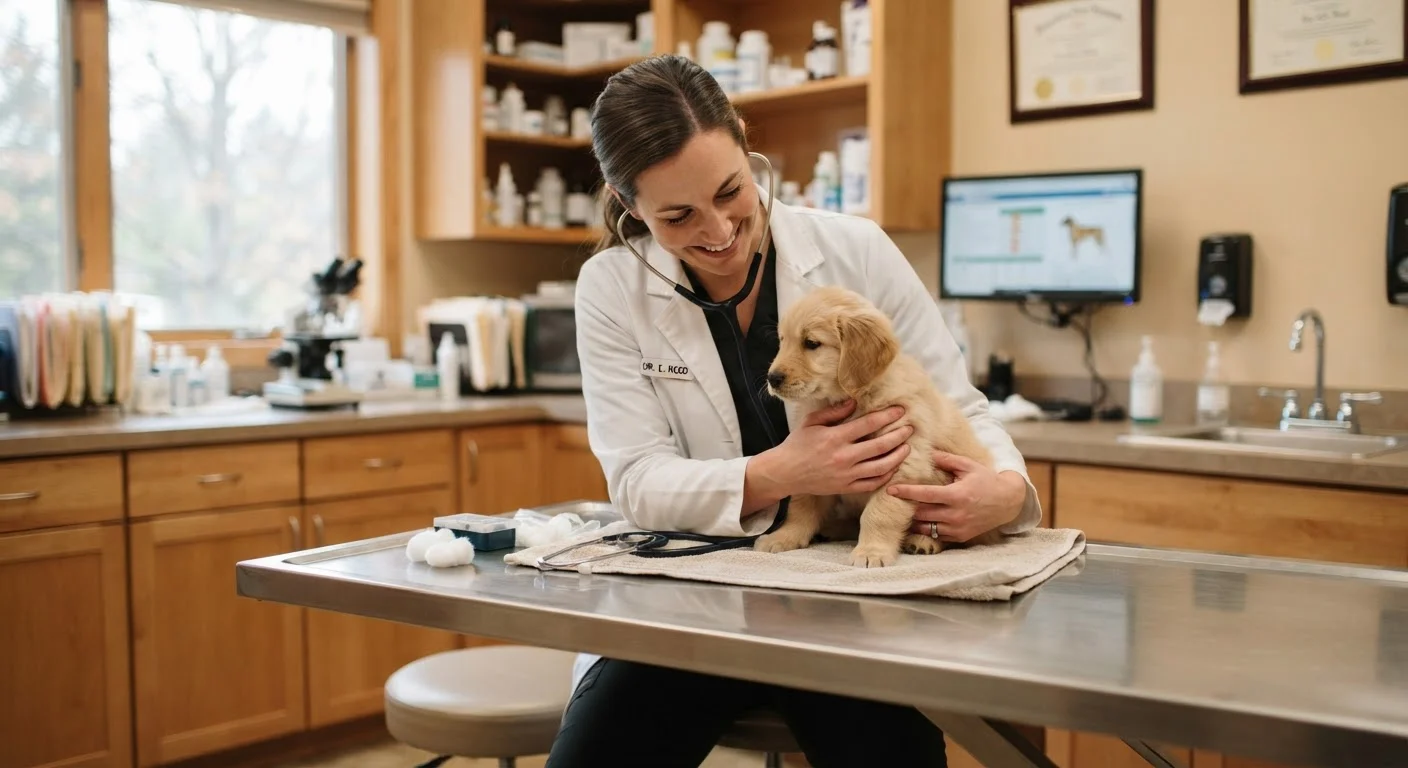
Your pet's first wellness exam is a head-to-tail physical assessment. The vet will check eyes, ears, teeth, skin, lymph nodes, heart, and lungs; assess body condition score; and look for any signs of congenital issues. For young animals, the vet will also review the vaccine history from the breeder or shelter and plan the schedule going forward.
Come prepared. Bring any paperwork from the breeder, rescue, or shelter - especially prior vaccine records - and a fresh stool sample for intestinal parasite screening. Write down behavioral observations you've made at home: appetite, energy level, litter box or bathroom habits, and any concerns. For a deeper look at what these appointments involve as your pet matures, our annual vet visit explainer walks through every stage of a routine exam.
Bring a written list of questions
First-time vet visits can feel overwhelming, and it's easy to forget what you wanted to ask once you're in the exam room. Jot down any behavioral quirks, dietary concerns, or worries beforehand. Your vet would rather answer ten questions than have you leave uncertain about something important.
Core Vaccines and the Puppy or Kitten Series
Young animals receive maternal antibodies through their mother's milk, but those antibodies fade - and until they do, they can also interfere with vaccine effectiveness. This is why puppies and kittens need a series of vaccines spaced 3-4 weeks apart (typically from 6-8 weeks through 16 weeks), rather than a single shot.
Core vaccines for dogs include distemper, parvovirus, adenovirus (sometimes grouped as the DA2PP or DHPP combination), and rabies. Core vaccines for cats include panleukopenia, feline herpesvirus type 1, calicivirus (grouped as the FVRCP combination), and rabies. Your vet may also recommend non-core vaccines - such as Bordetella for dogs or feline leukemia virus (FeLV) for cats with outdoor exposure - based on your pet's lifestyle and risk factors.
Rabies vaccination is legally required in most U.S. states for both dogs and cats. Confirm the requirements in your county and keep your pet's certificate on file.
Parasite Prevention From Day One
Fleas, ticks, heartworm, and intestinal parasites aren't just seasonal nuisances - they can cause serious illness, and some (like roundworms and certain tick-borne pathogens) are transmissible to people. Prevention is far simpler than treatment, and most vets recommend starting appropriate products as early as 6-8 weeks of age for puppies and around 8 weeks for kittens, depending on the product and the animal's weight.
Heartworm disease - transmitted by mosquitoes - is particularly insidious because it's asymptomatic until significant damage has occurred. Monthly preventives are highly effective; treatment of an active infection is lengthy, expensive, and hard on the animal. For a thorough overview of year-round prevention strategies, see our parasite prevention guide.
Never use over-the-counter products without vet guidance
Some flea and tick products formulated for dogs are toxic to cats - sometimes fatally so. Certain over-the-counter dewormers also address only a narrow range of parasites, leaving others untreated. Always confirm any parasite prevention product with your veterinarian before use.
Spay, Neuter, and Microchipping
Spaying (females) and neutering (males) carry health benefits beyond population control - including reduced risk of certain cancers and infections - but timing is no longer one-size-fits-all. Current veterinary guidance suggests that for large and giant-breed dogs in particular, waiting until skeletal maturity may reduce certain orthopedic risks. Discuss the right timing for your specific pet with your vet; breed, sex, and intended lifestyle all factor in.
Microchipping is a simple, permanent form of identification: a rice-grain-sized chip implanted under the skin, typically between the shoulder blades. Studies consistently show that microchipped pets are reunited with their owners at significantly higher rates than non-chipped pets. The procedure takes seconds and can often be done during a routine visit or spay/neuter procedure. Register the chip in a national database and keep your contact information current - the chip is useless if the registry entry is blank or outdated.
Building Healthy Habits Beyond the Clinic
Veterinary care is one pillar of pet health - what happens at home matters just as much. Establishing a dental hygiene routine early (tooth brushing, dental chews, or water additives as directed by your vet) prevents periodontal disease, which is among the most common health issues in companion animals. Weight monitoring at home between visits helps you catch gradual changes that are easy to miss day-to-day.
Behavioral health is equally important. Puppies have a narrow socialization window - roughly up to 12-14 weeks - during which positive exposure to people, environments, and other animals shapes their temperament for life. Our puppy socialization guide covers how to navigate that window carefully. If you're bringing a new pet into a home with resident animals, a thoughtful introduction process matters too - see our guide to introducing pets.
Understanding the difference between preventive and reactive care is also worth your time - this overview of preventive vs. reactive care explains how the two approaches differ and why the first-year investment pays dividends long-term.
This article is for general informational and educational purposes only and is not a substitute for professional veterinary advice, diagnosis, or treatment. Always consult a licensed veterinarian for guidance specific to your pet's health needs.