

Key Takeaways
- Rushing introductions is the single most common cause of lasting inter-pet conflict.
- A phased approach - scent first, sight second, contact last - mirrors how animals naturally establish familiarity.
- Separate feeding stations and safe retreat spaces reduce competition stress significantly.
- Most dogs and cats require one to three weeks of gradual exposure before free-roaming together safely.
- Regression is normal; slowing down the process is more effective than pushing through tension.
What you will need
Why Most Pet Introductions Go Wrong
The most common mistake owners make is treating a pet introduction as a single event rather than a process. Allowing animals to meet face-to-face immediately - even when both appear friendly - skips the sensory scaffolding that animals rely on to establish safety. The result is often a territorial response, fear-based aggression, or chronic avoidance that becomes difficult to reverse.
Animal behavior science consistently shows that dogs, cats, and many small mammals assess novelty through scent before they process visual or auditory information. An introduction that starts with smell and progresses to sight, then touch, mirrors the natural sequence these animals use. Skipping steps compresses a process that evolution built to take time.
It's also worth noting that the resident animal's experience matters as much as the newcomer's. A pet that has had exclusive access to a home, its owner's attention, and its own resources is undergoing a significant disruption. Framing the introduction around both animals - not just helping the new one settle in - tends to produce better outcomes for the household as a whole. For broader context on keeping all your pets healthy through transitions, explore the Pet Health & Care hub.
Health Check Before Any Introduction
Before bringing a new pet home, ensure both animals are up to date on vaccinations and have been evaluated by a veterinarian. Introducing an unwell or unvaccinated animal can put your resident pet at risk. Review your first-year veterinary roadmap to understand what health milestones matter most early on.
What You'll Need Before You Begin
Successful introductions depend less on luck and more on preparation. Having the right physical setup in place before the new animal arrives removes a significant source of stress for everyone involved - including you.
What you will need
Baby gate or pet barrier
Allows animals to see and smell each other without the risk of direct physical contact during early introduction phases.
Separate feeding bowls and water dishes
Prevents resource competition, which is a primary driver of aggression between newly introduced animals.
Pheromone diffuser
Species-specific synthetic pheromone products may help reduce ambient anxiety in the home during the transition period.
Bedding or worn cloth item
Used for scent swapping between animals before they meet face to face.
Treat pouch
High-value treats reinforce calm behavior during controlled visual introductions.
Use Feeding Time as a Positive Association Tool
Feeding each animal on opposite sides of a closed door is one of the most effective ways to build positive scent associations. Over several days, gradually move the bowls closer to the door so each animal learns that the other's smell predicts something good - food - rather than threat.
If your new pet is arriving from a shelter or foster situation and showing signs of anxiety or shutting down, the strategies in this guide still apply - but you may need to move more slowly. Our article on building trust with fearful rescue animals offers complementary guidance for those situations.
The Phased Introduction Process
The steps below outline a structured, behavior-informed approach that applies broadly to dog-dog, cat-cat, and cat-dog introductions. Timelines are approximate - let the animals' behavior guide your pace, not the calendar.
Set up a dedicated space for the new animal
Before your new pet arrives, prepare a room they will occupy exclusively for the first several days. This space should include food, water, a litter box (for cats), bedding, and enrichment appropriate to the species. Keep the door closed at all times to prevent unsupervised contact with the resident animal.
This confinement period is not punishment - it gives both animals time to process each other's presence through scent alone, which is far less threatening than visual or physical contact.
Begin scent swapping systematically
Over days two through four, exchange bedding or soft toys between the two animals daily. Observe each animal's response: sniffing calmly, rubbing against the item, or showing mild curiosity are positive signs. Growling, prolonged hissing, or avoidance suggest more time is needed before progressing.
Do not rush this phase. Scent is the primary sensory channel through which most mammals establish familiarity, and bypassing it increases the likelihood of a tense first visual encounter.
Introduce scent through a shared boundary
Once both animals are responding to scent items with at least neutral curiosity, allow them to sniff each other under a closed door. You can facilitate this by placing high-value treats near the base of the door for both animals simultaneously. Brief, relaxed sniffing followed by disengagement is the ideal response.
Continue this door-feeding exercise for two to three days before advancing. This is also the phase in which you can try feeding meals on opposite sides of the door, gradually moving bowls closer over time.
Move to controlled visual contact
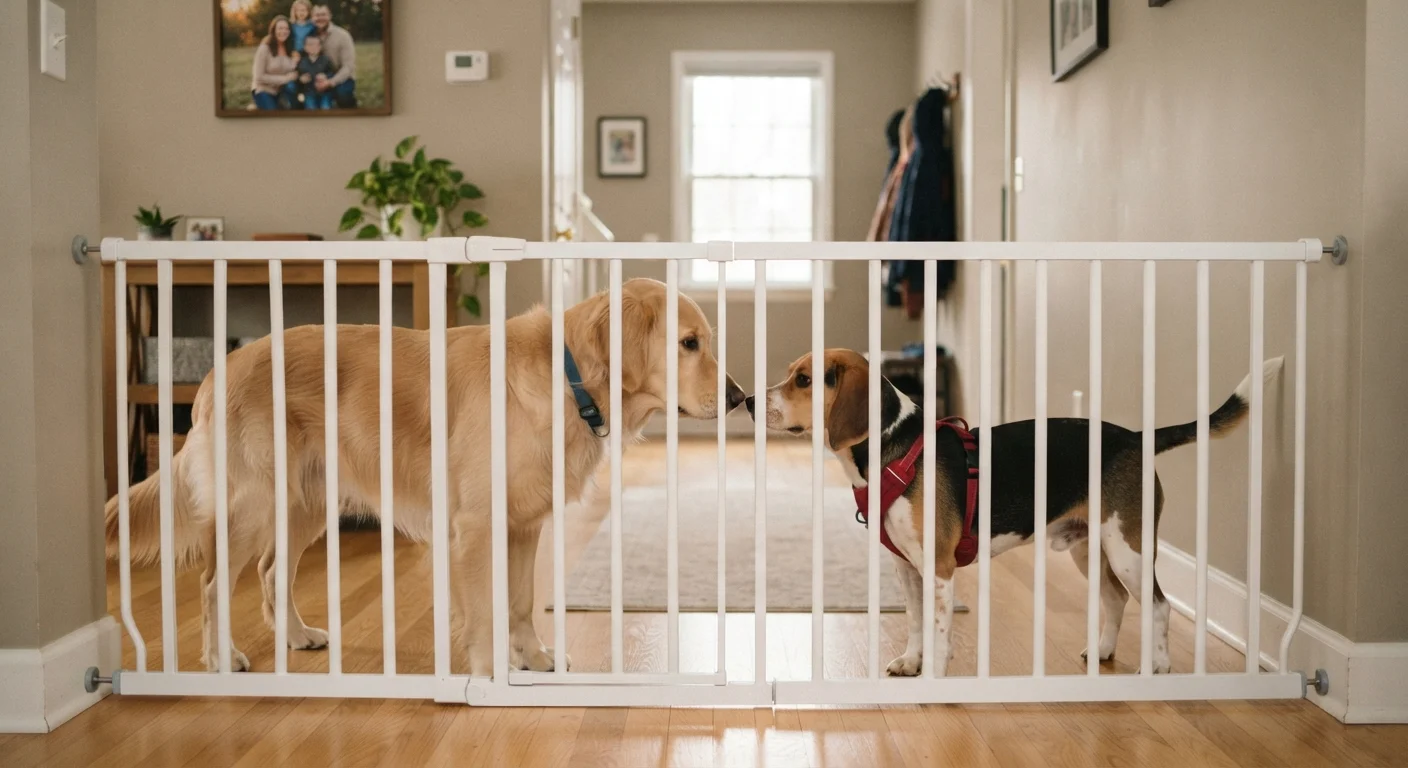
Replace the closed door with a baby gate or cracked door that allows visual access without physical contact. Keep initial sessions short - three to five minutes - and have a second person present if possible so each animal has a calm handler nearby.
Reward relaxed, curious behavior with treats and quiet praise. End each session before either animal shows signs of stress. Gradually extend session length over several days as both animals demonstrate comfort.
Allow supervised shared space
When both animals can be in visual proximity without sustained stress signals, allow brief supervised sessions in a shared neutral space. Keep leashes on dogs during this phase for easy management, and ensure cats have elevated escape routes available. Do not confine either animal - the ability to move away is critical for both.
Supervise every interaction closely. Most animals benefit from multiple short sessions spread across several days before longer contact is appropriate. Do not leave them unsupervised until you are confident conflict is unlikely.
Maintain separate resources and monitor long-term
Even after the introduction is considered successful, keep feeding stations, water bowls, and resting spaces separate and plentiful. Resource competition is one of the most common drivers of ongoing conflict in multi-pet households, and it is entirely preventable through thoughtful setup.
If you notice regression - renewed tension, resource guarding, or avoidance - slow the process back down rather than pushing through it. For animals with a history of fear or trauma, the timeline may be longer. The guidance in our article on bonding with shy or fearful rescue animals may be particularly relevant in those cases.
Never Force Direct Contact
Pushing animals together before they are ready can cause defensive aggression, lasting fear, or injury. A single traumatic encounter can undo weeks of careful progress. If either animal freezes, growls, hisses, or tries to flee, separate them calmly and return to the previous phase of introduction.
Once your animals are coexisting comfortably, keep in mind that other household changes - new food, a move, a change in routine - can temporarily increase tension. A gradual approach to those transitions helps too. Our guide on transitioning pets to a new food is a useful reference for managing one of the most common stressors in multi-pet households.
This article provides general educational information about animal behavior and is not a substitute for personalized guidance from a veterinarian or certified animal behaviorist. If your animals display persistent aggression or significant distress during introductions, consult a qualified professional.