

Key Takeaways
- The socialization window closes around 12-16 weeks, making early positive exposure critical for lifetime temperament.
- Quality of each social experience matters far more than quantity or speed.
- Stress signals like tucked tails or whale eye mean it's time to slow down or stop.
- Pair every new exposure with calm praise or high-value treats to build positive associations.
- Avoid dog parks and crowded public spaces until your puppy's vaccine series is complete.
What you will need
Why the Socialization Window Is So Important
Between roughly 3 and 16 weeks of age, puppies go through a critical developmental period during which their brains are especially receptive to new experiences. What they encounter - and how those encounters feel - becomes a foundational reference for how they interpret the world as adult dogs. Positive exposure during this window lays the groundwork for a confident, adaptable temperament. Missed or negative experiences can contribute to fearfulness, reactivity, or avoidance behavior later in life.
This doesn't mean you need to rush your puppy through every possible scenario before week sixteen. It means being intentional. The goal isn't a checklist - it's a series of genuinely good impressions. If your puppy is already past the primary window, socialization is still valuable; it simply requires more patience and consistency. For guidance on fear-based behavior that may emerge if early socialization is incomplete, see our article on fear and aggression in dogs.
What you will need
How to Socialize Your Puppy Step by Step
The steps below follow a graduated exposure framework - starting with the least stimulating environments and building gradually toward busier, more complex ones. Move through them at your puppy's pace, not a calendar's.
Learn to read your puppy's stress signals
Before introducing anything new, learn what your puppy looks like when they're comfortable versus overwhelmed. Relaxed signs include loose body posture, soft eyes, and a gently wagging tail. Stress signals include yawning out of context, lip licking, tucked tail, whale eye (showing the whites of the eyes), flattened ears, and attempting to retreat. Recognizing these early lets you intervene before anxiety escalates.
Start with low-intensity, familiar environments
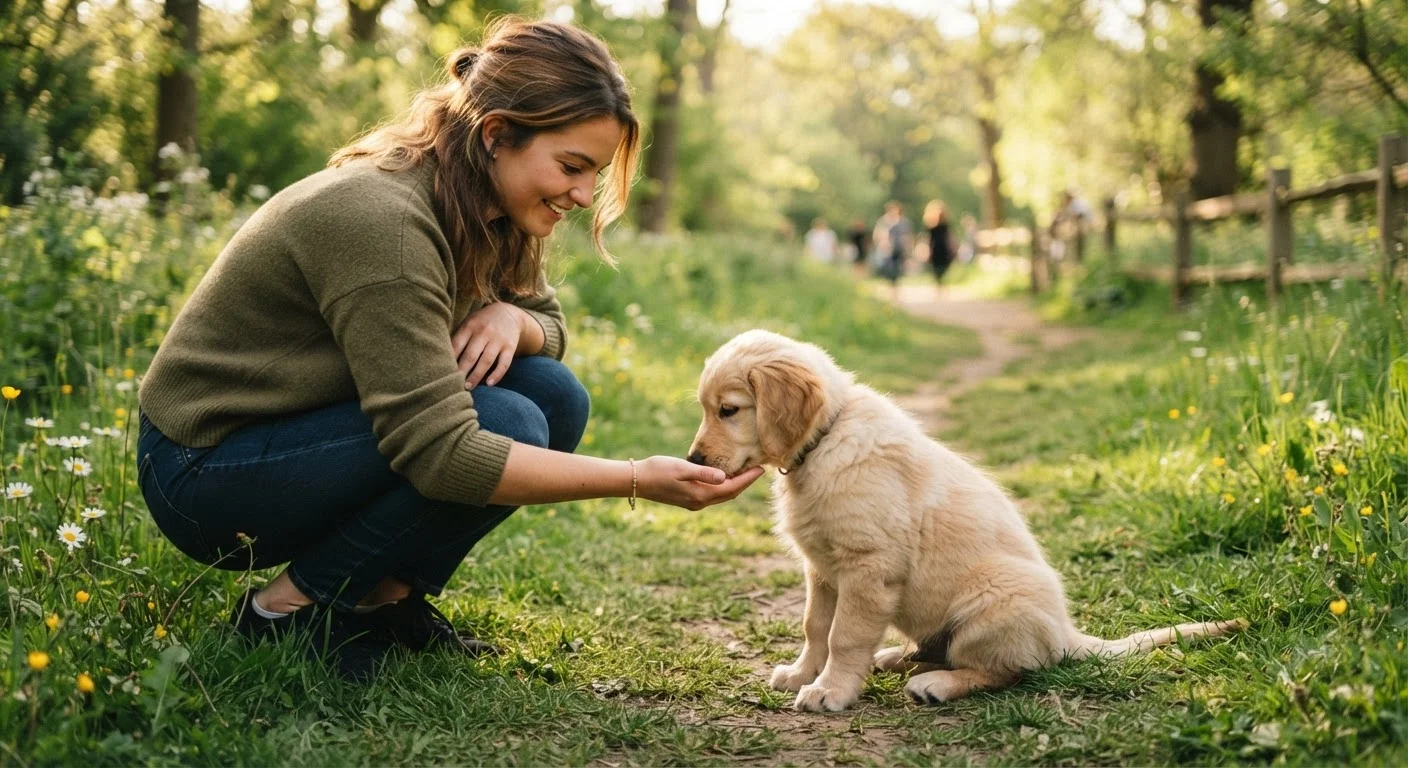
Begin socialization in your home and immediate yard, where your puppy already feels safe. Invite one calm, dog-experienced adult to visit. Keep the interaction brief - five to ten minutes - and allow your puppy to approach on their own terms. Don't allow visitors to rush in, crouch over the puppy, or make loud, sudden movements.
Gradually introduce novel sounds, surfaces, and objects
Expose your puppy to a variety of everyday stimuli indoors before venturing outside: vacuum cleaners running at a distance, umbrellas opening, hard floors, metal food bowls clanking. Pair each new sound or surface with treats and calm praise. The exposure should end while your puppy is still comfortable - not after they've become distressed.
Move to quiet outdoor environments
Once your puppy is comfortable with controlled indoor exposures, introduce quiet outdoor settings: a calm residential street, a friend's fenced yard, or a low-traffic park path during off-peak hours. Keep initial outings short (10-15 minutes). Let your puppy sniff, observe, and orient at their own pace. Avoid pulling them toward anything they're hesitant about.
Introduce well-matched dogs in controlled settings
Choose your puppy's early canine interactions carefully. A calm, vaccinated adult dog owned by someone you trust is far preferable to an off-leash encounter with an unknown dog. Keep initial meetings brief and on neutral ground. Watch both dogs' body language - play bows, relaxed movements, and mutual disengagement are positive signs. If either dog shows sustained tension, separate calmly and try again another day.
When you're ready to bring a second animal into your home permanently, our article on introducing a new pet to a resident animal outlines a phased approach that minimizes conflict.
Expand to busier environments progressively
As your puppy gains confidence, incrementally increase the complexity of exposures: a moderately busy sidewalk, a friend's home with children, a pet-friendly outdoor patio. Continue pairing each new setting with treats and upbeat, calm encouragement. Aim for several short positive outings each week rather than infrequent marathon sessions.
Puppy Classes Offer Dual Benefits
Structured puppy socialization classes, run by a certified trainer, provide controlled peer interaction and basic obedience foundations simultaneously. Look for classes that use reward-based methods and keep groups small. Ask your veterinarian for a referral if you're unsure where to start.
Troubleshooting Common Socialization Challenges
Even with a careful approach, some puppies resist certain experiences. A puppy that shuts down around strangers or barks at unfamiliar dogs isn't defiant - they're communicating discomfort. Respect that signal and back up a step.
Puppy freezes or refuses to move: Don't coax or drag. Give them a moment, then calmly redirect away from the trigger. Forcing forward increases anxiety.
Puppy is fixated or overstimulated rather than afraid: Excitement can look like confidence but still be overwhelming. Practice controlled approaches - sit, treat, walk away - rather than letting your puppy barrel into every encounter.
Progress feels slow: Some puppies are genetically predisposed to wariness. Progress measured in weeks rather than days is still progress. If fear responses are severe or escalating, consult a certified applied animal behaviorist or a veterinary behaviorist before the patterns solidify.
For puppies showing pronounced anxiety around departures or alone time, our guide on separation anxiety in dogs covers what those signals look like and how to respond. And because a well-socialized puppy is just one piece of a healthy first year, the new pet owner's veterinary care roadmap helps you stay on top of vaccines and wellness visits alongside your training efforts.
When to Involve a Professional
If your puppy shows intense fear responses - panic, aggression, or complete shutdown - in routine situations, consult a veterinary behaviorist or certified applied animal behaviorist promptly. Early professional intervention is significantly more effective than waiting. Your veterinarian can provide a referral.