

Key Takeaways
- Serving size controls every number on the label - always check it first before comparing products.
- % Daily Value of 5% or less signals low; 20% or more signals high for any given nutrient.
- Ingredients are listed by weight, so the first few items dominate the product's composition.
- Added sugars and sodium are the two numbers most Americans benefit from monitoring closely.
- Total carbohydrates include fiber, total sugars, and added sugars - read all three together.
What you will need
Why Nutrition Labels Deserve More Than a Glance
The Nutrition Facts label is a federally regulated document, not marketing material. Since its introduction in 1990 and significant redesign finalized around 2020, it has been structured to give consumers objective, standardized data about what they are eating. Yet most shoppers spend only a few seconds on it - often fixating on a single number like calories while ignoring equally important context.
Understanding the label's architecture makes the difference between using it as a genuine decision-making tool and being misled by surface-level figures. If you're new to thinking critically about food composition, our nutrition fundamentals primer provides useful grounding before you dive into label mechanics.
Labels Inform - They Don't Prescribe
Nutrition labels provide general population reference values, not personalized dietary targets. Individual needs vary based on age, health status, activity level, and medical history. For guidance tailored to your situation, consult a registered dietitian or your healthcare provider.
Front-of-Package Claims Can Mislead
Terms like "natural," "multigrain," or "low fat" appear on the front of a package but are not regulated with consistent nutritional meaning. A "low fat" product may be high in added sugars. Always flip to the Nutrition Facts panel and ingredient list for objective data rather than relying on front-label marketing language.
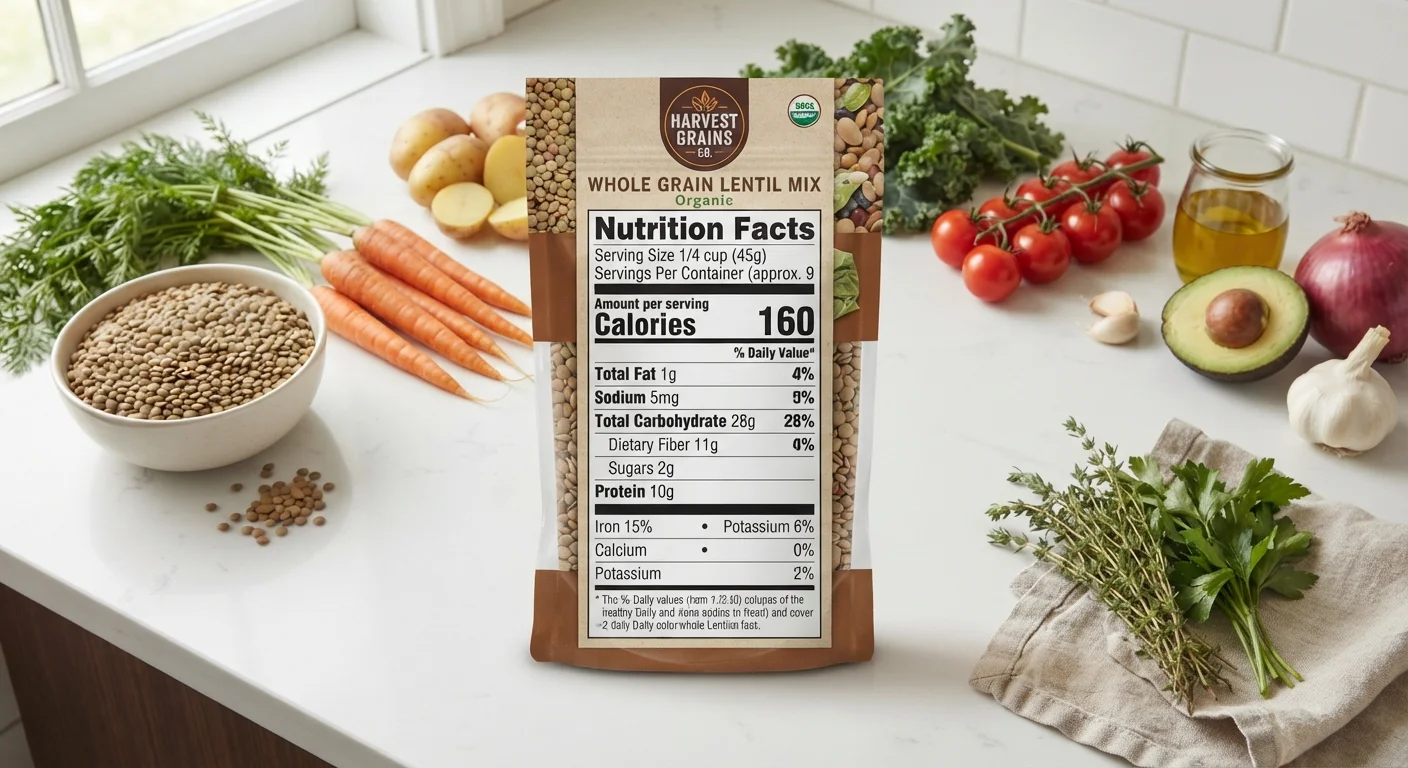
The steps below walk through each section of a standard Nutrition Facts label in the order it appears, explaining what each figure means and which ones deserve the most attention for everyday dietary decisions.
What You'll Need Before You Start
What you will need
Nutrition Facts Panel
The federally standardized label on packaged foods listing calories, macronutrients, micronutrients, and % Daily Values.
Ingredient List
Appears below the Nutrition Facts panel; lists every ingredient by descending weight so you can assess a product's true composition.
Calculator or Smartphone
Useful for multiplying per-serving values when you eat more or less than the stated serving size.
How to Read the Label: Step by Step
Start With Serving Size and Servings Per Container
The very first line of any Nutrition Facts label is the serving size - and it anchors every number that follows. If a bag lists a serving size of 1 oz (about 28 g) but contains 3.5 servings, eating the whole bag means multiplying every value by 3.5. The FDA updated label formatting in 2020 to make calories and serving sizes more prominent, but the arithmetic responsibility stays with the reader.
Check whether the serving size reflects how you actually eat the food. If it doesn't, adjust the numbers proportionally before drawing any conclusions.
Read Calories in Context
Calories measure the energy a food provides per serving. The label's calorie count is a starting point for understanding energy density, but a calorie figure alone says nothing about nutrient quality. A 200-calorie serving of nuts delivers fiber, protein, and healthy fats; 200 calories of a sugar-sweetened snack may offer little nutritional value beyond energy.
Calorie needs vary significantly by individual. The 2,000-calorie reference used on labels is a general population benchmark, not a universal prescription.
Examine Total Fat, Saturated Fat, and Trans Fat Separately
The label lists total fat first, then breaks it into subcategories. Saturated fat is the figure most relevant for cardiovascular health according to current dietary guidelines - most major health bodies recommend limiting it. Trans fat should ideally be zero; even small amounts from partially hydrogenated oils are associated with adverse cardiovascular outcomes in research literature.
Unsaturated fats (monounsaturated and polyunsaturated) are generally considered beneficial and are found in foods like nuts, seeds, and fish - though they still contribute calories. See our overview of what fats actually do in the body for deeper context.
Parse Carbohydrates: Total, Fiber, and Added Sugars
Total carbohydrates is an umbrella figure that includes dietary fiber, total sugars, and added sugars. These subcategories tell very different stories. Dietary fiber supports digestive health and is under-consumed by most American adults - look for foods that contribute meaningfully to the daily target. Our companion article on soluble and insoluble fiber explains the distinction in detail.
Added sugars - sweeteners added during processing, distinct from sugars naturally present in fruit or dairy - now have their own line on updated labels. Dietary guidance generally recommends keeping added sugars below 10% of total daily calories. Total sugars alone cannot tell you this; you need the added sugars line specifically.
Check Sodium and Prioritize % Daily Value
Sodium is expressed in milligrams per serving, and the reference daily intake is 2,300 mg for most adults. Many packaged foods contribute substantially to daily sodium even when a single serving seems modest. Use the % Daily Value (%DV) column to contextualize all nutrients at once: 5% DV or below is considered low; 20% DV or above is considered high. This rule applies across the entire label - not just sodium.
The %DV is calculated against a 2,000-calorie reference diet. If your caloric needs differ considerably, the absolute milligram or gram values may be more useful than the percentages.
Read the Ingredient List From First to Last
Ingredients are listed in descending order by weight - the first ingredient is the most abundant by mass. If whole wheat flour appears before enriched flour, whole grain dominates; if sugar appears in the first three ingredients of a product marketed as a health food, that's a meaningful signal. Our article on whole grains vs. refined grains explains why grain position in the ingredient list matters for fiber and micronutrient content.
Also scan for how many different names for added sugar appear (e.g., cane syrup, dextrose, maltose, fruit juice concentrate). Multiple sugar sources listed separately can collectively rank higher than any single ingredient shows.
Use the 5/20 Rule as a Quick Screen
When scanning a label quickly, apply the 5/20 rule: a % Daily Value of 5% or less means the food is low in that nutrient; 20% or more means it's high. Use this to limit saturated fat, sodium, and added sugars - and to seek out fiber, calcium, iron, and vitamin D.
For a richer understanding of how protein quality factors into label reading - beyond just grams - see our article on protein quality and amino acid profiles. And if you're curious how the same label-reading logic applies to other consumer products, the approach shares some parallels with reading a skincare ingredient list.
This article is for general informational and educational purposes only and does not constitute medical or dietary advice. Individual nutritional needs vary. Consult a registered dietitian or qualified healthcare professional for guidance tailored to your specific health circumstances.