

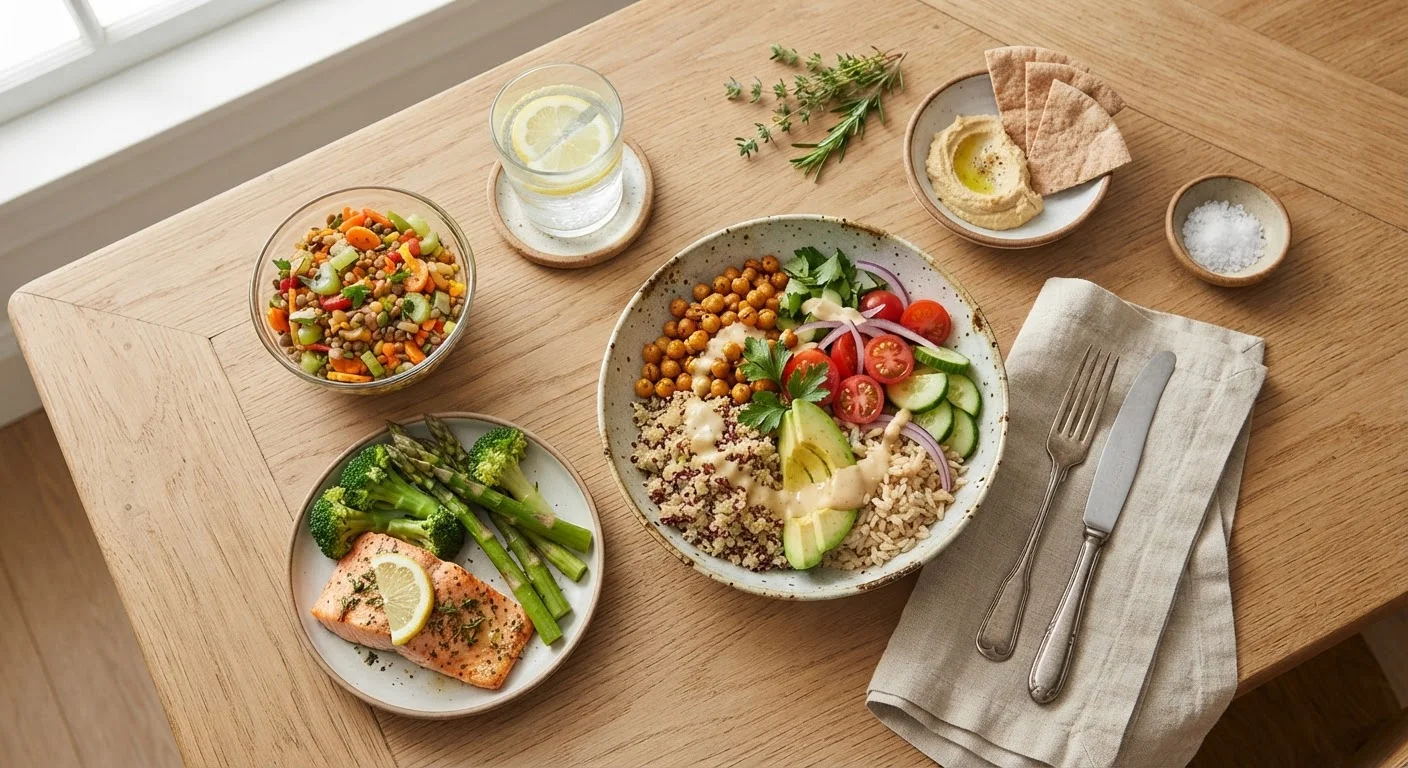
Key Takeaways
- Macronutrients provide energy; micronutrients support the processes that keep your body functioning.
- No single food group is inherently harmful - variety and balance drive long-term health outcomes.
- Portion awareness is about recognizing hunger and fullness signals, not rigid calorie counting.
- A sustainable eating pattern is one you can maintain - not one that demands perfection.
- Nutrition science evolves; building flexible habits is more durable than following strict rules.
Start here
What Nutrients Actually Do
Next
Understanding Food Groups
Then
Portion Awareness Without Obsession
Apply it
Building a Sustainable Baseline
What Nutrients Actually Do
Nutrition is the science of how food substances interact with your body to sustain life, growth, and function. Understanding a few core categories makes the rest far less overwhelming.
Macronutrients
The three main energy-providing nutrients in food: carbohydrates, proteins, and fats. Your body needs them in relatively large amounts daily.
Micronutrients
Vitamins and minerals your body needs in small amounts to carry out essential functions like immune defense, bone maintenance, and energy metabolism.
Dietary fiber
A type of carbohydrate found in plant foods that the body cannot fully digest. It supports digestive health, helps regulate blood sugar, and feeds beneficial gut bacteria.
Energy density
The number of calories a food contains relative to its weight or volume. Low-energy-dense foods let you eat a satisfying amount while consuming fewer calories.
Phytonutrients
Natural compounds found in plants - including pigments and antioxidants - that may support health, though they are not classified as essential nutrients.
Interoceptive awareness
Your ability to notice and accurately interpret internal body signals, such as hunger, fullness, and thirst, to guide eating decisions.
Macronutrients - carbohydrates, proteins, and fats - are the three classes of compounds your body uses for energy and structural purposes. Carbohydrates break down into glucose, the brain's primary fuel. Proteins supply amino acids, which your body uses to build and repair tissue. Dietary fats support cell membrane integrity, hormone synthesis, and the absorption of fat-soluble vitamins (A, D, E, and K).
Micronutrients - vitamins and minerals - do not provide calories but are indispensable for enzymatic reactions, immune function, bone density, and hundreds of other processes. Iron, for instance, is critical for oxygen transport; magnesium participates in over 300 enzymatic reactions. Deficiencies, even mild ones, can impair energy, cognition, and resilience over time.
Fiber, technically a carbohydrate, deserves its own mention. It slows digestion, supports blood glucose regulation, and feeds beneficial gut bacteria. For a deeper look at how your gut ecosystem responds to what you eat, see our article on the gut microbiome.
Understanding Food Groups
Food groups are a practical organizing system - not a hierarchy of virtue. Each group clusters foods that share a dominant nutritional profile, making it easier to check whether your overall pattern covers your bases.
- Vegetables and fruits supply vitamins, minerals, antioxidants, and fiber. Greater variety in color generally reflects greater variety in phytonutrients.
- Whole grains (oats, brown rice, quinoa, whole-wheat bread) provide sustained energy, B vitamins, and fiber. Refined grains retain energy but lose much of their fiber and micronutrient content during processing.
- Proteins include animal sources (meat, poultry, fish, eggs, dairy) and plant sources (legumes, tofu, tempeh, nuts, seeds). Not all protein sources deliver the same amino acid profile - our article on protein quality explains this distinction clearly.
- Dairy and fortified alternatives are primary sources of calcium and vitamin D for many people.
- Fats and oils are not a food group to minimize categorically. Unsaturated fats found in olive oil, avocado, and nuts are associated with cardiovascular benefit; saturated and trans fats warrant more moderation.
Think Patterns, Not Perfection
Instead of evaluating each meal in isolation, look at what you eat across a full week. A day with fewer vegetables is easily balanced by the surrounding days. This longer view reduces anxiety around individual food choices and supports a more relaxed, sustainable relationship with eating.
No single meal needs to be perfect. Nutritional adequacy emerges from patterns across days and weeks, not individual choices.
Portion Awareness Without Obsession
Portion size and energy density are closely linked concepts. Energy density refers to how many calories a food delivers per unit of weight or volume. Foods high in water and fiber - most vegetables, fruits, legumes - tend to be low in energy density, meaning a satisfying volume carries fewer calories. Conversely, foods high in refined starch or added fat pack more energy into smaller amounts.
Rigid calorie counting is one approach, but it is not the only one and can become counterproductive for some people. A practical alternative is developing interoceptive awareness - the ability to recognize and respond to the body's internal hunger and fullness signals. Eating slowly, minimizing screen-based distractions during meals, and pausing mid-meal to assess hunger are evidence-supported strategies for avoiding unintentional overconsumption.
Portion Tools Are Guides, Not Prescriptions
Visual portion guides (using your hand or a plate model) can be useful starting points, but individual energy needs vary significantly based on age, body size, activity level, and health status. Use general tools as orientation, not prescription, and consult a registered dietitian for personalized guidance.
Visual portion guides (using your hand or a plate model) can be useful starting points, but individual energy needs vary significantly based on age, body size, activity level, and health status. Use general tools as orientation, not prescription, and consult a registered dietitian for personalized guidance.
Building a Sustainable Baseline
The most nutritionally dense eating pattern is only effective if it is one you can actually maintain. Research on long-term dietary adherence consistently shows that flexibility, enjoyment, and social compatibility matter as much as technical nutritional adequacy.
A practical baseline might look like this: fill roughly half your plate with vegetables and fruit at most meals, include a quality protein source, choose whole grains when available, and limit ultra-processed foods - not because they are morally problematic, but because they tend to crowd out more nutrient-dense options. Hydration matters too; water supports digestion, temperature regulation, and cognitive function.
Approaching food decisions with the same structured intentionality you might bring to personal budgeting - knowing your inputs, understanding your needs, and making consistent small choices - can help translate nutritional knowledge into lasting behavior.
Nutrition science continues to evolve. What is durable is not any single rule but the habit of returning to foundational principles: variety, balance, moderation, and enjoyment. If you have specific health conditions, are pregnant, or are managing a chronic illness, personalized guidance from a registered dietitian or your physician is the appropriate starting point - not general articles like this one.
Dietary Guidelines for Americans
Published jointly by the U.S. Department of Agriculture and the Department of Health and Human Services, this evidence-based framework outlines recommended eating patterns for the general U.S. population across life stages.
MyPlate (USDA)
A visual, interactive tool that illustrates proportional food group targets and offers practical guidance for building balanced meals without complicated tracking systems.
Academy of Nutrition and Dietetics - Find a Dietitian
A searchable directory of registered dietitian nutritionists (RDNs) in the U.S., useful for connecting with a credentialed professional for personalized dietary guidance.
This article is for general informational and educational purposes only and does not constitute medical or dietary advice. Always consult a qualified healthcare professional before making significant changes to your diet, especially if you have an existing health condition.