

Key Takeaways
- The gut microbiome contains trillions of microorganisms from hundreds of different species.
- Microbial diversity - variety among species - is generally associated with better gut health outcomes in research.
- Diet, particularly fiber intake, is one of the most studied factors shaping microbiome composition.
- The gut-brain axis is an active research area exploring how gut microbes may influence mood and cognition.
- Current science is promising but still evolving; many microbiome-based health claims are not yet fully proven.
Gut Microbiome
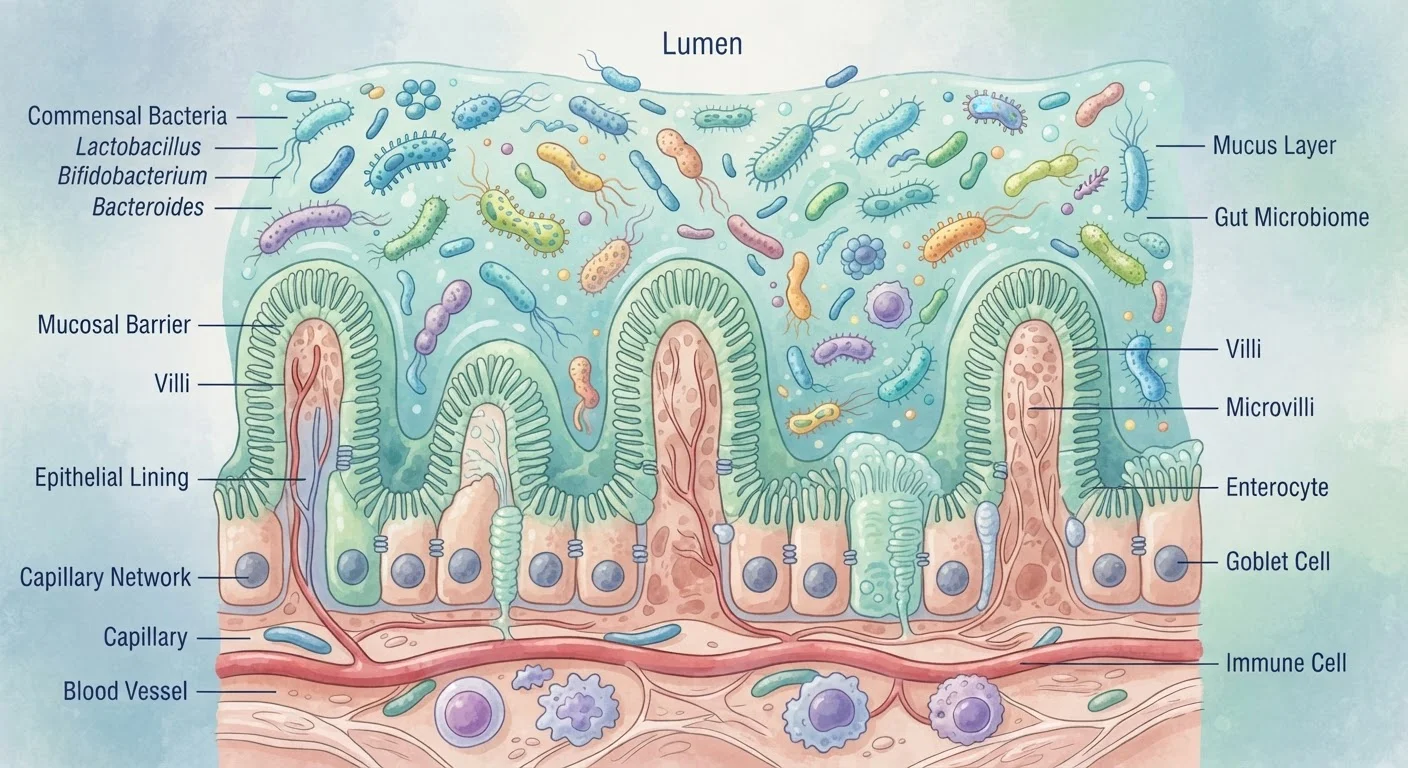
The gut microbiome is the vast community of microorganisms - including bacteria, fungi, viruses, and other microbes - that live in your digestive tract, primarily in the large intestine. These trillions of organisms are not passive residents; they actively participate in digestion, produce certain vitamins, train the immune system, and communicate with other body systems. Every person's microbiome has a unique composition shaped by genetics, diet, environment, and life history.
Researchers use the term 'microbiota' to refer to the organisms themselves and 'microbiome' to describe their collective genetic material and functional capacity, though in common usage the terms are often used interchangeably.
A Living Ecosystem Inside You
Your digestive tract is home to an estimated 38 trillion microbial cells - roughly equal in number to the human cells in your entire body. This community of bacteria, archaea, fungi, and viruses is collectively called the gut microbiome, and it is now one of the most actively studied systems in biomedical research.
The large intestine hosts the densest concentration of these organisms. Far from being inert passengers, they carry out biochemical work that our own cells cannot perform alone. They ferment undigested dietary fiber into short-chain fatty acids (SCFAs), which serve as an energy source for colon cells and have been linked to anti-inflammatory effects in research settings. They also contribute to synthesizing certain vitamins, including vitamin K and several B vitamins.
Understanding what your microbiome is - and what it is not - is a useful starting point before sifting through the growing volume of health claims surrounding it. To put it in broader nutritional context, see our nutrition fundamentals primer for grounding in how food choices interact with body systems.
Microbiome Research Is Moving Fast
The field of microbiome science has expanded dramatically since high-throughput DNA sequencing made it possible to identify microbial species without culturing them in a lab. Large-scale projects such as the Human Microbiome Project have generated enormous datasets, but translating findings into clinical recommendations remains a work in progress. Many discoveries are still at the hypothesis-generating stage.
Why Diversity Matters - and What Shapes It
One of the most consistent findings in microbiome research is that diversity - a broad range of different microbial species - tends to correlate with positive health markers. Populations with lower microbial diversity have been observed more frequently alongside conditions such as obesity, inflammatory bowel disease, and type 2 diabetes. Importantly, these are associations in observational data, not proven cause-and-effect relationships.
Several factors influence your microbiome's composition throughout life:
- Diet: The single most studied modifiable factor. Fiber-rich plant foods - vegetables, legumes, whole grains, and fruits - feed beneficial bacteria and support diversity. Processed foods low in fiber are associated with reduced diversity in large cohort studies.
- Antibiotic use: Antibiotics reduce populations of beneficial bacteria alongside harmful ones. Diversity often partially recovers, but recovery varies by individual.
- Birth and early life: Delivery method, breastfeeding, and early environment shape the initial microbial colonization of the infant gut.
- Physical activity: Emerging evidence suggests regular exercise is independently associated with greater microbial diversity, though research is still maturing.
Diet is especially actionable. The role of carbohydrates, proteins, and fats - particularly the distinction between digestible and fermentable carbohydrates - directly affects which microbes thrive.
~38 trillion
Microbial cells in the human gut
Estimates from a landmark 2016 study published in Cell suggest the ratio of microbial to human cells is approximately 1:1, revising earlier overestimates.
~1,000
Bacterial species identified in the gut
Large-scale sequencing efforts, including the Human Microbiome Project, have catalogued roughly 1,000 distinct bacterial species across studied populations, though individuals typically host a few hundred.
~70%
Immune cells located in or near the gut
According to established immunology literature, the gut-associated lymphoid tissue (GALT) houses a large majority of the body's immune cells, underscoring the microbiome's relevance to immune regulation.
The Gut-Brain Axis and Immune Connections
Two areas drawing significant scientific attention are the microbiome's relationship with the immune system and with the brain.
Roughly 70 percent of immune cells reside in or near the gut lining, where they are in constant contact with the microbiome. Research in both animal models and human studies suggests that gut microbes help calibrate immune responses - distinguishing harmless environmental substances from genuine threats. Disruptions to this relationship are an active area of investigation in autoimmune and allergic disease research.
The gut-brain axis - the bidirectional communication network linking the gut and the central nervous system - is perhaps the most widely publicized frontier. Gut microbes produce precursors to neurotransmitters such as serotonin and communicate with the brain via the vagus nerve. Preliminary human studies have explored connections between microbiome composition and conditions including depression and anxiety. However, most robust evidence still comes from animal studies, and translating these findings to human clinical practice requires considerably more research. Readers interested in mental wellness more broadly can explore our Mind & Mental Health hub.
“The gut microbiome has emerged as a key regulator of host physiology, influencing not just digestion but immunity, metabolism, and potentially brain function. We are only beginning to understand how to translate that knowledge into clinical practice.”
— Justin Sonnenburg, Professor of Microbiology and Immunology, Stanford University School of Medicine
What the Science Can - and Cannot - Yet Tell Us
Public interest in the gut microbiome has outpaced the evidence in several areas. Probiotic supplements, fermented foods, and specialized diets are frequently marketed with claims that exceed what current research supports. Here is an honest accounting of where the science stands:
- Established: Fiber-rich diets support microbial diversity; SCFAs from fermentation nourish colon cells; the microbiome plays a role in immune regulation.
- Emerging but not yet conclusive: Specific microbiome profiles as predictors of disease; probiotics as reliable treatments for most conditions; microbiome-based mood modulation.
- Unproven or overstated: That any single food, supplement, or protocol will definitively 'fix' or 'reset' your microbiome.
Focusing on dietary patterns with established benefits - adequate fiber from diverse plant sources - remains the most evidence-supported approach for supporting gut health. For perspective on how individual food components interact, our article on protein quality and digestibility illustrates how nutritional nuance applies across macronutrients.
Support Diversity Through Food Variety
Research consistently links dietary variety - especially a wide range of plant foods - to greater microbial diversity. Aiming for a broad range of vegetables, fruits, legumes, and whole grains over time is more meaningful than any single 'superfood.' This approach aligns with dietary patterns that show benefit across multiple health outcomes in large epidemiological studies.
This article is for general informational and educational purposes only and does not constitute medical advice. If you have specific digestive health concerns or symptoms, consult a qualified healthcare professional.