

| Recommended daily fiber intake (adults) | 22-38 grams/day (Dietary Guidelines for Americans, 2020-2025) |
| Average US adult daily fiber intake | ~15-16 grams/day (National Health and Nutrition Examination Survey (NHANES)) |
| Primary fiber subtypes | Soluble and insoluble |
| Top food sources | Legumes, whole grains, fruits, vegetables, nuts, seeds |
| Fermentable fiber type | Soluble fiber (produces SCFAs in the colon) |
| Fiber content in refined grains | Significantly reduced vs. whole grain equivalents |
What Dietary Fiber Actually Is
Dietary fiber is the collective term for plant-based carbohydrates that the human digestive system cannot fully break down. Unlike sugars and starches, fiber passes largely intact through the small intestine, where it performs a range of functions - depending on its type. Understanding fiber starts with recognizing that it isn't a single compound; it's a broad category with two functionally distinct subtypes. For context on how fiber fits within the broader macronutrient picture, see our guide to macronutrients.
| Recommended daily fiber intake (adults) | 22-38 grams/day (Dietary Guidelines for Americans, 2020-2025) |
| Average US adult daily fiber intake | ~15-16 grams/day (National Health and Nutrition Examination Survey (NHANES)) |
| Primary fiber subtypes | Soluble and insoluble |
| Top food sources | Legumes, whole grains, fruits, vegetables, nuts, seeds |
| Fermentable fiber type | Soluble fiber (produces SCFAs in the colon) |
| Fiber content in refined grains | Significantly reduced vs. whole grain equivalents |
Despite fiber's well-documented role in digestive, cardiovascular, and metabolic health, most US adults consume only about half of the recommended daily amount, according to data from the Dietary Guidelines for Americans. The gap exists largely because the modern diet draws heavily from refined and processed foods, which are stripped of their natural fiber content.
Soluble vs. Insoluble: How Each Type Works
Soluble fiber dissolves in water, forming a thick, gel-like substance in the digestive tract. This gel slows the absorption of glucose, which helps moderate blood sugar responses after meals. It also binds to bile acids - compounds derived from cholesterol - and carries them out of the body, a mechanism associated with modest reductions in LDL (low-density lipoprotein) cholesterol levels. Soluble fiber is also fermentable: gut bacteria break it down into short-chain fatty acids (SCFAs), which serve as fuel for colon cells and contribute to a balanced gut microbiome.
Dietary fiber
A group of plant-based carbohydrates resistant to digestion by human enzymes. Fiber passes through the digestive system largely intact and supports gut, cardiovascular, and metabolic health.
Soluble fiber
Fiber that dissolves in water to form a gel-like substance. It slows glucose absorption, binds cholesterol-derived bile acids, and is fermented by gut bacteria into short-chain fatty acids.
Insoluble fiber
Fiber that does not dissolve in water. It adds bulk to stool and speeds transit through the intestines, supporting regularity and reducing constipation risk.
Short-chain fatty acids (SCFAs)
Compounds produced when gut bacteria ferment soluble fiber. SCFAs serve as an energy source for colon cells and play a role in maintaining gut microbiome balance.
Beta-glucan
A soluble fiber found in oats and barley with well-documented evidence for modestly reducing LDL cholesterol when consumed regularly as part of a balanced diet.
LDL cholesterol
Low-density lipoprotein cholesterol, often called 'bad' cholesterol. Elevated LDL levels are associated with increased cardiovascular risk; soluble fiber can help modestly reduce circulating LDL.
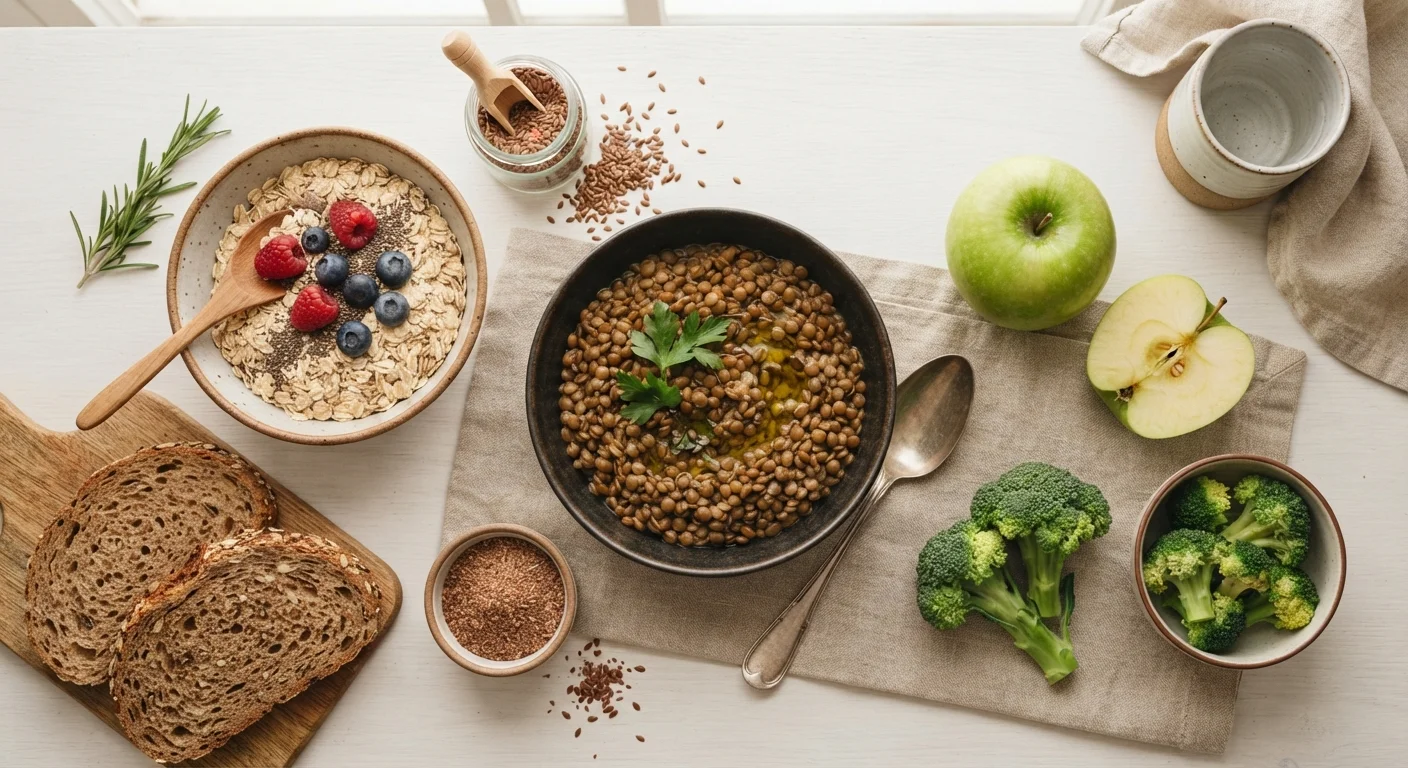
Common sources of soluble fiber include oats, barley, legumes (such as lentils, chickpeas, and black beans), apples, citrus fruits, and psyllium husk. Beta-glucan - the soluble fiber found in oats and barley - has among the strongest evidence linking fiber intake to LDL cholesterol reduction.
Insoluble fiber does not dissolve in water. Instead, it adds bulk to stool and accelerates the movement of material through the intestines, promoting regularity and reducing the risk of constipation. Unlike soluble fiber, most insoluble fiber is not fermented by gut bacteria. Its primary mechanical role is physical: it keeps the gastrointestinal tract moving efficiently. Whole wheat, wheat bran, brown rice, nuts, seeds, and the skins of many vegetables are reliable insoluble fiber sources.
Most whole plant foods contain both types in varying ratios, so eating a diverse diet naturally provides both. To understand what the fiber content on packaged food labels actually means, the guide to reading nutrition labels is a practical companion resource.
Why the Intake Gap Persists - and How to Close It
Current dietary guidelines suggest adults generally need between 22 and 38 grams of fiber per day, with specific targets varying by age and sex. Yet surveys consistently show average US adult intake hovers around 15-16 grams daily - a meaningful shortfall with real health implications over time.
~15g
Average daily fiber intake for US adults
NHANES data consistently shows US adults consume roughly half the recommended fiber amount each day.
95%
Americans not meeting fiber recommendations
According to analysis cited in the Journal of the Academy of Nutrition and Dietetics, fiber is among the most under-consumed nutrients in the US diet.
5-10g
Soluble fiber linked to modest LDL reduction
Research indicates that 5-10 grams of soluble fiber daily is associated with small but meaningful decreases in LDL cholesterol levels.
The gap is largely structural. Ultra-processed foods - which now account for a substantial portion of calories in the American diet - deliver very little fiber because processing removes the fibrous plant matter. White bread, white rice, many snack foods, and sweetened beverages contribute calories without meaningful fiber content.
Closing this gap doesn't require dramatic dietary overhaul. Practical approaches include:
- Replacing refined grains with whole grain versions (whole wheat bread, brown rice, oats)
- Adding legumes - lentils, beans, or chickpeas - to soups, salads, or grain bowls several times per week
- Eating fruit whole rather than juiced, preserving its fiber matrix
- Leaving edible skins on vegetables and fruits where appropriate
- Incorporating nuts or seeds as snacks or toppings
One important note: increasing fiber intake significantly in a short period can cause bloating or gas, particularly from soluble fiber fermentation. A gradual increase paired with adequate water intake allows the gut to adjust. People with certain gastrointestinal conditions should consult a registered dietitian or physician before substantially changing fiber intake. Our broader nutrition fundamentals primer provides additional context for building sustainable dietary habits.
This article is for general informational and educational purposes only. It is not a substitute for personalized medical or dietary advice. Consult a qualified healthcare professional for guidance specific to your health needs.