

Key Takeaways
- Hydroplaning can occur at speeds as low as 35 mph on roads with standing water.
- Worn tire tread significantly increases the risk because tires lose their ability to channel water away.
- Cruise control should be turned off in wet conditions - it can worsen loss of control during a hydroplane.
- When hydroplaning occurs, the correct response is to ease off the gas gradually - do not brake hard or jerk the wheel.
- Proper tire inflation and adequate tread depth are the most reliable preventive measures.
Hydroplaning
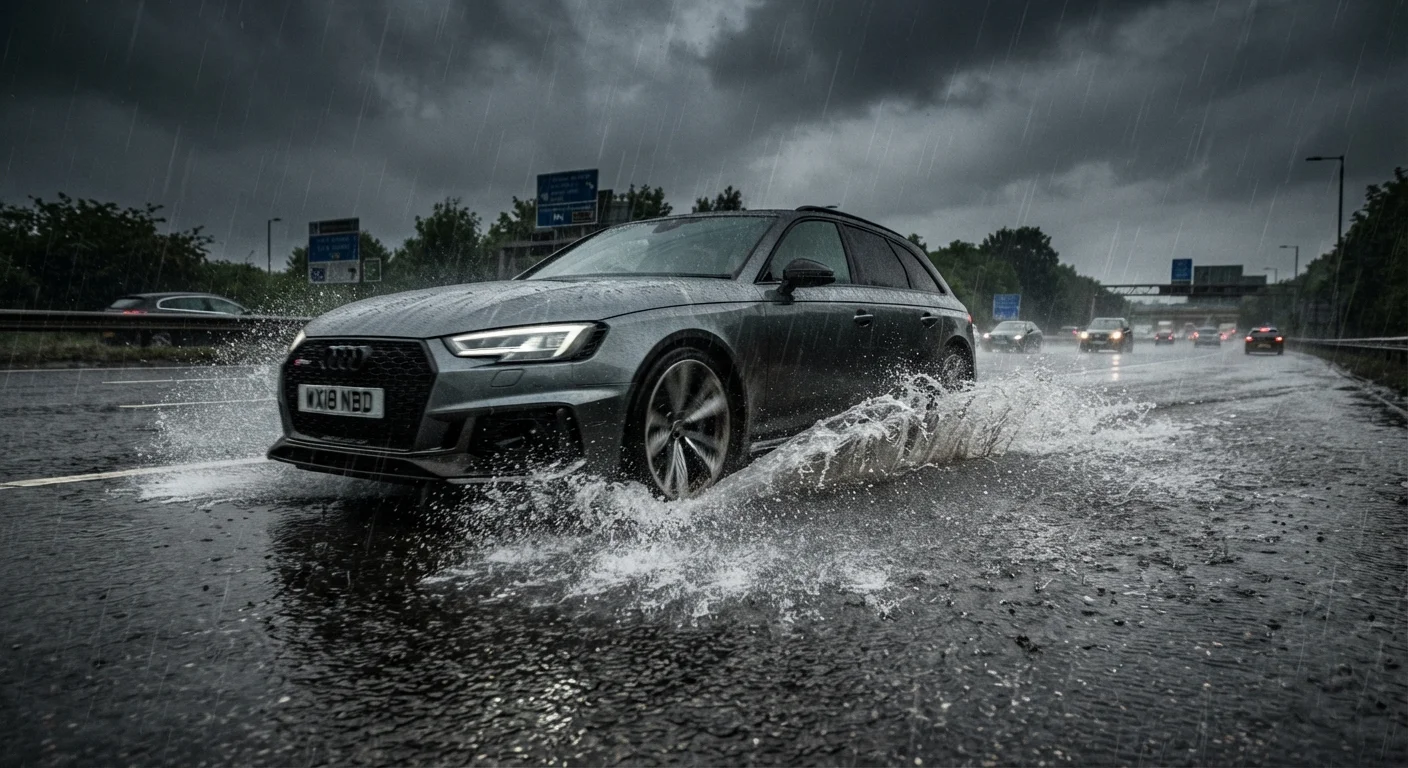
Hydroplaning occurs when a vehicle's tires encounter more water than they can displace, causing them to ride on top of a thin film of water rather than maintaining contact with the road surface. When this happens, the driver loses the traction needed to steer, brake, or control the vehicle effectively. It can happen suddenly and without obvious warning, even in relatively shallow water.
The phenomenon is more precisely called aquaplaning in some engineering contexts. Tire contact patch pressure, tread design, vehicle speed, and water depth all interact to determine the onset threshold.
The Physics Behind Hydroplaning
Every tire is engineered to push water outward through its tread grooves as it rolls. At low speeds on wet pavement, this works reliably - the tire maintains solid contact with the road surface beneath. But as speed increases, the volume of water the tire must displace in a fraction of a second also grows. At a certain point, more water is arriving at the contact patch than the tire can move away, and a wedge of water begins to build up under the tire. When that wedge fully separates the rubber from the road, hydroplaning occurs.
The onset is governed by several interacting factors: vehicle speed, water depth, tire tread depth, tire inflation pressure, and the weight of the vehicle. A heavier vehicle with properly inflated tires and deep tread can resist hydroplaning at speeds that would cause a lighter vehicle with worn tires to lose contact almost immediately. Understanding how speed affects vehicle physics helps drivers appreciate why reducing speed in rain is not just caution - it's physics working in your favor.
Conditions That Increase Risk
Hydroplaning is not limited to torrential downpours. Several specific conditions make it more likely:
- Early rainfall: The first 10-20 minutes of rain often produce the slickest roads, as water mixes with accumulated oil, rubber residue, and dust.
- Road depressions and ruts: Areas where water pools - wheel ruts, dips, and clogged drains - create localized deep water that increases risk even when surrounding roads are only damp.
- Highway speeds: Freeways are where hydroplaning is most dangerous, because speeds are high and reaction time is short.
- Worn or underinflated tires: Tread grooves that are too shallow cannot channel water effectively. Similarly, underinflated tires deform in ways that reduce water-clearing efficiency.
See our guide to tire pressure, tread, and rotation for a practical overview of how to keep tires in condition that reduces hydroplaning risk. Broader wet-weather strategies are covered in our article on driving in fog, ice, and heavy rain.
35 mph
Speed at which hydroplaning can begin
According to the National Highway Traffic Safety Administration, hydroplaning risk begins at approximately 35 mph on wet roads, particularly with worn tires.
0.1 in
Water depth sufficient to trigger hydroplaning
Research in tire engineering indicates that as little as a tenth of an inch of standing water can be enough to initiate hydroplaning at highway speeds.
~75%
Weather-related crashes involving wet pavement
The Federal Highway Administration reports that a significant majority of weather-related crashes occur on wet pavement rather than snow or ice.
How to Respond When It Happens
The instinct to brake hard when a car suddenly feels light and unresponsive is understandable - but it is the wrong response. Hard braking during a hydroplane can lock the wheels (or trigger ABS cycling on a water wedge that offers no grip), making it harder to regain directional control. Jerking the steering wheel is equally counterproductive; when tires suddenly regain contact, a sharp steering input can cause a violent swerve.
The correct response is deliberately calm:
- Ease off the accelerator smoothly - do not stab the brakes.
- Keep the wheel pointed in the direction you intend to travel.
- Allow the vehicle to decelerate naturally until the tires regain traction.
- Only when traction returns should you apply gentle braking if needed.
Drivers who use cruise control in wet conditions face an added hazard: the system may apply throttle to maintain speed during a hydroplane event, prolonging the loss of traction. Turning off cruise control in rain is a straightforward precaution.
Turn Off Cruise Control in Wet Weather
Cruise control is designed to maintain a set speed, which means it may apply throttle when your tires lose traction - exactly the wrong response during a hydroplane. Disable it whenever roads are wet, even if rainfall seems light. This is one of the simplest habit changes with immediate safety benefit.
Developing these calm, deliberate responses is part of what defensive driving is all about - anticipating situations before they become emergencies.
Prevention: What Drivers Control
No driver can control rainfall or road drainage. But several factors that directly influence hydroplaning risk are well within driver control:
- Tire tread depth: Most safety organizations recommend replacing tires when tread depth reaches 2/32 of an inch, though some experts suggest acting at 4/32 for improved wet performance. The quarter-coin test (checking whether the top of a quarter's head is visible in the groove) is a common field check.
- Tire pressure: Check pressure monthly and before long trips. Use the pressure listed on the driver's door jamb sticker - not the maximum printed on the tire sidewall.
- Speed management: Slowing down in rain is the single most effective immediate action. Each reduction in speed meaningfully lowers the water volume the tire must displace per second.
- Lane positioning: Avoid the outer lanes of highways where water tends to collect, and give extra space to vehicles ahead.
Keeping up with routine maintenance - including fluid checks and tire inspections - forms the foundation of a safer vehicle in any weather. Our guide to essential fluid checks covers related upkeep habits worth building.