

Key Takeaways
- Most vehicles lose 15-25% of their value in the first year alone.
- The steepest depreciation typically occurs within the first three to five years of ownership.
- Depreciation directly affects how much an insurer will pay if your car is totaled.
- Keeping a car well-maintained can slow depreciation and improve resale value.
- Understanding depreciation helps you make smarter decisions about financing and loan terms.
Vehicle Depreciation
Vehicle depreciation is the loss in a car's market value over time. Every vehicle begins losing value from the moment it's driven off the dealership lot, and that decline continues throughout its life. Depreciation is not a fee or a charge - it's a financial reality that affects resale value, insurance payouts, and loan risk.
Depreciation is calculated as the difference between a vehicle's original purchase price and its current market value, often expressed as a percentage of the original cost over a given period.
Why Cars Lose Value: The Basics
Depreciation happens for several interconnected reasons. The moment a new vehicle is titled and driven away, it transitions from "new" to "used" in the eyes of the market. Buyer demand for that exact vehicle - with that mileage and that history - drops compared to a factory-fresh model. Age, wear, advances in technology, and shifts in consumer preferences all compound that loss over time.
Mileage is one of the most direct drivers. Higher mileage typically signals more mechanical wear, which reduces what a buyer is willing to pay. Accident history, condition of the interior and exterior, and the availability of service records also play significant roles in how the market values a used vehicle.
Some vehicle types depreciate faster than others. Luxury vehicles, electric vehicles in rapidly evolving segments, and certain vehicle categories can experience sharper early declines, while trucks and SUVs in consistently high demand sometimes hold value comparatively better. However, no vehicle is immune to depreciation.
Depreciation Is Not a Cash Expense
Unlike a fuel cost or insurance premium, depreciation doesn't require a direct payment. It represents a reduction in your asset's worth - a cost you realize when you sell or trade in the vehicle, or when an insurer values it after a total loss. Because it's invisible day-to-day, many owners underestimate its significance in the total cost of ownership.
When Depreciation Hits Hardest
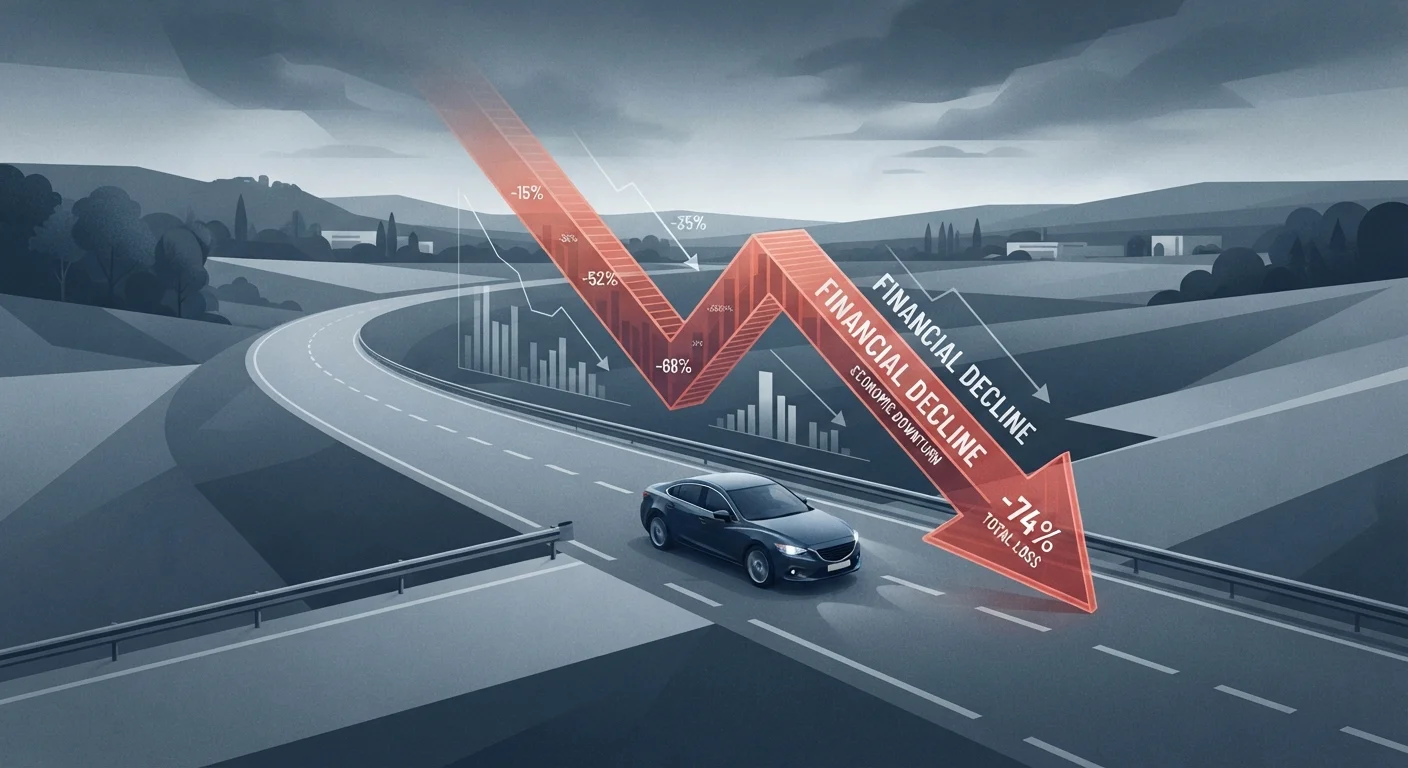
The depreciation curve is not linear. The sharpest drop happens early - particularly in the first year and through years two and three. Industry data consistently shows that a new car can lose a substantial portion of its value within 12 months of purchase, with cumulative losses often reaching 40-60% over five years.
~20%
Average first-year value loss for new vehicles
Industry estimates from automotive valuation sources consistently place first-year depreciation for new cars between 15% and 25%, depending on make and model.
~50%
Typical value remaining after five years
Many vehicles retain roughly half their original purchase value after five years, meaning the other half was lost to depreciation during that period.
Year 1-3
Period of steepest depreciation
The first three years of ownership account for the majority of a vehicle's lifetime depreciation, making early loan terms the highest-risk period for being underwater.
After the initial steep decline, the rate typically levels off. A 7- or 8-year-old vehicle depreciates more slowly in absolute dollar terms because so much of the value loss has already occurred. This is why the financial impact of depreciation is front-loaded - and why it's especially important to understand when you're financing a new vehicle.
Understanding this curve matters for the true cost of owning a car, which extends well beyond the sticker price and monthly payment.
Depreciation, Loans, and Being "Underwater"
When you finance a vehicle, depreciation and your loan balance interact in ways that can create financial risk. Early in a loan term - especially with low down payments and long loan terms - the balance you owe can exceed what the car is actually worth on the market. This situation is commonly called being "underwater" or "upside down" on your loan.
If your vehicle is totaled while you're underwater, a standard insurance policy's actual cash value payout may not fully cover your outstanding loan balance. That gap becomes your out-of-pocket obligation. This is the scenario that GAP insurance (Guaranteed Asset Protection) is designed to address - it covers the difference between the ACV payout and the remaining loan balance.
To understand how your financing terms interact with depreciation risk, learn how auto loan interest actually works before committing to a loan structure. Longer terms lower monthly payments but extend the period when you're most likely to be underwater.
Consider a Larger Down Payment on New Vehicles
A larger down payment reduces the loan balance from the start, which shrinks the window during which you might be underwater. This doesn't stop depreciation, but it lowers the risk that your loan balance exceeds your vehicle's market value during the critical early years. Consult a licensed financial adviser to determine what makes sense for your budget and circumstances.
Depreciation and Your Insurance Coverage
Most standard auto insurance policies settle total-loss claims based on a vehicle's actual cash value at the time of loss - not what you paid, not what you owe. Because depreciation reduces ACV continuously, a car totaled several years into ownership may be valued significantly lower than its original purchase price.
This is a distinction that surprises many policyholders at claim time. For a deeper look at how insurers calculate payouts, see actual cash value vs. replacement cost. Understanding your policy's valuation method before you need to file a claim is far preferable to discovering it afterward.
For broader context on auto and home insurance coverage options, explore auto and home insurance guidance to understand your coverage choices more fully.
Practical Steps to Manage Depreciation's Impact
While you cannot eliminate depreciation, you can make decisions that minimize its financial sting. Keeping up with your vehicle's service intervals is one of the most reliable ways to preserve resale value - a documented service history signals to future buyers that the car was well cared for. See your car's maintenance schedule explained for a clear breakdown of what regular service actually involves.
Other practical considerations include keeping mileage in check where possible, protecting the vehicle's exterior and interior condition, and avoiding modifications that may limit buyer appeal. When it's time to revisit the financial picture of your vehicle each year, financial factors to revisit every year you own a car provides a useful annual review framework.
For a full picture of how depreciation fits into the lifecycle of vehicle ownership - from purchase to eventual sale - see vehicle ownership from purchase to sale.
This article is for general informational and educational purposes only and does not constitute financial, legal, or insurance advice. Consult a licensed financial adviser or insurance professional for guidance specific to your situation.