

Key Takeaways
- The skin barrier is a physical and chemical system, not just a metaphor for skin health.
- Ceramides, cholesterol, and fatty acids are the three lipid types essential to barrier integrity.
- Over-cleansing, harsh surfactants, and low humidity are among the most common barrier disruptors.
- A compromised barrier is associated with conditions like eczema, rosacea, and contact dermatitis.
- Fewer, well-chosen skincare steps often support barrier health better than complex layered routines.
Skin Barrier Function
The skin barrier is the outermost layer of your skin - known scientifically as the stratum corneum - that acts as the body's primary shield against the external environment. It prevents water from escaping the skin while blocking irritants, allergens, bacteria, and pollutants from entering. A healthy barrier keeps skin hydrated, resilient, and less reactive.
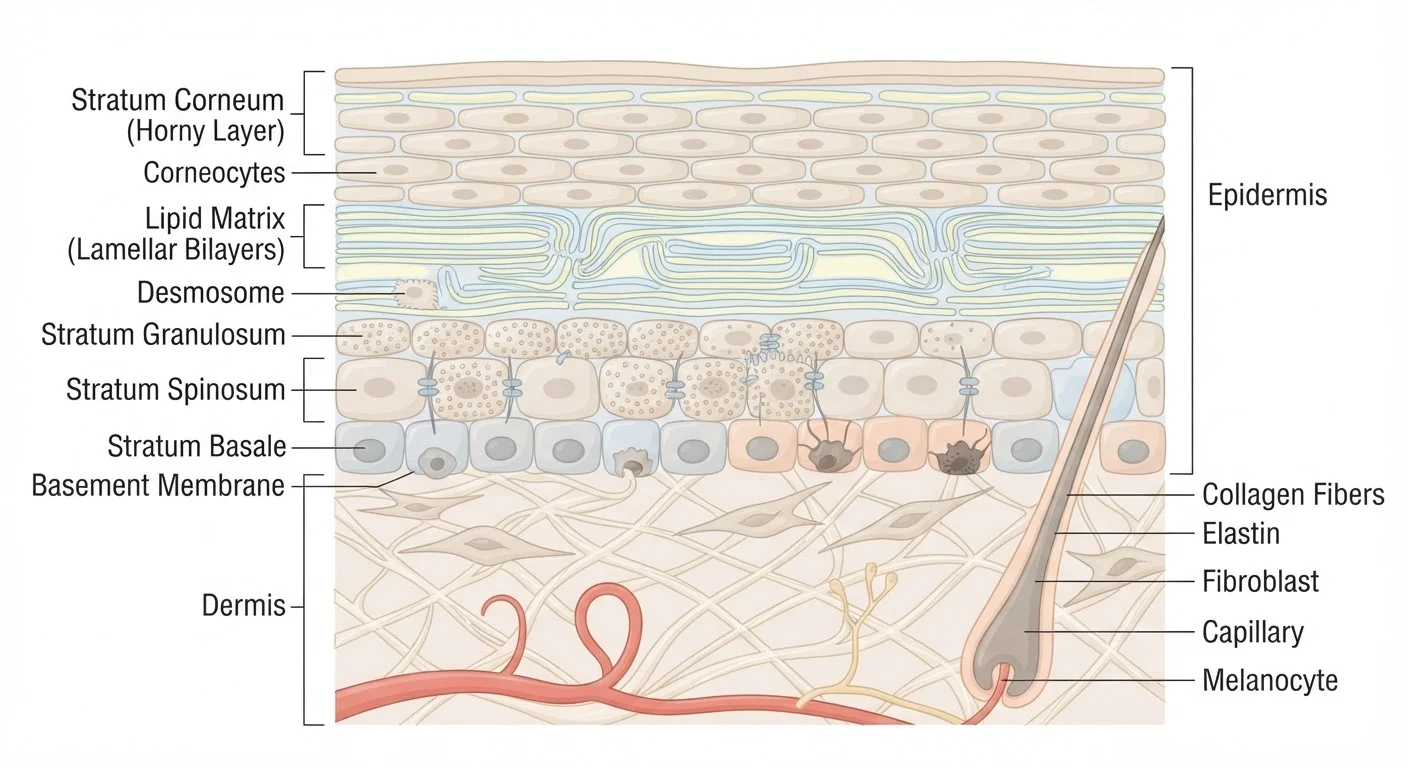
The barrier is often described using a 'brick and mortar' model: skin cells (corneocytes) serve as bricks held together by a matrix of lipids - primarily ceramides, cholesterol, and fatty acids - acting as the mortar.
What the Skin Barrier Actually Is
Healthy skin isn't simply about appearance - its most critical job is structural and protective. The stratum corneum, the topmost layer of the epidermis, is composed of flattened, protein-rich cells called corneocytes surrounded by a carefully organized mixture of lipids. These lipids - primarily ceramides, cholesterol, and free fatty acids - fill the spaces between cells, creating a near-impermeable seal.
This 'brick and mortar' architecture serves two simultaneous functions: it slows the loss of water from inside the body (a process called transepidermal water loss, or TEWL), and it resists the entry of external substances that could trigger inflammation or infection. Neither function works independently - the same lipid matrix governs both.
Beneath the stratum corneum, the skin also maintains a slightly acidic surface pH. This acid mantle supports the enzymatic processing of barrier lipids and plays a role in regulating the skin's microbial environment. When pH shifts significantly - through over-cleansing or certain product formulations - these enzyme-driven processes become less efficient, and barrier integrity can weaken.
Barrier Function Across Skin Types
Skin classified as 'oily' is not immune to barrier disruption. Sebum production and the lipid composition of the barrier are separate systems - it's entirely possible to have an oily surface and a compromised stratum corneum simultaneously. Over-stripping oily skin in an attempt to control shine is a common pattern that can worsen both conditions.
Why the Barrier Breaks Down
Barrier disruption rarely has a single cause. Environmental stressors, skincare habits, and intrinsic biological factors all contribute - often simultaneously. Low ambient humidity accelerates transepidermal water loss, particularly in dry or cold climates and in air-conditioned interiors. Repeated exposure to water itself, paradoxically, can weaken the barrier by swelling and then shrinking corneocytes during the wet-dry cycle.
Skincare products are a significant - and often underappreciated - variable. Surfactants in cleansers, by design, dissolve oils; when formulations are too harsh or used too frequently, they strip away barrier lipids alongside surface debris. Certain exfoliating acids, retinoids, and preservatives can also transiently compromise the barrier, especially when introduced too quickly or at high concentrations. This doesn't mean these ingredients are harmful - context and frequency matter - but it does explain why a more-is-more approach to skincare often backfires.
Genetics play a meaningful role as well. Variants in the gene encoding filaggrin - a protein critical to corneocyte structure - are among the best-established risk factors for atopic dermatitis (eczema) and increased general skin sensitivity. Understanding this helps explain why identical routines can produce very different outcomes in different individuals. For more on how ingredient concentration and formulation affect your skin, see our guide to reading a skincare label.
~50%
Ceramide share of stratum corneum lipids
Research consistently identifies ceramides as the dominant lipid class in the stratum corneum, comprising roughly half of the total lipid content by weight.
1 in 10
US adults affected by atopic dermatitis
The American Academy of Dermatology estimates that atopic dermatitis - strongly linked to barrier dysfunction - affects approximately 10% of US adults.
4.5-5.5
Healthy skin surface pH range
Dermatology literature consistently identifies this mildly acidic pH range as optimal for barrier enzyme function and microbial balance.
Evidence-Based Habits That Support Barrier Integrity
Supporting a healthy barrier is largely about reducing unnecessary stress rather than adding more steps. A few well-established principles guide a barrier-supportive approach:
- Gentle cleansing: Choose a cleanser with a pH-balanced, low-irritant formula and limit cleansing to once or twice daily. Removing all surface oil every time you wash is not a goal - it is the problem.
- Lipid replenishment: Moisturizers that include ceramides, cholesterol, and fatty acids in a physiologically similar ratio to those found naturally in the stratum corneum are better supported by evidence than those relying solely on humectants like glycerin or hyaluronic acid.
- Routine simplicity: Fewer products mean fewer potential disruptors. Principles-first routines - especially for sensitive or reactive skin - tend to outperform complex multi-step regimens in terms of barrier outcomes.
- Environmental considerations: A humidifier in dry indoor environments can meaningfully reduce TEWL. Sunscreen is relevant here too: UV radiation damages the epidermal cells that produce barrier lipids over time.
It's also worth separating fact from popular belief. The idea that skin needs to 'breathe,' for instance, or that natural ingredients are inherently barrier-safe, doesn't hold up well under scrutiny. Some of the most effective barrier ingredients are synthetic; some plant-derived ingredients are common sensitizers. Our overview of persistent skincare myths addresses these misconceptions directly.
Simplify Before You Add
If your skin feels reactive or persistently dry, resist the urge to add more products. Stripping your routine back to a gentle cleanser, a barrier-supportive moisturizer, and broad-spectrum sunscreen is often the most effective first step. Once the barrier stabilizes, you can cautiously reintroduce other actives one at a time.
This article is for general informational and educational purposes only and is not a substitute for professional medical or dermatological advice. If you are experiencing persistent skin symptoms, consult a qualified healthcare professional.