

Key Takeaways
- HMOs typically charge lower premiums but require referrals and restrict you to in-network providers.
- PPOs offer broader provider access and no referral requirements, usually at a higher premium.
- Going out-of-network on an HMO generally means paying the full cost; PPOs cover some out-of-network care at a reduced rate.
- Your choice depends heavily on how often you see specialists and whether your current doctors are in-network.
- Both plan types vary significantly by employer, insurer, and state - always read the specific plan documents.
Option A
HMO (Health Maintenance Organization)
The coordinated, cost-contained network structure.
Best for: People who want lower monthly premiums and are comfortable using a primary care physician as a gatekeeper to specialist care.
Option B
PPO (Preferred Provider Organization)
The flexible, wide-access network structure.
Best for: People who want the freedom to see any doctor or specialist without a referral, even if it means higher monthly costs.
If you want the lowest possible monthly premium
HMO
HMOs typically carry lower premiums because the insurer controls costs by limiting provider access. This trade-off makes sense if you're generally healthy and don't anticipate frequent specialist visits.
If you have ongoing specialist care or chronic conditions
PPO
PPOs let you see specialists without a referral and offer partial coverage for out-of-network care, giving you more flexibility when managing complex or ongoing health needs.
If you travel frequently or live in multiple locations
PPO
HMO networks are typically geographically limited. A PPO's broader network and out-of-network benefits provide a meaningful safety net when you're far from your primary care area.
If you prefer a single coordinated care relationship
HMO
Having a primary care physician manage and coordinate your care can reduce duplicated tests and improve communication between providers - a structural strength of the HMO model.
How Each Plan Type Structures Your Access to Care
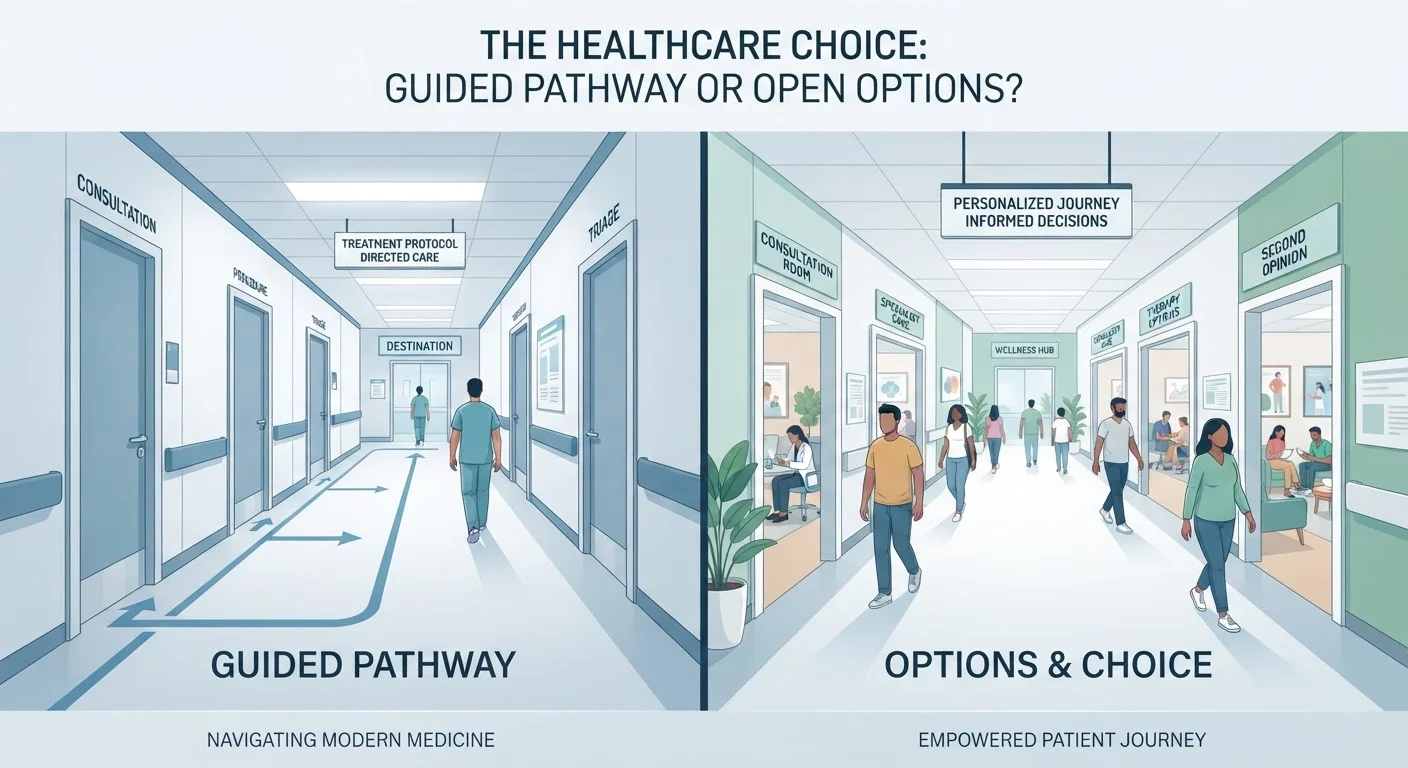
The most fundamental difference between an HMO and a PPO is how they control - or don't control - your path to care.
With an HMO, you select a primary care physician (PCP) who becomes your central point of contact. That PCP coordinates your care and, in most cases, must issue a referral before you can see a specialist. Coverage is generally limited to providers within the plan's designated network; using an out-of-network provider (except in genuine emergencies) typically means you bear the full cost.
A PPO removes most of those barriers. You can visit any licensed provider - specialist or generalist - without a referral. The plan divides providers into in-network (preferred) and out-of-network tiers. In-network visits cost you less, but unlike an HMO, the plan still covers a portion of out-of-network care, though your share of the cost will be higher. See our guide to in-network vs. out-of-network care for a closer look at how those cost differences add up.
| Criterion | HMO | PPO |
|---|---|---|
| Monthly premium | Generally lower | Generally higher |
| Requires a primary care physician | Yes, typically required | No, optional |
| Specialist referral needed | Yes, in most cases | No referral required |
| Out-of-network coverage | Emergency only, typically | Partial coverage available |
| Network size | Smaller, regional | Larger, often national |
| Care coordination | Structured through PCP | Self-directed by patient |
| Typical deductible | Lower on average | Higher on average |
Cost Structure: Premiums, Deductibles, and Out-of-Pocket Exposure
Neither plan type is universally cheaper - it depends on how you use care. HMOs tend to carry lower monthly premiums and often have smaller deductibles, but that lower sticker price comes with the constraint of staying in-network. One out-of-network visit can wipe out months of premium savings.
PPO premiums are generally higher, and the plans may have higher deductibles. The trade-off is meaningful, however: if you require frequent specialist visits or have existing provider relationships you want to keep, the flexibility can prevent costly disruptions to your care.
~49%
U.S. workers enrolled in PPO plans
According to KFF's Employer Health Benefits Survey, PPOs remain the most common plan type offered by employers, though HMO enrollment has grown steadily.
~25%
U.S. workers enrolled in HMO plans
KFF employer benefits data shows HMOs hold a consistent share of employer-sponsored enrollment, often appealing to cost-conscious plan sponsors.
It's also worth noting that cost structures vary significantly between plans even within the same type. Two different HMOs from different insurers may have very different deductibles or copay schedules. Always compare the Summary of Benefits and Coverage (SBC) - a standardized document every plan must provide - rather than relying solely on the plan label.
Which Plan Type Fits Your Situation?
Choosing between an HMO and a PPO isn't purely about cost - it's about matching the plan's structure to how you actually use healthcare.
- Check your doctors' network status. Before enrolling, verify that your current physicians participate in the plan's network. For an HMO, an out-of-network PCP means starting that relationship over entirely.
- Consider your specialist needs. If you manage a chronic condition or see multiple specialists regularly, the referral requirement and narrow network of an HMO can create friction and delay. A PPO may offer smoother coordination.
- Factor in geography. HMO networks are often regionally concentrated. If you split time between cities or travel frequently, a PPO's broader reach and out-of-network benefits add real value.
- Review your prescription needs. Drug formularies differ by plan, and the same medication may be covered differently under an HMO versus a PPO. Check the formulary for any maintenance medications before choosing.
HMO vs. PPO Isn't the Only Distinction
You may also encounter EPO (Exclusive Provider Organization) and POS (Point of Service) plans. EPOs share the HMO's in-network-only rule but typically don't require a PCP or referrals. POS plans blend elements of both - referrals are required, but some out-of-network care is covered. Understanding all four types helps you compare plan offerings more accurately during open enrollment.
If you're evaluating these options through your employer or the Health Insurance Marketplace, our open enrollment preparation checklist walks through the full set of factors to review before you commit. And if cost-sharing is a central concern, it's worth comparing the HMO/PPO decision alongside the trade-offs of high-deductible health plans, which follow a different structural logic entirely.
This article provides general health insurance education and is not personalized insurance or financial advice. Coverage terms, costs, and network rules vary by plan, insurer, and state. Always review the actual plan documents and consult a licensed insurance agent or adviser for guidance specific to your situation.