
Employer-Sponsored Insurance vs. Marketplace Plans: Key Differences to Understand

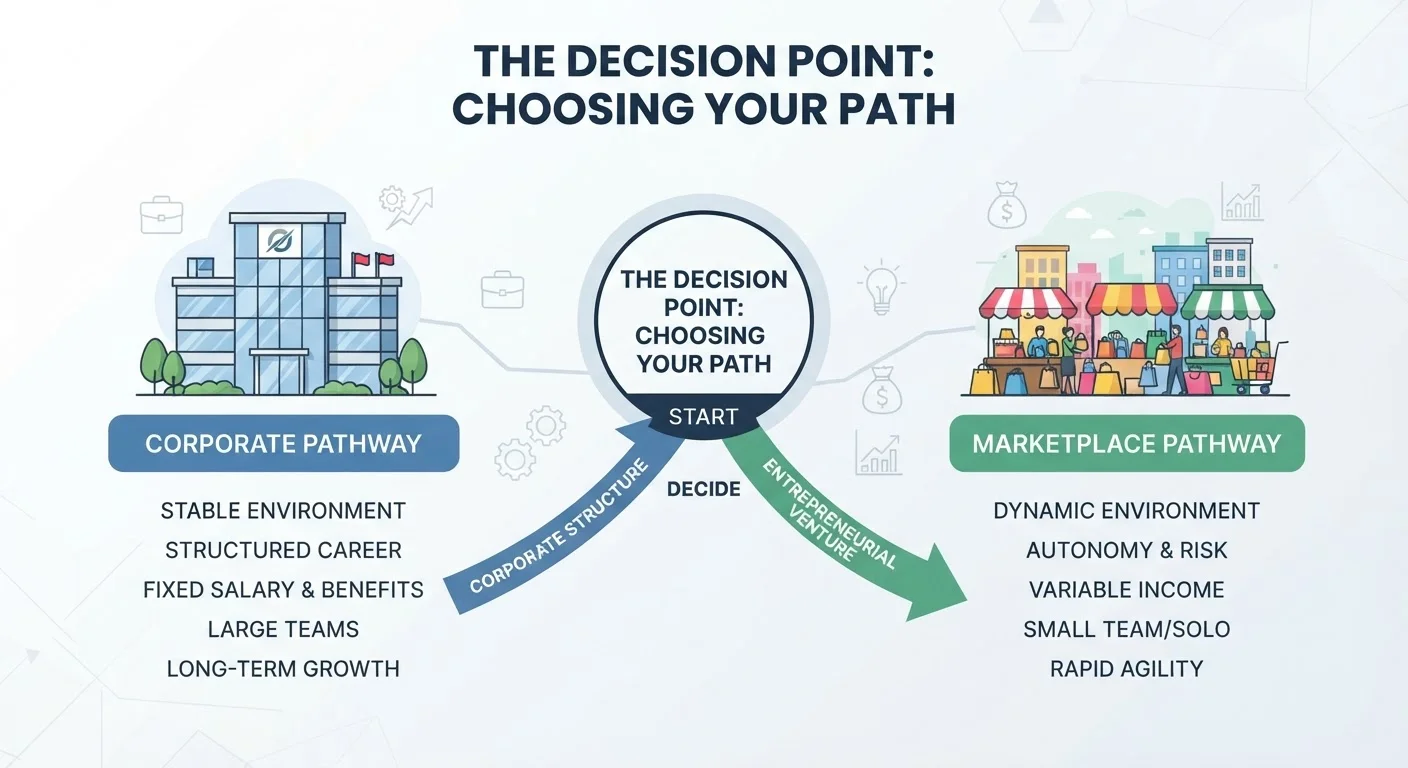
Key Takeaways
- Employer-sponsored plans typically share premium costs with your employer, often making them less expensive than individual marketplace plans.
- Marketplace plans offer income-based subsidies that can significantly reduce premiums for those who qualify.
- If your employer's plan is deemed 'affordable' under federal standards, you generally cannot claim marketplace subsidies.
- Both plan types must cover the ACA's ten essential health benefits, but network size and cost-sharing structures vary widely.
- Losing job-based coverage qualifies you for a Special Enrollment Period on the marketplace.
Our Verdict
Employer-sponsored insurance is often the more cost-effective default when an employer contributes substantially to premiums. However, marketplace plans can be the stronger choice for self-employed individuals, those between jobs, or lower-to-moderate income earners who qualify for premium tax credits. Neither option is universally superior - the right fit depends on your income, family size, health needs, and what your employer actually offers.
| Best for | Recommended |
|---|---|
| Employees whose employers cover a meaningful share of premiums | Employer-Sponsored Insurance |
| Self-employed individuals or those without job-based coverage | Marketplace Plan |
| Lower-to-moderate income earners who qualify for premium tax credits | Marketplace Plan |
| Workers who value payroll-deducted, pre-tax premium contributions | Employer-Sponsored Insurance |
How Each Type of Plan Works
Health insurance in the United States arrives through two primary channels for most working-age adults: coverage offered through an employer (often called group insurance) and plans purchased individually through the Health Insurance Marketplace established under the Affordable Care Act (ACA).
Employer-sponsored insurance (ESI) is arranged by a company on behalf of its workforce. The employer negotiates with one or more insurers, selects a menu of plan options, and typically pays a portion of each enrolled employee's monthly premium. The employee's share is usually deducted from their paycheck on a pre-tax basis, which reduces their taxable income.
Marketplace plans - sold at HealthCare.gov or state-run exchanges - are individual or family policies purchased directly by consumers. Insurers offering these plans must comply with ACA rules, including standardized metal tiers (Bronze, Silver, Gold, Platinum) that signal how costs are split between the insurer and the enrollee. If you're new to how these terms fit together, the plain-English guide to health insurance covers foundational concepts in detail.
Cost Structures: Premiums, Subsidies, and Employer Contributions
Cost is often the deciding factor, and the two systems calculate it very differently.
With ESI, your employer absorbs part of the premium. Federal data from the Kaiser Family Foundation has consistently shown that employers cover a substantial share - often well over half - of single-coverage premiums. That employer contribution is not counted as your taxable income, which adds further financial value beyond the dollar amount itself.
Marketplace premiums are paid entirely by the enrollee, but the ACA provides premium tax credits (also called advanced premium tax credits, or APTCs) to households whose income falls within a qualifying range. These credits are applied directly to monthly premiums, reducing what you owe. Cost-sharing reduction (CSR) subsidies can also lower deductibles and out-of-pocket maximums for Silver-tier plans, but only for enrollees within specific income bands.
~83%
Employees offered ESI who enrolled
According to U.S. Bureau of Labor Statistics data, the majority of workers offered employer-sponsored insurance choose to take it.
~$1,400
Average annual individual marketplace premium tax credit
Federal data from CMS enrollment reports has shown substantial average credit values for marketplace enrollees who qualify for subsidies.
The catch: if your employer offers coverage that meets the ACA's affordability and minimum value standards, you are generally not eligible to claim premium tax credits on the marketplace - even if a marketplace plan would otherwise suit you better. Affordability is determined by whether the employee-only premium for the lowest-cost qualifying plan exceeds a set percentage of your household income (this threshold is adjusted periodically by the IRS).
Coverage Rules, Networks, and Plan Choice
Both ESI and marketplace plans sold since 2014 must cover the ACA's ten essential health benefits, including preventive care, emergency services, prescription drugs, and mental health treatment. Beyond that baseline, the plans can differ considerably.
Employer plans often come in a narrow selection - sometimes just one or two options - curated by your HR department. You have limited input into network breadth, formulary design, or the insurer itself. Marketplace plans, by contrast, offer broader choice within a standardized framework: you can compare multiple insurers, network types, and metal tiers side by side.
Network structure - HMO versus PPO, for example - matters in both channels. An HMO typically requires a primary care physician referral to see specialists and limits coverage to in-network providers, while a PPO provides more flexibility at higher cost. This trade-off exists whether your plan comes through your employer or the marketplace. Our HMO vs. PPO comparison breaks down how these network structures affect access and out-of-pocket spending.
| Employer-Sponsored Insurance | Marketplace Plan | |
|---|---|---|
| Premium payment | Shared between employer and employee | Paid entirely by enrollee (subsidies may apply) |
| Pre-tax premium contributions | Yes, via payroll deduction | No (credits applied to monthly bill) |
| Income-based subsidies | Not available | Available if employer plan fails affordability test |
| Plan choice | Limited to employer-selected options | Wide selection across insurers and metal tiers |
| Enrollment timing | Employer plan year / new hire period | ACA Open Enrollment Period or SEP |
| ACA essential benefits required | Yes (for plans subject to ACA) | Yes, all plans |
| Portability when leaving job | Coverage ends; COBRA available temporarily | Coverage continues regardless of employment |
Enrollment Windows and Life Event Triggers
When you can enroll - and when you can make changes - also differs between the two systems.
ESI enrollment is governed by your employer's plan year. You typically enroll when you're first hired and then again during your company's annual open enrollment window. Outside those windows, changes are generally only allowed when a qualifying life event occurs.
Marketplace enrollment follows the ACA's annual Open Enrollment Period (OEP), which runs each fall for coverage starting January 1. Missing this window means waiting until the next OEP unless a qualifying life event - such as losing job-based coverage, getting married, or having a child - triggers a Special Enrollment Period (SEP). Losing ESI is itself one of the most common SEP triggers. For a full breakdown of what qualifies, see our article on special enrollment periods and qualifying life events.
Before either enrollment window arrives, it pays to review your coverage needs systematically. Our open enrollment prep checklist walks through what to assess before you commit to a plan.
Run a Side-by-Side Cost Estimate
Before defaulting to your employer's plan, use the marketplace calculator at HealthCare.gov to estimate what a comparable plan would cost after any subsidies. Factor in your employer's premium contribution, any pre-tax savings from payroll deductions, and the deductible and out-of-pocket maximum on each option. A plan with a lower premium is not always the lower-cost option over a full plan year.
This article provides general health insurance information for educational purposes only and is not personalized insurance, financial, or legal advice. Coverage terms, costs, and eligibility rules vary by employer, insurer, and state. Consult a licensed insurance agent or benefits adviser to evaluate your specific situation.