

Key Takeaways
- Standard homeowners policies typically cover wind damage, lightning, and hail, but exclude floods and earthquakes entirely.
- Flood insurance is a separate policy, most commonly purchased through the National Flood Insurance Program (NFIP).
- Earthquake coverage requires either an endorsement or a standalone policy in most states.
- A wildfire may be covered, but smoke damage exclusions and defensible-space requirements can complicate claims.
- Policy language - not the disaster's official name - determines whether a loss is covered.
- Consulting a licensed insurance agent is the most reliable way to identify gaps in your specific policy.
Named Perils vs. Open Perils Coverage
A homeowners insurance policy defines which causes of damage - called "perils" - trigger a payout. Policies written on a "named perils" basis only cover losses from events specifically listed in the policy. "Open perils" (or all-risk) policies cover any cause of loss not explicitly excluded. Natural disasters are treated differently depending on which peril is involved, and several common ones are excluded outright from standard policies.
Most standard homeowners policies (such as the HO-3 form widely used in the US) cover the dwelling structure on an open-perils basis but cover personal property on a named-perils basis - a distinction that affects natural disaster claims.
How Standard Homeowners Policies Treat Natural Disasters
Homeowners insurance is not a blanket protection against every act of nature. Each peril is evaluated individually, and the coverage - or exclusion - is written into your policy's declarations and conditions pages. Understanding this structure is the first step toward knowing where you stand.
The most widely used homeowners policy form in the US, the HO-3, provides open-perils coverage for the dwelling structure itself. That means any cause of damage is covered unless the policy specifically excludes it. Two of the most significant exclusions are flood and earthquake - both of which require entirely separate policies. See our overview of common homeowners coverage gaps for a broader look at where standard policies fall short.
~23%
US homes at high flood risk without flood insurance
FEMA estimates that a significant share of properties facing meaningful flood risk carry no flood insurance policy, leaving owners exposed to uninsured losses.
$1-5%
Typical hurricane deductible range (as % of insured value)
In coastal states, hurricane deductibles are commonly written as a percentage of the insured dwelling value rather than a flat dollar figure, per state insurance department filings.
90%+
US natural disaster losses involving flood or wind
According to NOAA and FEMA data, the majority of billion-dollar US natural disaster events involve wind, flood, or a combination of both perils.
Your policy's declarations page lists your deductibles, coverage limits, and any endorsements you've added. Reading it alongside the policy's exclusions section gives you the clearest picture of your natural disaster exposure.
Covered Perils: Wind, Hail, Lightning, and Wildfire
Several natural-disaster scenarios are generally covered under a standard HO-3 policy:
- Windstorm and hail: Damage from high winds and hail is a named covered peril. This includes roof damage, broken windows, and structural harm from falling trees caused by wind. However, some coastal insurers exclude windstorm or sell it separately.
- Lightning strikes: A lightning strike that causes a fire or electrical surge is covered. This includes damage to appliances and systems affected by a power surge directly resulting from a strike to your home.
- Wildfire and smoke: Fire is among the oldest covered perils in homeowners insurance. Wildfire losses are generally covered, though some insurers in high-risk states have restricted or non-renewed policies in vulnerable areas. Smoke damage coverage can vary - check your policy language carefully.
- Volcanic action: Most standard policy forms list volcanic eruption as a covered peril, including lava flow damage to the structure.
For context on how dwelling and personal property coverage work differently in these scenarios, see dwelling vs. personal property coverage explained.
Review Your Policy Before Storm Season
Don't wait for a loss to discover what your policy excludes. Pull out your declarations page and read the exclusions section - particularly any language around water, earth movement, and wind. If your insurer applies a hurricane or windstorm deductible, confirm the exact trigger and percentage. A licensed insurance agent can walk you through your specific policy language and suggest endorsements or separate policies to fill gaps.
Key Exclusions: Flood, Earthquake, and Sewer Backup
Three perils account for the most financially painful gaps in standard homeowners coverage:
- Flood
- Damage from water that originates outside your home - storm surge, overflowing bodies of water, or surface water accumulation - is excluded. The NFIP, administered by FEMA, is the most common source of flood insurance for residential properties, though private flood insurers also operate in many states. Premiums and coverage limits differ from standard homeowners policies.
- Earthquake
- Ground movement, sinkholes related to seismic activity, and landslides are excluded. In California, the CEA provides a major market for earthquake policies. Elsewhere, earthquake coverage is typically available as an endorsement from your existing insurer or as a standalone policy.
- Sewer and drain backup
- When heavy storms overwhelm municipal drainage systems and sewage reverses into your home, standard policies don't cover the resulting damage. An endorsement - usually modestly priced - can fill this gap.
Policy Language Controls - Not the Disaster's Name
Whether a government declares a federal disaster area does not automatically determine what your insurer will cover. Coverage is governed entirely by your policy's terms, definitions, and exclusions. A federally declared disaster may open access to FEMA assistance programs, but that is separate from your private insurance claim. Always refer to your actual policy documents when assessing a potential loss.
Many homeowners discover these exclusions only after a loss. Our article on common misconceptions about home insurance coverage addresses this pattern directly.
Hurricanes: A Split Coverage Problem
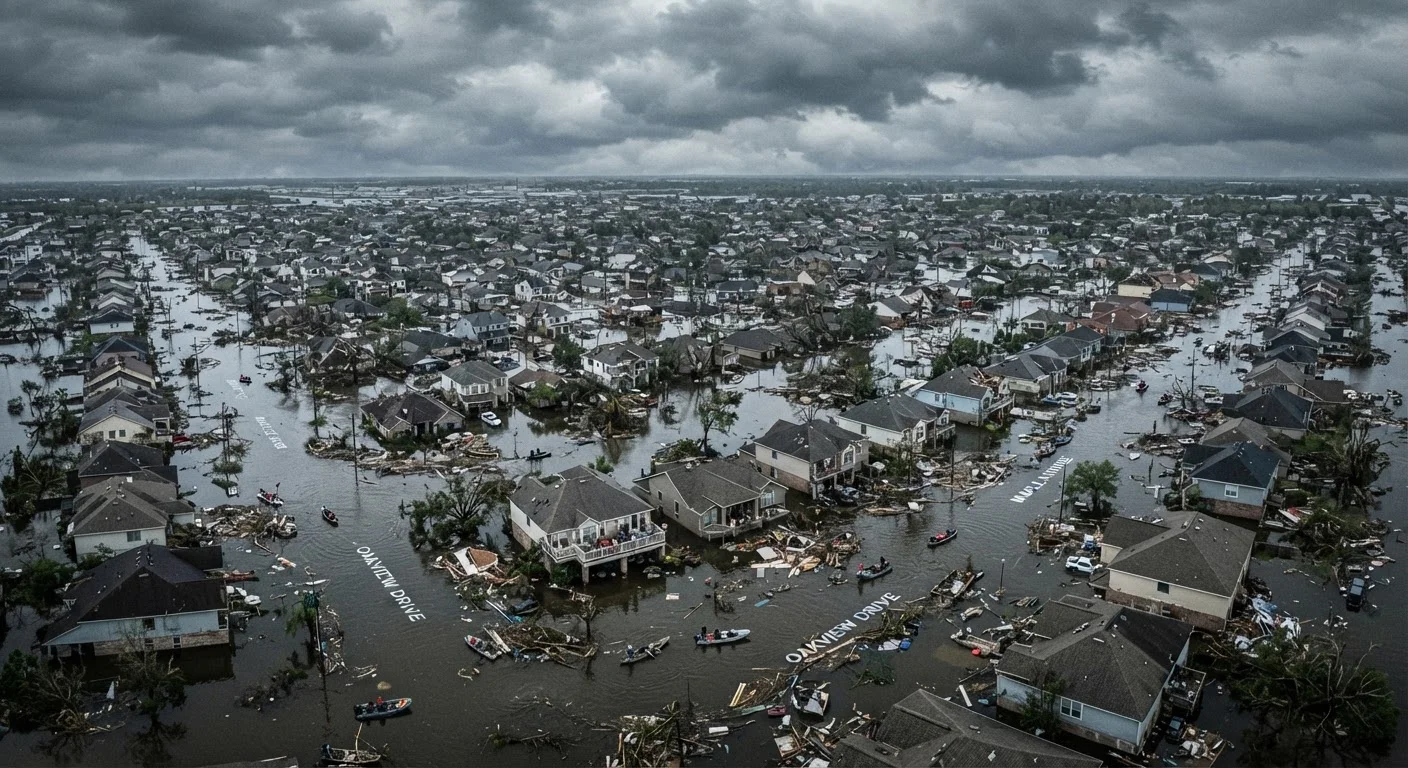
Hurricane losses illustrate how a single event can produce both covered and excluded damage simultaneously. Wind damage from a hurricane - broken roof, shattered windows, structural harm - typically falls under your standard homeowners policy's windstorm coverage. Storm surge, however, is treated as flood damage and excluded unless you hold a separate flood policy.
This split matters enormously after a major storm, because adjusters must determine which portion of each loss was caused by wind versus water. In coastal states, many insurers apply a separate hurricane deductible, expressed as a percentage of your insured dwelling value rather than a flat dollar amount. A 2% hurricane deductible on a $400,000 insured home means you absorb the first $8,000 in wind-related losses before coverage begins - significantly more than a standard $1,000-$2,500 deductible.
If you ever need to file a claim after a natural disaster, understanding the documentation process matters. See how to file a claim without undermining your position for a step-by-step walkthrough.
This article is for general informational and educational purposes only and does not constitute personalized insurance, financial, or legal advice. Coverage terms, exclusions, and availability vary significantly by insurer, policy form, and state. Always read your actual policy documents and consult a licensed insurance agent or adviser to evaluate your specific coverage needs.