

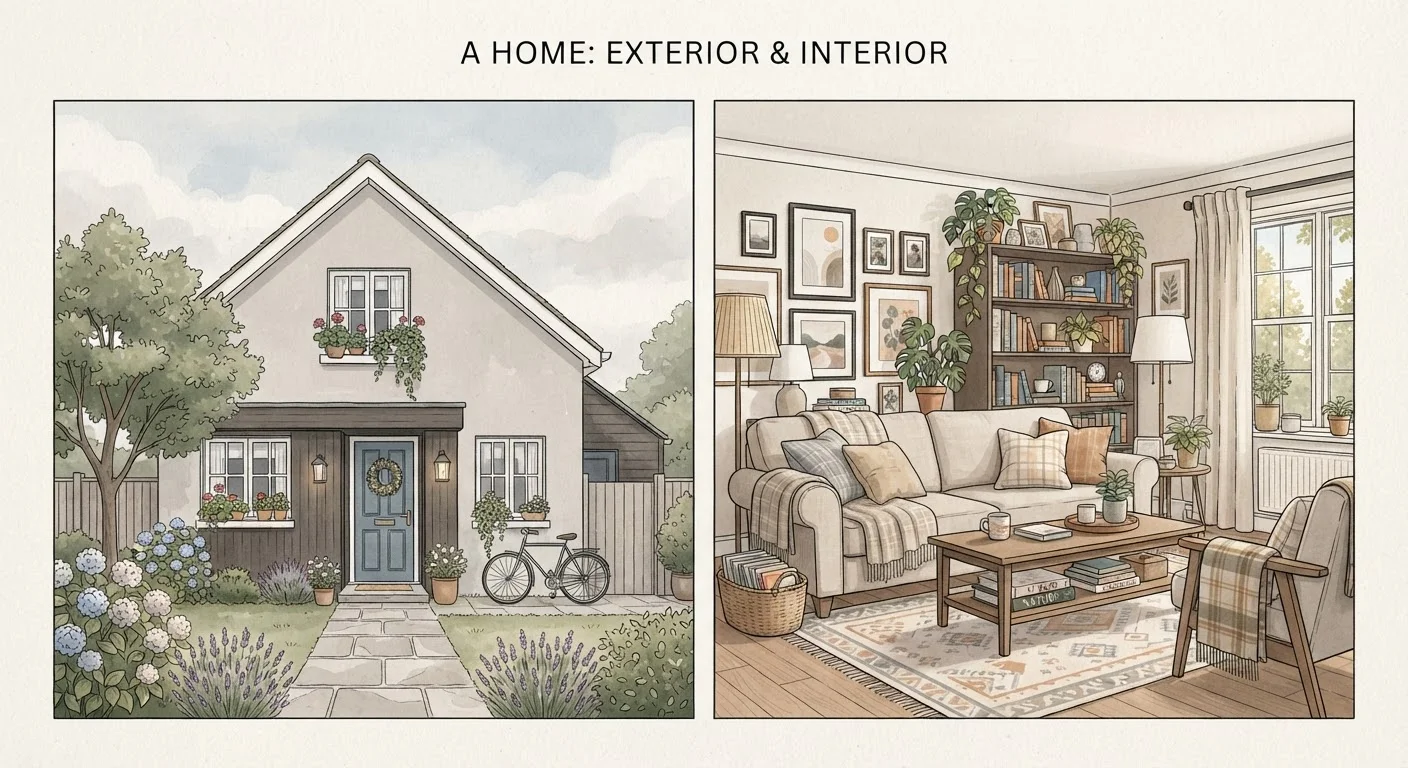
Key Takeaways
- Dwelling coverage pays to repair or rebuild the physical structure of your home after a covered loss.
- Personal property coverage applies to moveable belongings - furniture, electronics, clothing, and similar items.
- Each coverage type carries its own limit; a shortfall in one does not borrow from the other.
- High-value items like jewelry or art often require separate scheduled endorsements under personal property coverage.
- Replacement cost vs. actual cash value is a critical distinction that applies differently to each coverage type.
- Reviewing both limits regularly - especially after renovations or major purchases - helps prevent coverage gaps.
Option A
Dwelling Coverage
The structural shield for your home itself.
Best for: Homeowners who want protection for the physical structure - walls, roof, built-in systems, and attached structures - against covered perils.
Option B
Personal Property Coverage
The safety net for everything inside your home.
Best for: Homeowners who want reimbursement for furniture, electronics, clothing, and other moveable possessions damaged or stolen.
If you've recently renovated or expanded your home
Dwelling Coverage
Structural upgrades increase your home's rebuild cost. Failing to update your dwelling limit after renovations can leave you significantly underinsured.
If you've accumulated high-value belongings over time
Personal Property Coverage
Standard personal property limits may not fully cover expensive electronics, jewelry, or collectibles without scheduled endorsements added to your policy.
If you want to understand your full homeowners policy
Dwelling Coverage
Dwelling coverage is typically the largest component of a homeowners policy and sets the baseline from which other coverage amounts are often calculated.
If you rent out a room or store items off-premises
Personal Property Coverage
Personal property coverage often extends to belongings in a storage unit or a dorm room, but sub-limits and conditions vary by policy - always verify with your insurer.
What Dwelling Coverage Actually Protects
Dwelling coverage - formally listed as Coverage A on a standard homeowners policy - pays to repair or rebuild the physical structure of your home when it is damaged by a covered peril. This includes the walls, roof, floors, foundation, built-in appliances, and permanently attached fixtures like plumbing and electrical systems.
Detached garages, fences, and sheds typically fall under a separate section called other structures coverage (Coverage B), which is usually set at a percentage of your dwelling limit. It is distinct from Coverage A, so it's worth noting where one ends and the other begins when reading your declarations page.
Your dwelling limit should reflect the cost to rebuild your home from the ground up - not its market value or purchase price. These figures can diverge significantly based on local construction costs, materials, and labor. Many insurers offer guaranteed or extended replacement cost options that provide a buffer if rebuild costs exceed your stated limit. Whether your policy uses replacement cost or actual cash value (which deducts for depreciation) has a direct impact on what you receive after a loss.
For a closer look at how coverage gaps can emerge even when you think you're protected, see Coverage Gaps That Leave Homeowners Exposed.
| Criterion | Dwelling Coverage | Personal Property Coverage |
|---|---|---|
| Policy designation | Coverage A | Coverage C |
| What it covers | Home structure, built-in systems, fixtures | Moveable belongings inside (and sometimes outside) the home |
| How the limit is set | Based on estimated rebuild cost | Often 50-70% of dwelling limit; adjustable |
| Sub-limits apply | Generally no | Yes - jewelry, cash, firearms, and others |
| Valuation options | Replacement cost or actual cash value | Replacement cost or actual cash value (varies by policy) |
| Off-premises protection | No | Often yes, with limits |
| Endorsements available | Guaranteed/extended replacement cost | Scheduled personal property for high-value items |
What Personal Property Coverage Actually Protects
Personal property coverage - Coverage C - applies to the moveable contents of your home: furniture, clothing, electronics, kitchenware, sporting equipment, and similar belongings. Crucially, this coverage can also extend to items you take outside the home - a laptop stolen from your car or luggage lost during travel may qualify, depending on your policy terms.
Coverage C limits are typically set as a percentage of Coverage A, often ranging from 50% to 70%, though you can usually adjust this. The catch is that standard personal property coverage comes with sub-limits on certain categories. Jewelry, furs, silverware, firearms, and cash are common examples where the default payout is capped well below what the items are worth. A separate scheduled personal property endorsement can raise those caps for specific high-value items, usually requiring an appraisal.
Another pivotal choice is whether your personal property is covered at actual cash value (ACV) or replacement cost value (RCV). ACV deducts depreciation - a five-year-old television is worth far less on paper than it costs to replace today. RCV pays what it costs to buy a comparable item new. Upgrading to replacement cost for personal property often increases your premium modestly but can make a meaningful difference after a significant loss.
~$250,000
Average US home rebuild cost
According to the Insurance Information Institute, the average cost to rebuild a home varies widely by location and materials, but frequently exceeds what owners expect.
64%
Homeowners who are underinsured
CoreLogic has estimated that a substantial majority of US homes are underinsured relative to their actual rebuild cost, often by 20% or more.
50-70%
Typical personal property limit as share of dwelling
Most standard homeowners policies set the personal property limit at 50% to 70% of the dwelling coverage amount, though this is adjustable.
Many homeowners underestimate how much their belongings are worth in total. Creating a home inventory - a documented list of possessions with photos and receipts - is one of the most practical steps you can take before a claim occurs. See Filing an Insurance Claim Without Undermining Your Position for guidance on documentation best practices.
Key Differences and Common Misconceptions
The most frequent misunderstanding is assuming that a high dwelling limit automatically means personal property is well covered. These are separate coverage buckets with separate limits - a shortfall in one cannot be filled by the other at claim time.
Another common misconception involves built-in vs. freestanding items. A built-in dishwasher is part of the dwelling; a freestanding refrigerator is personal property. A hardwood floor is part of the structure; a rug sitting on top of it is personal property. When damage occurs to both, claims are sometimes split across coverage types, which can affect how your deductible applies.
Renters Are Covered Differently
If you rent your home, dwelling coverage is not part of your policy - that obligation falls on your landlord's insurance. A renters insurance policy provides personal property coverage and liability protection for tenants. The structure itself is simply not your insurable interest. This distinction matters if you're comparing homeowners and renters policies side by side.
Perils covered under each section can also differ. Some policies cover personal property on an open perils basis (all causes of loss except those explicitly excluded), while others use a named perils basis (only causes explicitly listed). Your dwelling coverage may be open perils while your personal property coverage is named perils, or vice versa. Reading the actual policy form - not just the summary - clarifies this.
For a broader look at where homeowners policies often fall short, Common Misconceptions About What Home Insurance Covers addresses the most widespread assumptions that don't hold up after a loss.
This article is for general informational purposes only and does not constitute personalized insurance, financial, or legal advice. Coverage terms, limits, exclusions, and availability vary by insurer and state. Always read your actual policy documents and consult a licensed insurance professional for guidance specific to your situation.