

Key Takeaways
- Raw diets may offer benefits like improved coat quality, but robust clinical evidence is limited.
- Pathogen contamination - including Salmonella and Listeria - is a documented and serious safety concern.
- Nutritional imbalances are common in homemade raw diets without professional formulation.
- Immunocompromised people and young children in the household face elevated risk from raw-fed pets.
- A veterinary nutritionist consultation is strongly recommended before switching any pet to a raw diet.
High moisture content supports urinary health
Raw diets are naturally high in water, which can benefit cats especially, as adequate hydration supports kidney function and may reduce risk of lower urinary tract issues.
Minimally processed animal protein for obligate carnivores
Cats require nutrients - like taurine and arachidonic acid - found primarily in animal tissue. Raw meat delivers these in unprocessed form, though well-formulated commercial diets also meet these needs.
Owner-reported coat and digestive improvements
Many owners observe firmer stools, reduced shedding, and improved coat quality, though these reports are largely anecdotal and have not been consistently replicated in controlled trials.
Potential positive effects on gut microbiome diversity
Emerging research suggests raw-fed dogs may show different gut microbiome profiles compared to kibble-fed dogs, though what this means for long-term health is not yet fully established.
Documented pathogen contamination risk
Studies consistently detect Salmonella, Listeria, and E. coli in raw pet food products. These pathogens can be shed by pets and pose real infection risk to people in the household, particularly vulnerable individuals.
Nutritional imbalances common in homemade recipes
Research shows most homemade raw diets are deficient in calcium, phosphorus, and key vitamins. Without formulation by a veterinary nutritionist and regular testing, these gaps can cause serious long-term health problems.
Risk of injury from raw bones
Whole raw bones can cause dental fractures, choking, and gastrointestinal obstruction or perforation - injuries that can require emergency veterinary intervention.
Elevated risk for immunocompromised household members
The AVMA and CDC have both noted that households with young children, pregnant individuals, or immunocompromised persons face meaningfully higher infection risk from raw-pet-food-associated pathogens.
Lack of regulatory oversight equivalent to commercial pet food
Homemade raw diets are not subject to AAFCO nutritional standards or feeding trials, meaning there is no independent verification that they are complete and balanced for any life stage.
Our Verdict
Raw feeding occupies a contested space between compelling owner anecdotes and cautious veterinary guidance. The potential benefits are real but often anecdotal, while the safety and nutritional risks are well-documented. For most owners, the evidence does not clearly favor raw over high-quality commercial diets formulated to meet established nutritional standards.
Best suited to owners who are willing to invest significant time in professional diet formulation, rigorous food-safety protocols, and ongoing veterinary oversight - and who do not have immunocompromised individuals or young children in the household.
What Raw Feeding Actually Means
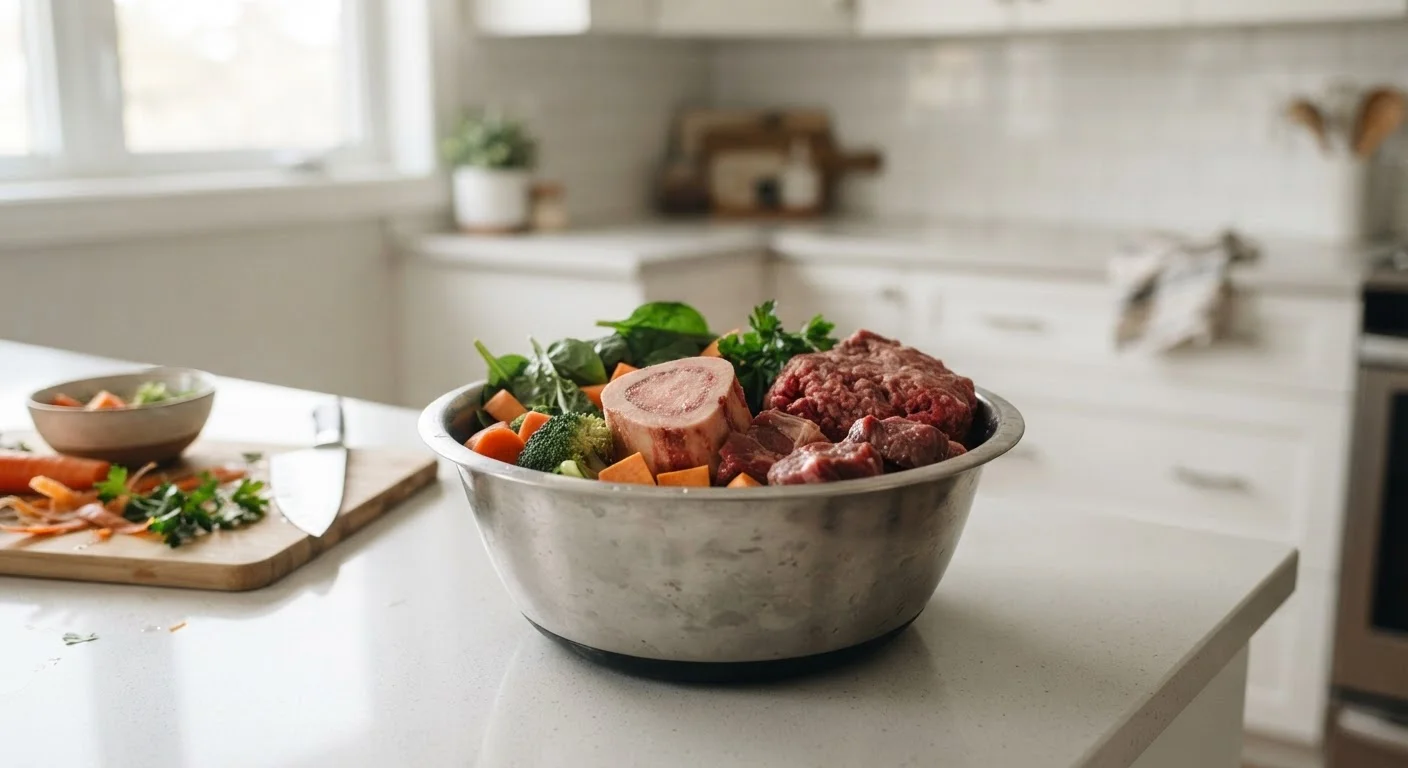
Raw feeding - often called a BARF diet (BARF, or Bones and Raw Food) - involves feeding pets uncooked muscle meat, organ meat, raw meaty bones, and sometimes raw fruits, vegetables, and eggs. Some owners prepare meals at home; others purchase commercially prepared raw products, fresh-frozen or freeze-dried.
Proponents argue that this approach mirrors the ancestral diet of dogs and cats more closely than processed kibble. Critics, including many veterinary organizations, point to meaningful gaps in safety evidence. Understanding both sides requires separating owner-reported experience from peer-reviewed data - a distinction that matters when your pet's health is the subject.
For a broader comparison of feeding formats, see wet food, dry food, and raw diet trade-offs.
The Case For Raw Feeding
Owners who feed raw diets frequently report visible improvements in their pets - shinier coats, firmer stools, and higher energy levels. While these accounts are widespread, it is important to recognize that most are observational rather than controlled.
High moisture content supports urinary health
Raw diets are naturally high in water, which can benefit cats especially, as adequate hydration supports kidney function and may reduce risk of lower urinary tract issues.
Minimally processed animal protein for obligate carnivores
Cats require nutrients - like taurine and arachidonic acid - found primarily in animal tissue. Raw meat delivers these in unprocessed form, though well-formulated commercial diets also meet these needs.
Owner-reported coat and digestive improvements
Many owners observe firmer stools, reduced shedding, and improved coat quality, though these reports are largely anecdotal and have not been consistently replicated in controlled trials.
Potential positive effects on gut microbiome diversity
Emerging research suggests raw-fed dogs may show different gut microbiome profiles compared to kibble-fed dogs, though what this means for long-term health is not yet fully established.
Some limited research does support specific benefits. A 2020 study published in PLOS ONE found differences in gut microbiome diversity between raw-fed and kibble-fed dogs, though the clinical significance of those differences is still being studied. Higher moisture content in raw diets may also support urinary tract health, particularly in cats prone to lower urinary tract disease.
Cats, as obligate carnivores, have metabolic requirements closely tied to animal protein, which raw diets can deliver in minimally processed form - potentially preserving heat-sensitive amino acids like taurine, though commercially manufactured cat foods are formulated to compensate for processing losses.
The Case Against Raw Feeding
The concerns raised by veterinary organizations - including the American Veterinary Medical Association (AVMA) and the American Animal Hospital Association (AAHA) - center on three interconnected problems: pathogen risk, nutritional imbalance, and physical injury from bones.
Documented pathogen contamination risk
Studies consistently detect Salmonella, Listeria, and E. coli in raw pet food products. These pathogens can be shed by pets and pose real infection risk to people in the household, particularly vulnerable individuals.
Nutritional imbalances common in homemade recipes
Research shows most homemade raw diets are deficient in calcium, phosphorus, and key vitamins. Without formulation by a veterinary nutritionist and regular testing, these gaps can cause serious long-term health problems.
Risk of injury from raw bones
Whole raw bones can cause dental fractures, choking, and gastrointestinal obstruction or perforation - injuries that can require emergency veterinary intervention.
Elevated risk for immunocompromised household members
The AVMA and CDC have both noted that households with young children, pregnant individuals, or immunocompromised persons face meaningfully higher infection risk from raw-pet-food-associated pathogens.
Lack of regulatory oversight equivalent to commercial pet food
Homemade raw diets are not subject to AAFCO nutritional standards or feeding trials, meaning there is no independent verification that they are complete and balanced for any life stage.
Pathogen contamination is the most extensively documented concern. Multiple studies have detected Salmonella, Listeria monocytogenes, and E. coli in commercially prepared raw pet foods. These organisms shed in feces and saliva, creating transmission risk for people in the home - especially children, elderly individuals, and anyone who is immunocompromised.
Nutritional imbalances are equally serious. A 2011 analysis published in the Journal of Animal Physiology and Animal Nutrition found that the majority of homemade raw recipes were deficient in key nutrients including calcium, phosphorus, zinc, and vitamins D and E. Unlike commercial diets formulated to AAFCO (Association of American Feed Control Officials) standards, homemade raw meals rarely undergo nutritional testing. See our guide on evaluating pet food nutritional soundness for what to look for.
AAFCO Nutritional Standards Explained
The Association of American Feed Control Officials (AAFCO) sets nutritional profiles that commercial pet foods must meet to carry a 'complete and balanced' label. These standards define minimum and maximum levels for protein, fat, vitamins, and minerals by life stage. Most homemade raw diets - and many raw commercial products - are not formulated or tested against these benchmarks. When evaluating any diet, checking for AAFCO compliance is a useful starting point, though it is not the only indicator of quality.
Making an Informed Decision
If you are seriously considering raw feeding, the single most important step is consulting a board-certified veterinary nutritionist before making any change. A qualified professional can formulate a diet that is complete and balanced for your individual pet's life stage, weight, and health status - rather than relying on generic recipes whose nutritional adequacy is unverified.
86%
Homemade raw recipes with nutritional deficiencies
A study in the Journal of Animal Physiology and Animal Nutrition found the vast majority of analyzed homemade raw diets failed to meet established nutritional requirements.
~20-35%
Commercial raw products testing positive for pathogens
Multiple independent studies and FDA sampling programs have found Salmonella or Listeria contamination in a substantial proportion of raw commercial pet food samples tested.
Food safety practices are non-negotiable for raw feeders. These include dedicated preparation surfaces and utensils, thorough handwashing, and safe thawing protocols. Households with young children, pregnant individuals, or immunocompromised members should weigh these risks carefully.
Raw feeding is not an all-or-nothing decision. Some owners transition partially, or explore high-pressure processed (HPP) raw products that reduce - though do not eliminate - pathogen load. For those drawn to minimally processed nutrition but wary of raw risks, homemade cooked diets represent an alternative worth discussing with your vet. You may also want to review whether pet supplements could address specific nutritional gaps if you do pursue raw feeding.
This article provides general educational information about pet nutrition and is not a substitute for advice from a licensed veterinarian or veterinary nutritionist regarding your individual pet's dietary needs.