

Key Takeaways
- Dry kibble is cost-effective and convenient but contains less moisture than wet or raw options.
- Wet food provides higher hydration and is often more palatable for picky eaters or senior pets.
- Raw diets carry genuine food safety risks and require careful handling and nutritional balancing.
- No single diet format is universally superior - the right choice depends on your pet's life stage, health, and your household's capacity.
- Any major dietary change should be discussed with a veterinarian before implementation.
Our Verdict
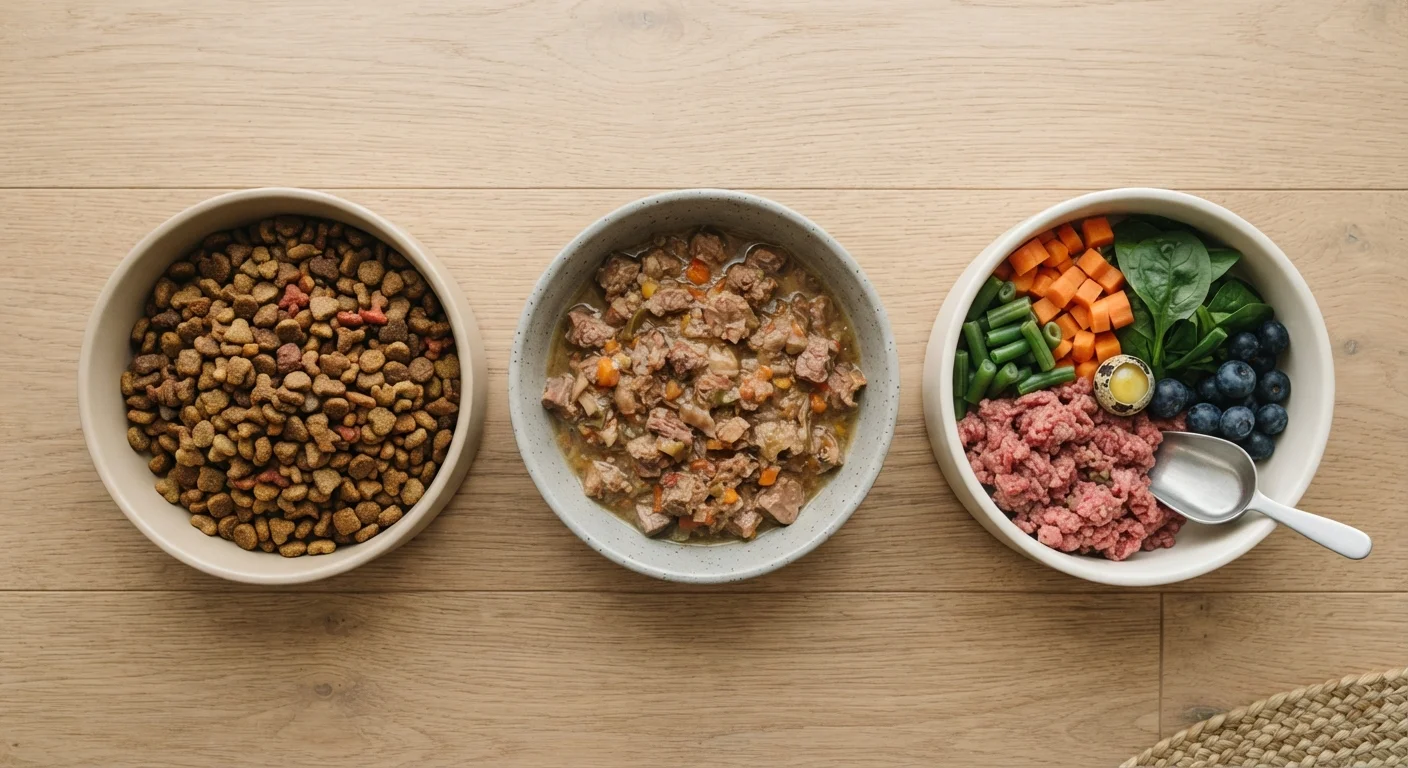
Dry kibble, wet food, and raw diets each serve different pets and households well. Kibble offers ease and long shelf life; wet food delivers hydration and palatability; raw feeding can align with a carnivore-appropriate philosophy but demands strict food safety practices and nutritional oversight. There is no single correct answer - the right format is the one that meets your specific pet's nutritional needs, health status, and your ability to prepare it safely and consistently.
| Best for | Recommended |
|---|---|
| Budget-conscious owners with busy schedules | Dry kibble |
| Cats with urinary issues or pets with low thirst drive | Wet food |
| Experienced owners with time for safe preparation and vet oversight | Raw diet |
| Pets with palatability challenges or dental limitations | Wet food |
Why Diet Format Matters Beyond the Label
The format of your pet's food - dry, wet, or raw - shapes far more than texture. It affects moisture intake, digestibility, caloric density, microbial safety, and even how easily you can calibrate portion sizes. For dogs and cats alike, these differences can have meaningful health consequences over a lifetime.
Before comparing formats, it helps to understand what a nutritionally sound diet actually requires. Our guide to evaluating pet food walks through what labels tell you - and what they don't. Diet format is one layer of that larger picture, not the whole story.
Most veterinary nutritionists agree that the best diet for a pet is one that meets established nutritional standards (such as those set by the Association of American Feed Control Officials, or AAFCO), suits the animal's life stage and health needs, and can be fed consistently and safely. With that baseline in mind, here's how the three main formats compare.
Dry Kibble: Convenience With Trade-Offs
Dry kibble is by far the most widely fed pet food format in the United States. Its advantages are practical: it stores well at room temperature, is typically the most affordable option per calorie, and is easy to measure for portion control - a factor that matters given how common pet overweight is. See our overview of pet obesity and body condition scoring for context on why portion discipline matters.
The nutritional trade-off is moisture. Dry kibble typically contains only 8-12% water, compared to 70-80% in canned food. Cats in particular evolved as low-thirst desert animals who historically obtained most of their water through prey. A kibble-only diet may not provide sufficient hydration for cats prone to urinary tract issues or kidney disease.
Kibble also tends to be more calorically dense, which makes accidental overfeeding easy. On the upside, the mechanical abrasion of crunching dry food offers some modest dental benefit, though it is not a substitute for active dental hygiene.
Pair Kibble With Moisture Sources
If your pet eats primarily dry food, consider adding water or a small amount of wet food to their meal to boost hydration. This is especially beneficial for cats, who tend to drink less water than dogs and are more susceptible to urinary and kidney issues when chronically underhydrated. Discuss the appropriate ratio with your veterinarian.
Wet Food: Hydration and Palatability
Canned and pouch-format wet foods deliver significantly more moisture per serving, which supports kidney function and urinary health - particularly important for cats. The higher water content also means fewer calories per gram, which can help with weight management if portions are monitored carefully alongside overall intake. For a deeper look at how kibble and canned food compare nutritionally, our article on kibble and wet food nutritional trade-offs goes into further detail.
Wet food is generally more palatable, making it useful for picky eaters, recovering animals, seniors with reduced appetite, and pets with dental pain who struggle to crunch kibble. Its soft texture also makes it easier to mix in medications.
The practical downsides are cost and storage. Wet food is typically more expensive per calorie than dry, spoils rapidly once opened (refrigerate and use within 24-48 hours), and is less convenient for free-feeding. Some pet owners use a combination approach - wet food as a hydration and palatability boost alongside a dry kibble base.
| Dry Kibble | Wet Food | Raw Diet | |
|---|---|---|---|
| Moisture Content | 8-12% | 70-80% | 60-75% (varies) |
| Relative Cost | Lowest per calorie | Moderate to high | High (especially commercial) |
| Convenience | Very high - shelf-stable | Moderate - refrigerate once opened | Low - requires handling, thawing |
| Food Safety Risk | Low | Low to moderate | High - pathogen exposure risk |
| Nutritional Completeness | Reliable if AAFCO-compliant | Reliable if AAFCO-compliant | Variable - depends on formulation |
| Best Suited For | Most dogs and cats | Cats, seniors, picky eaters | Experienced owners with vet oversight |
Raw Diets: Potential Benefits and Real Risks
Raw feeding - whether commercially prepared frozen raw or home-assembled combinations of meat, bones, and organs - appeals to owners who want to align their pet's diet more closely with what ancestral carnivores ate. Proponents suggest benefits including improved coat condition, smaller stool volume, and better digestibility. However, controlled research supporting these specific claims remains limited, and veterinary organizations including the American Veterinary Medical Association (AVMA) have expressed concern about raw diets.
The most significant and well-documented concern is food safety. Raw meat can harbor pathogens such as Salmonella, Listeria, and E. coli - risks not only to the pet but to human household members, especially children, elderly individuals, and immunocompromised people. The AVMA discourages raw protein feeding specifically due to these public health considerations.
Nutritional balance is a second serious challenge. Home-assembled raw diets frequently lack critical nutrients - calcium-to-phosphorus ratios, essential vitamins, and trace minerals - unless formulated with veterinary nutritionist input. Our article on homemade pet food gaps addresses this problem in detail. Commercially prepared raw foods that meet AAFCO standards reduce - though don't eliminate - this risk.
Raw Diets Pose Household Safety Risks
Handling raw pet food requires the same hygiene protocols as handling raw meat for human consumption - thorough handwashing, sanitizing surfaces, and keeping food preparation areas separate. Households with young children, pregnant individuals, or immunocompromised members face elevated risk from pathogen exposure. The American Veterinary Medical Association recommends discussing raw feeding risks with a veterinarian before starting.
Choosing Based on Your Pet's Specific Needs
Diet format decisions should account for your pet's species, age, and health status. A kitten, adult cat, and senior dog each have meaningfully different nutritional requirements. Our guide to pet nutrition across life stages explains what changes at each stage and why it matters at the bowl.
Pets with food sensitivities, kidney disease, diabetes, or digestive conditions may have format requirements that override general guidelines - always consult your veterinarian before making significant changes. If you're considering switching formats, a gradual transition over 7-10 days reduces the likelihood of digestive upset. Our transition guide explains the process step by step.
Finally, regardless of format, look for foods that meet AAFCO nutritional adequacy statements for your pet's life stage, and check with your veterinarian regularly - nutritional needs can shift as your pet ages or if health conditions emerge.
This article is for general informational and educational purposes only. It is not a substitute for professional veterinary advice, diagnosis, or treatment. Always consult a licensed veterinarian regarding your pet's individual dietary needs.