

Key Takeaways
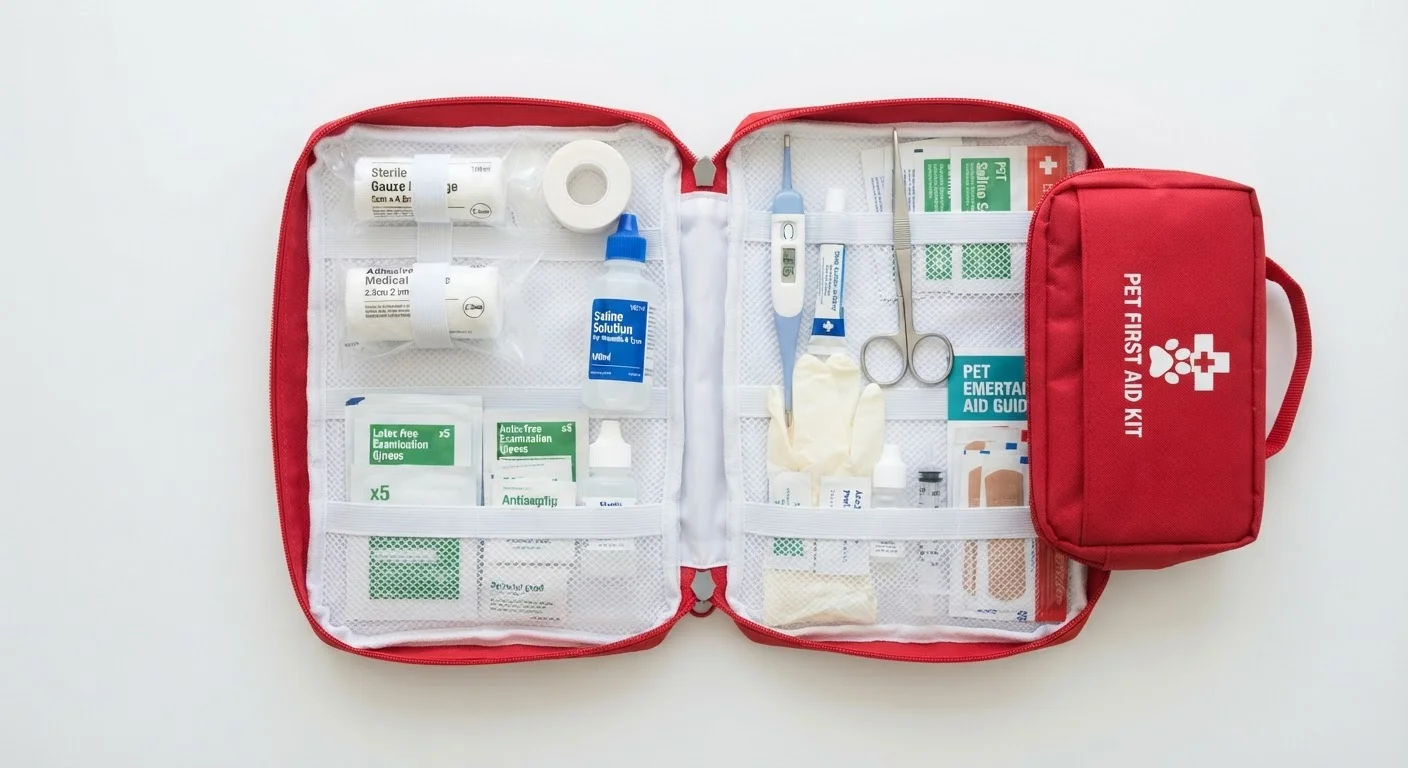
- A pet first aid kit manages minor injuries and stabilizes emergencies - it does not replace veterinary care.
- Supplies should cover wound care, temperature monitoring, restraint, and key contact information.
- Regularly audit your kit every six months to replace expired or depleted items.
- Knowing when NOT to treat at home is just as important as knowing what to include.
- Your veterinarian can advise on pet-specific additions based on your animal's health history.
Summary
22 items · 30-60 minutes to assemble
Why Every Pet Owner Needs a First Aid Kit
Emergencies rarely happen during clinic hours. A pet that cuts a paw on a hiking trail, swallows something suspicious, or suffers a minor burn needs immediate attention - and how you respond in the first several minutes can meaningfully affect the outcome. A prepared kit doesn't turn you into a veterinarian, but it gives you the tools to stabilize, comfort, and protect your pet while you arrange professional care.
Think of a pet first aid kit the way you'd think about any household preparedness measure: assembled before you need it, reviewed regularly, and used with clear limits in mind. The New Pet Owner's Roadmap to Veterinary Care offers helpful context for building a broader health safety net alongside this kit.
First Aid Is Not a Substitute for Veterinary Care
No home kit - no matter how well stocked - replaces a licensed veterinarian's assessment and treatment. Every situation where you apply first aid should be followed by a call to your vet, even if your pet appears to recover quickly. Some injuries and toxin exposures present delayed symptoms that only a professional can evaluate.
What to Put in Your Pet First Aid Kit
The list below is organized by category so you can assemble supplies methodically. Some items - like hydrogen peroxide - appear in older guides but should only be used under direct veterinary instruction, as inducing vomiting incorrectly can cause serious harm. When in doubt, call your vet or an animal poison control hotline before acting.
Sterile saline wound wash
Flushes foreign material and bacteria from cuts and abrasions safely without damaging tissue.
Digital rectal thermometer
Measures your pet's core temperature to help assess fever or hypothermia.
Cohesive bandage wrap (vet wrap)
Secures wound dressings on limbs without adhering to fur or requiring scissors to remove.
Tick removal tool or fine tweezers
Removes embedded ticks cleanly at the skin surface to reduce infection risk.
Emergency mylar blanket
Retains body heat for a pet in shock or exposed to cold during transport.
Soft muzzle or nylon slip lead
Allows safe handling of a frightened or painful pet that may bite defensively.
Wound Care & Bandaging
Monitoring & Examination Tools
Restraint & Safety
Instruments & Utilities
Information & Documentation
When to Use It - and When to Go Straight to the Vet
Your first aid kit is appropriate for minor, non-life-threatening situations: small surface cuts, minor insect stings, a splinter, or mild paw abrasions. It is also a stabilization tool for emergencies while you transport your pet - applying pressure to a wound, keeping an injured limb still, or preventing a pet in shock from injuring themselves further.
Do not attempt home treatment for any of the following - go directly to an emergency veterinary clinic:
- Difficulty breathing or choking
- Suspected poisoning or toxin ingestion
- Loss of consciousness or unresponsiveness
- Suspected broken bones or spinal injury
- Seizures lasting more than two minutes
- Severe, uncontrolled bleeding
- Eye injuries of any severity
Never Give Human Medications Without Vet Guidance
Many over-the-counter medications safe for humans - including ibuprofen, acetaminophen, and certain antacids - are toxic to dogs and cats. Do not administer any medication to your pet unless your veterinarian has explicitly approved it and provided dosage guidance for your specific animal's weight and condition.
Understanding your pet's normal baseline - resting heart rate, normal gum color, typical temperature range - makes it far easier to assess whether something is truly wrong. Ask your veterinarian to walk you through these vitals at your next wellness visit.
This article is for general informational purposes only and does not constitute veterinary medical advice. Always consult a licensed veterinarian for guidance specific to your pet's health and situation.