

Key Takeaways
- Unpaid credit card balances accrue interest daily, not just monthly.
- Minimum payments are designed to keep balances alive longer, maximizing interest paid.
- A $1,000 balance at 20% APR can take years to pay off with minimums alone.
- Paying even modestly above the minimum can save significant money in interest.
- Carrying a balance does not improve your credit score - this is a common myth.
Carrying a Credit Card Balance
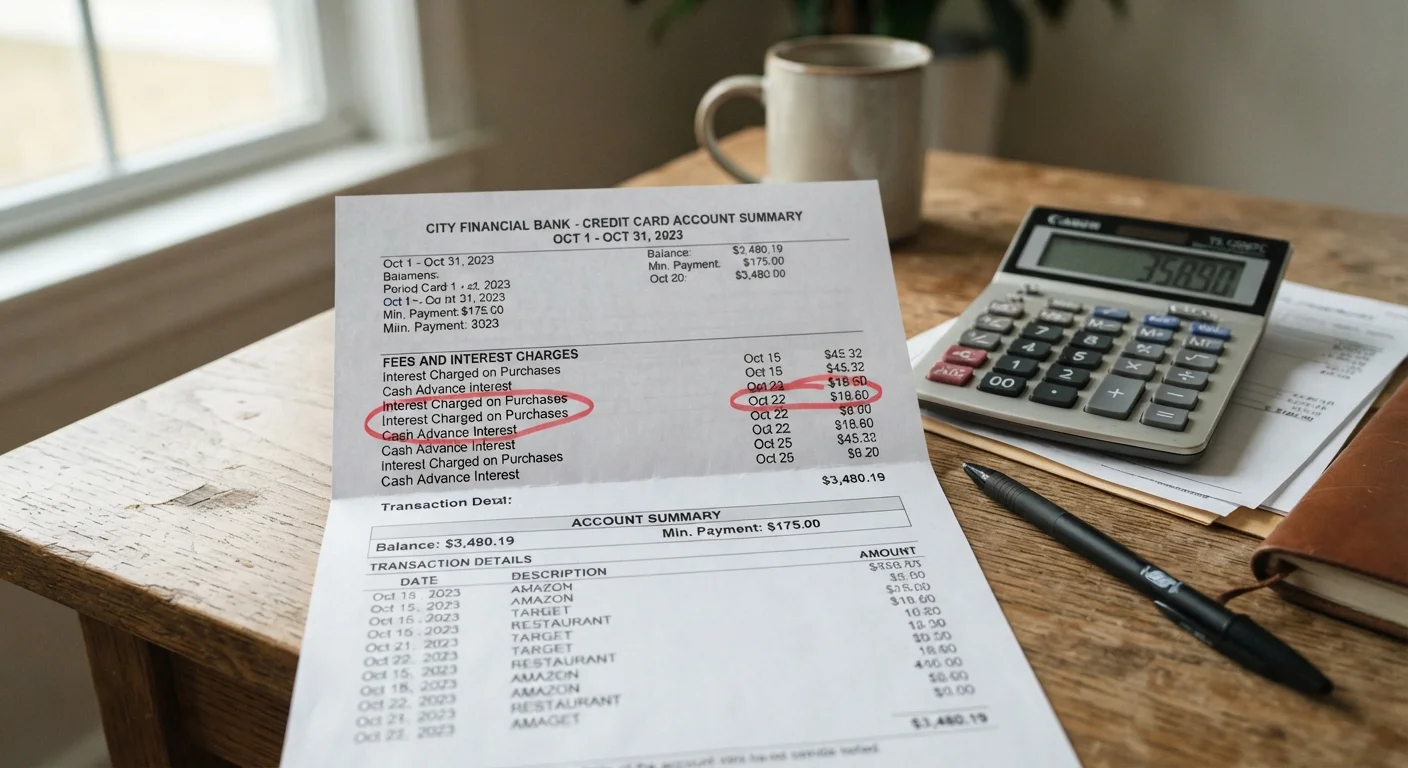
Carrying a credit card balance means you don't pay off your full statement amount by the due date. The unpaid portion rolls over to the next billing cycle and begins accruing interest. That interest is then added to what you owe, which can cause your debt to grow even when you're making regular payments.
Credit card interest is typically calculated using an Average Daily Balance method, meaning interest compounds daily based on your Annual Percentage Rate (APR) divided by 365.
How Interest Actually Accumulates on a Balance
When you leave a balance on your credit card, your issuer charges interest based on your card's Annual Percentage Rate (APR). Despite the name, this rate is applied daily. Your APR is divided by 365 to produce a daily periodic rate, which is then multiplied by your average daily balance for the billing cycle.
Here's what that looks like in practice: A $2,000 balance on a card with a 22% APR accrues roughly $1.21 in interest every single day. That's about $36 added in a single month - before you've even used the card again. Because that interest is added to your balance, the following month's interest is calculated on a slightly larger number. This is compound interest working against you.
One important nuance: most cards offer a grace period - typically 21 to 25 days after the billing cycle closes. If you pay your statement balance in full within that window every month, no interest is charged at all. The moment you carry any balance forward, however, you generally lose the grace period on new purchases too, meaning new charges begin accruing interest immediately.
Grace Period Rules Vary by Issuer
Not all credit cards work identically. Some cards eliminate the grace period as soon as any balance is carried - meaning new purchases start accruing interest immediately. Always review your card's terms and conditions, and contact your issuer directly if you're unsure how your specific card handles grace periods and interest timing.
The Minimum Payment Trap
Credit card issuers typically set minimum payments at a small percentage of your balance - often 1-2% of what you owe, or a flat dollar amount like $25, whichever is greater. These minimums are intentionally low, and that's not an accident.
Consider a $3,000 balance at 22% APR. If your minimum payment starts at $75 and you never charge another dollar, making only minimum payments could keep you in debt for well over ten years - and you might pay more than $3,000 in interest alone over that period. You'd effectively double the cost of whatever you originally purchased.
22%
Average credit card APR in the U.S.
According to Federal Reserve data, average credit card interest rates have risen significantly in recent years, making carried balances increasingly costly.
~47%
U.S. cardholders who carry a balance
The American Bankers Association has reported that roughly half of active credit card accounts carry a balance from month to month.
$1,000+
Potential interest on a $3,000 balance at minimum payments
Consumer Financial Protection Bureau illustrations show that minimum-only payments on a mid-sized balance at typical rates can generate over $1,000 in interest charges before the debt is cleared.
Paying even a fixed amount above the minimum changes the picture dramatically. Adding an extra $50 per month to that same $3,000 balance could cut years off repayment and reduce total interest by hundreds of dollars. The math rewards any additional payment, however modest.
For a structured approach to eliminating multiple balances, consider exploring the debt avalanche and debt snowball methods, two proven frameworks for tackling debt systematically.
Use Your Statement's Payoff Calculator
Federal law requires credit card issuers to include a payoff disclosure on your monthly statement. It shows how long it will take to pay off your balance making only minimum payments, and what monthly amount would clear it in three years. These numbers are eye-opening - and free to access every billing cycle.
What Carrying a Balance Actually Costs You
The true cost of a carried balance goes beyond interest line items. It shapes your broader financial health in ways that aren't always visible month to month.
Credit utilization - the percentage of your available credit you're using - is one of the most influential factors in your credit score. Consistently carrying a high balance relative to your credit limit can suppress your score even if you make every payment on time.
There's also an opportunity cost. Money spent on interest is money not going toward savings, an emergency fund, or other financial goals. A household paying $80 per month in credit card interest is effectively spending nearly $1,000 per year to maintain debt they could be eliminating.
Different types of debt carry different costs and strategies, and credit cards typically sit at the expensive end of the spectrum. Our guide on how debt type changes your strategy explains why the approach you take should match the debt you're carrying.
If you're feeling overwhelmed by where to start, the getting out of debt starter guide walks through practical first steps. And for broader context on credit and banking fundamentals, visit our Credit & Banking hub.
This article is for general informational and educational purposes only and does not constitute personalized financial or legal advice. Consult a licensed financial professional for guidance specific to your situation.