
Secured Cards, Credit-Builder Loans, and Authorized User Status: Credit-Building Tools Compared

Key Takeaways
- Secured cards, credit-builder loans, and authorized user status all report to credit bureaus but work through different mechanisms.
- Secured cards require a cash deposit and help build both payment history and credit utilization habits.
- Credit-builder loans hold funds in escrow, so you build savings and credit simultaneously.
- Authorized user status lets you benefit from another person's credit history without taking on primary responsibility.
- The right tool depends on your current credit situation, cash availability, and access to trusted account holders.
Our Verdict
No single credit-building tool is universally superior - each serves a distinct situation. Secured cards suit those who want a revolving credit line and can manage spending discipline. Credit-builder loans work well for people who want to build savings while establishing installment credit history. Authorized user status is the most passive approach and depends heavily on the primary cardholder's behavior.
| Best for | Recommended |
|---|---|
| Those with no credit history who want active control over building credit | Secured Card |
| Those who want to build both credit and savings with predictable payments | Credit-Builder Loan |
| Those with a trusted family member or partner willing to share their account | Authorized User Status |
| Those who want to diversify their credit mix across account types | Secured Card + Credit-Builder Loan |
Why Credit-Building Tools Exist
Establishing or rebuilding credit can feel like a classic catch-22: lenders want to see a credit history before they'll extend credit, but you need credit to create that history. Several structured tools exist specifically to break that cycle by giving lenders or credit bureaus enough activity to generate a scoreable file.
Each approach works differently at a mechanical level - affecting different credit factors, requiring different resources upfront, and carrying different risks. Understanding how the five factors that shape your credit score interact with each tool helps you choose the one that fits your situation rather than defaulting to the most visible option.
This article is for general educational purposes only and does not constitute personalized financial advice. Consult a qualified financial professional for guidance specific to your circumstances.
Secured Credit Cards
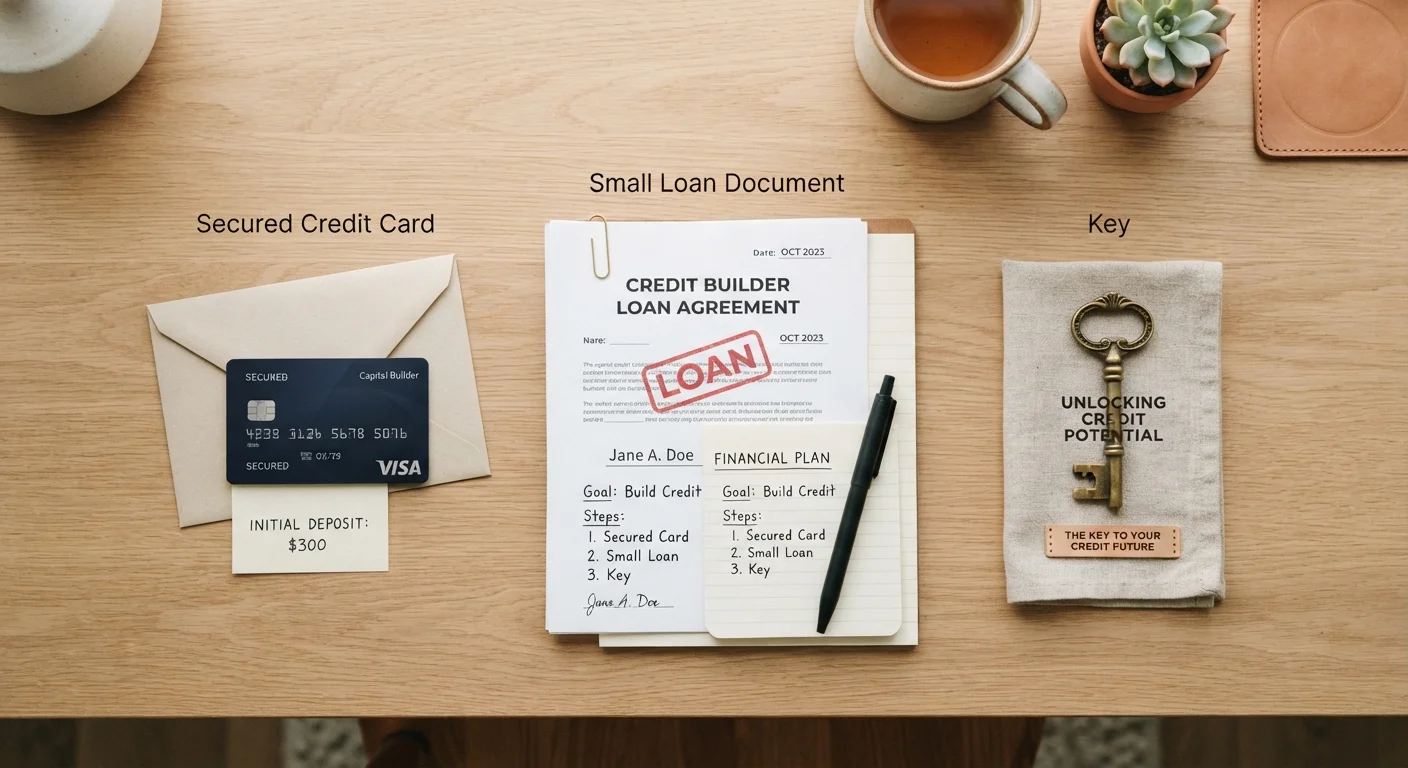
A secured credit card works almost identically to a standard credit card, with one key difference: you provide a cash deposit - typically equal to your credit limit - that the issuer holds as collateral. Spend $300, charge it to the card, pay it back, and the bureau records that activity just as it would for any revolving account.
What they build: Payment history (the largest single credit score factor) and credit utilization habits. Keeping your balance well below the limit is important - credit utilization trips up even careful borrowers because a high balance-to-limit ratio can drag down a score even if every payment is on time.
Upfront cost: The deposit itself, which is typically refundable when the account is closed or upgraded. Some issuers also charge annual fees - read the terms carefully before opening any account.
Key risk: Overspending. Because the card functions like a normal credit card, carrying a large balance or missing a payment can damage the score you're trying to build.
Pair Tools to Build a Diverse Credit Mix
Scoring models generally reward having both revolving accounts (like credit cards) and installment accounts (like loans) on your credit file. Using a secured card and a credit-builder loan together - if your budget allows - can help establish that mix faster than either tool alone. Keep balances low and payments on time for both.
Many issuers will review a secured card account after 12 to 18 months of responsible use and may offer to upgrade it to an unsecured card, returning the deposit. Timelines vary by issuer.
Credit-Builder Loans
A credit-builder loan reverses the typical loan structure. Instead of receiving money upfront and paying it back, you make monthly payments into a locked savings account. At the end of the loan term, you receive the accumulated funds - minus any fees or interest - and the lender reports your payment history to the credit bureaus throughout.
What they build: An installment loan tradeline, which contributes to both payment history and credit mix. Having both revolving (card) and installment (loan) accounts on a credit file can be a positive signal to scoring models, as explained in our guide to the factors that shape your credit score.
Upfront cost: Usually low - often just a small application fee. Monthly payments are typically modest, ranging from around $25 to $150 depending on the lender and term.
Key risk: Missing a payment still harms your credit. Treat these payments like any other bill obligation.
| Secured Card | Credit-Builder Loan | Authorized User | |
|---|---|---|---|
| Upfront cost | Cash deposit required | Low/no deposit, small fees | None for authorized user |
| Account type reported | Revolving credit | Installment loan | Revolving (primary holder's) |
| Control over outcome | High - your own account | High - your own account | Low - depends on primary holder |
| Builds savings | No | Yes - funds released at term end | No |
| Risk of negative impact | Overspending or missed payments | Missed payments | Primary holder's behavior |
| Typical time to credit impact | 1-3 months to appear | 1-3 months to appear | Can appear quickly or not at all |
Authorized User Status
When someone adds you as an authorized user on their credit card account, that account's history may appear on your credit report - including the account's age, credit limit, and payment record. You don't need to use the card, or even receive a physical card, for the tradeline to potentially benefit your file.
What it builds: Depending on how scoring models treat the account, you may gain positive payment history and a lower utilization ratio if the primary cardholder maintains a low balance. Building credit from zero often starts here because no deposit or loan payment is required.
Upfront cost: None for the authorized user. The primary cardholder assumes full legal responsibility for charges.
Key risks: This approach depends entirely on the primary cardholder's habits. If they miss payments or carry high balances, that negative activity can appear on your report too. Note also that some scoring models - particularly older FICO versions - may weight authorized user accounts differently than primary accounts. If the relationship with the cardholder changes, you could be removed at any time.
Authorized User Arrangements Carry Shared Risk
Before agreeing to become an authorized user - or adding someone to your account - both parties should understand the implications. The primary cardholder is legally responsible for all charges. Negative payment history on the account can appear on the authorized user's credit report as well, not just positive history. Enter these arrangements only with someone whose financial habits you trust completely.
Choosing the Right Approach
These tools aren't mutually exclusive. Many people use two or more simultaneously - for example, becoming an authorized user while also opening a secured card - to diversify credit account types and accelerate file-building. If a credit report already contains errors dragging down a score, addressing those first can be just as impactful; see our overview of disputing errors on your credit report before adding new accounts.
When weighing your options, consider three practical questions: Do you have cash available for a deposit? Do you have a trusted person willing to add you to their account? Do you prefer building savings alongside credit? Your answers point directly to the tools most likely to fit your circumstances.
Regardless of the tool chosen, consistency matters most. On-time payments, low balances on revolving accounts, and patience - credit files typically take several months to a year of activity before generating a strong score - are the real drivers of progress. No product can replace those habits.
This article is for general informational purposes only and does not constitute personalized financial or credit advice. Consult a licensed financial professional for guidance tailored to your specific situation.