

Key Takeaways
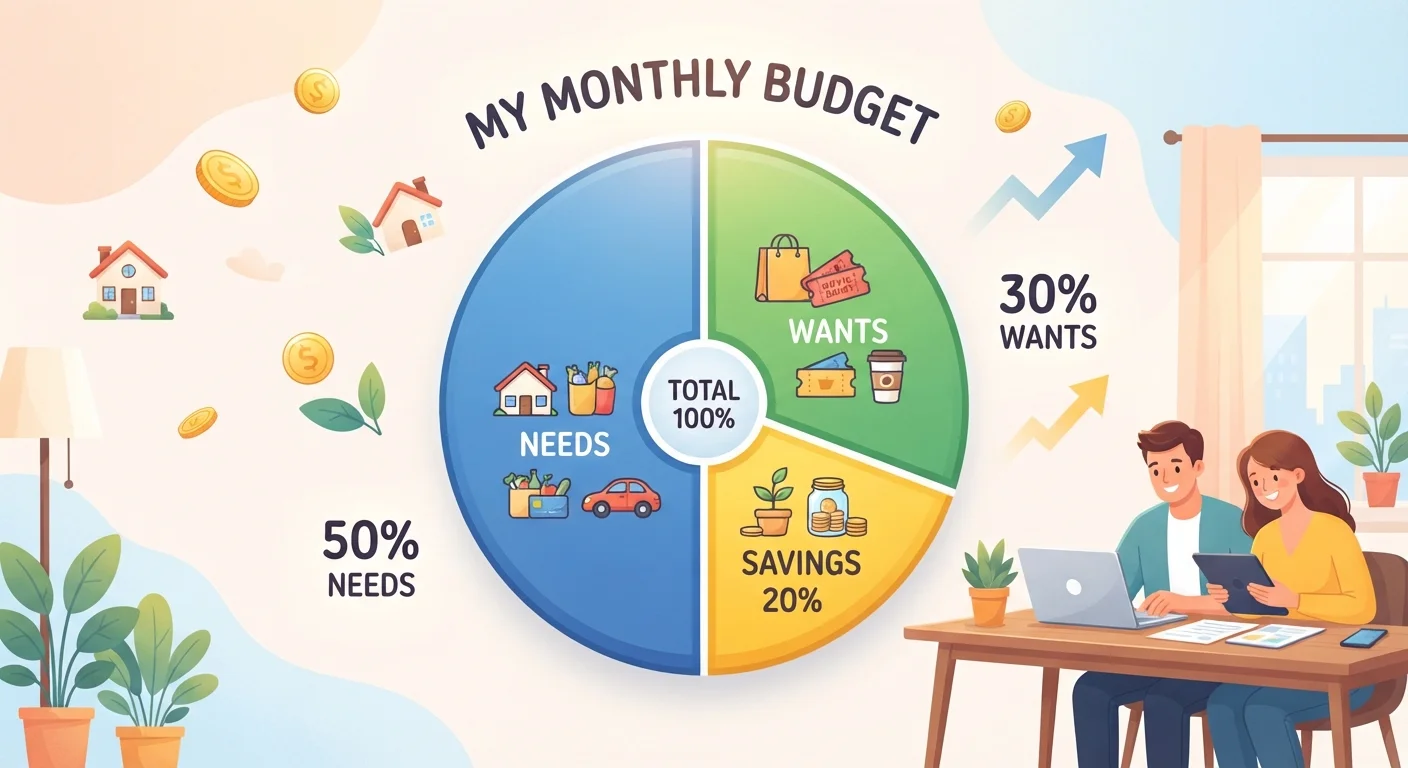
- The rule splits after-tax income into needs (50%), wants (30%), and savings or debt repayment (20%).
- Needs include housing, utilities, groceries, and minimum debt payments - essentials you can't avoid.
- Wants cover discretionary spending like dining out, subscriptions, and entertainment.
- The 20% savings category includes emergency funds, retirement contributions, and extra debt payments.
- The rule is a starting point, not a rigid formula - it may need adjustment for high-cost areas or low incomes.
- Consulting a financial professional can help tailor any budgeting approach to your specific situation.
The 50/30/20 Rule
The 50/30/20 rule is a budgeting framework that divides your after-tax income into three categories: 50% toward needs, 30% toward wants, and 20% toward savings or debt repayment. It offers a straightforward starting point for people who want to manage money without building a detailed line-item budget. The goal is balance - covering essentials, allowing some flexibility, and making consistent financial progress.
The framework was popularized in the book 'All Your Worth' by Senator Elizabeth Warren and her daughter Amelia Warren Tyagi, who drew on consumer bankruptcy research to argue for a balanced spending ratio.
How the Three Categories Break Down
Understanding the 50/30/20 rule starts with knowing what goes where. The framework applies to your after-tax income - the money deposited into your account after federal, state, and payroll taxes are withheld.
50% - Needs
This half of your budget covers the essentials: housing, utilities, groceries, health insurance premiums, transportation costs required for work, and minimum payments on any debts. The defining test is whether skipping the expense would have serious, unavoidable consequences. Distinguishing true needs from wants is trickier than it sounds - a streaming subscription feels necessary, but it isn't in the same category as your electric bill.
30% - Wants
Wants are the spending choices that improve your quality of life but aren't strictly required. Dining out, gym memberships, travel, new clothes beyond the basics, entertainment, and hobby expenses all fall here. This category is not frivolous - it acknowledges that sustainable budgeting includes room for enjoyment.
20% - Savings and Debt Repayment
The final slice goes toward building financial security. This includes contributions to an emergency fund, retirement accounts, and any debt payments beyond the minimums. Building an emergency fund is often the recommended first priority within this 20%, followed by high-interest debt payoff and long-term saving.
~35%
Average share of income spent on housing
According to the U.S. Bureau of Labor Statistics Consumer Expenditure Survey, housing typically accounts for around a third of household spending - making it the largest single need category.
57%
Americans living paycheck to paycheck
A recurring finding in LendingClub consumer surveys indicates that a majority of U.S. adults report having little or no money left after covering monthly expenses.
Less than $1,000
Emergency savings for many U.S. adults
Bankrate surveys have consistently found that a significant share of Americans lack adequate emergency savings, underscoring the importance of the 20% savings target.
A Simple Example in Practice
Applying the rule to real numbers makes the abstract concrete. Suppose your monthly after-tax income is $4,000.
| Category | Percentage | Monthly Amount |
|---|---|---|
| Needs | 50% | $2,000 |
| Wants | 30% | $1,200 |
| Savings / Debt | 20% | $800 |
With $2,000 for needs, you'd cover rent, utilities, groceries, and insurance. The $1,200 for wants handles dining, subscriptions, and personal spending. The $800 could go toward a retirement account contribution, an emergency fund, or accelerated student loan payments - or a combination of all three.
For a more structured approach to the savings portion, building your budget around savings goals can help you turn that 20% into a concrete plan rather than a vague intention.
When the 50/30/20 Rule Doesn't Fit
The rule works well as a starting template, but it isn't universally applicable. Several real-world situations push against its assumptions.
- High housing costs: In cities where a one-bedroom apartment can consume 40% or more of take-home pay on its own, the 50% needs ceiling becomes nearly impossible to meet without other adjustments.
- Low income: When income is modest, essential expenses may take up 70-80% of take-home pay, leaving little room for the 30% wants category or consistent savings.
- Heavy debt load: Someone carrying significant high-interest debt may need to redirect a larger share - perhaps 30-35% - toward repayment to make meaningful progress.
- Variable income: Freelancers, contractors, and gig workers face irregular monthly income, making fixed percentage targets harder to apply consistently.
Adapt the Ratios to Your Reality
If your needs genuinely exceed 50%, try trimming the wants category first before concluding the framework doesn't work. Small reductions - cutting one subscription, dining out less often - can restore balance without major lifestyle changes. If costs are structurally too high, consider whether a larger income or housing change is the real lever.
If the standard ratios don't reflect your reality, that's not a personal failing - it's a signal to adapt the framework. Alternatives to the 50/30/20 rule are worth exploring if your income or expenses don't fit neatly into these buckets. You might also compare it to other frameworks by reviewing zero-based budgeting vs. the 50/30/20 method.
“The secret to getting ahead is getting started. A simple framework, even an imperfect one, beats no plan at all.”
— Amelia Warren Tyagi, Co-author of 'All Your Worth,' the book that popularized the 50/30/20 budgeting framework
This article is for general informational and educational purposes only and does not constitute personalized financial advice. Consult a licensed financial professional for guidance tailored to your specific situation.