

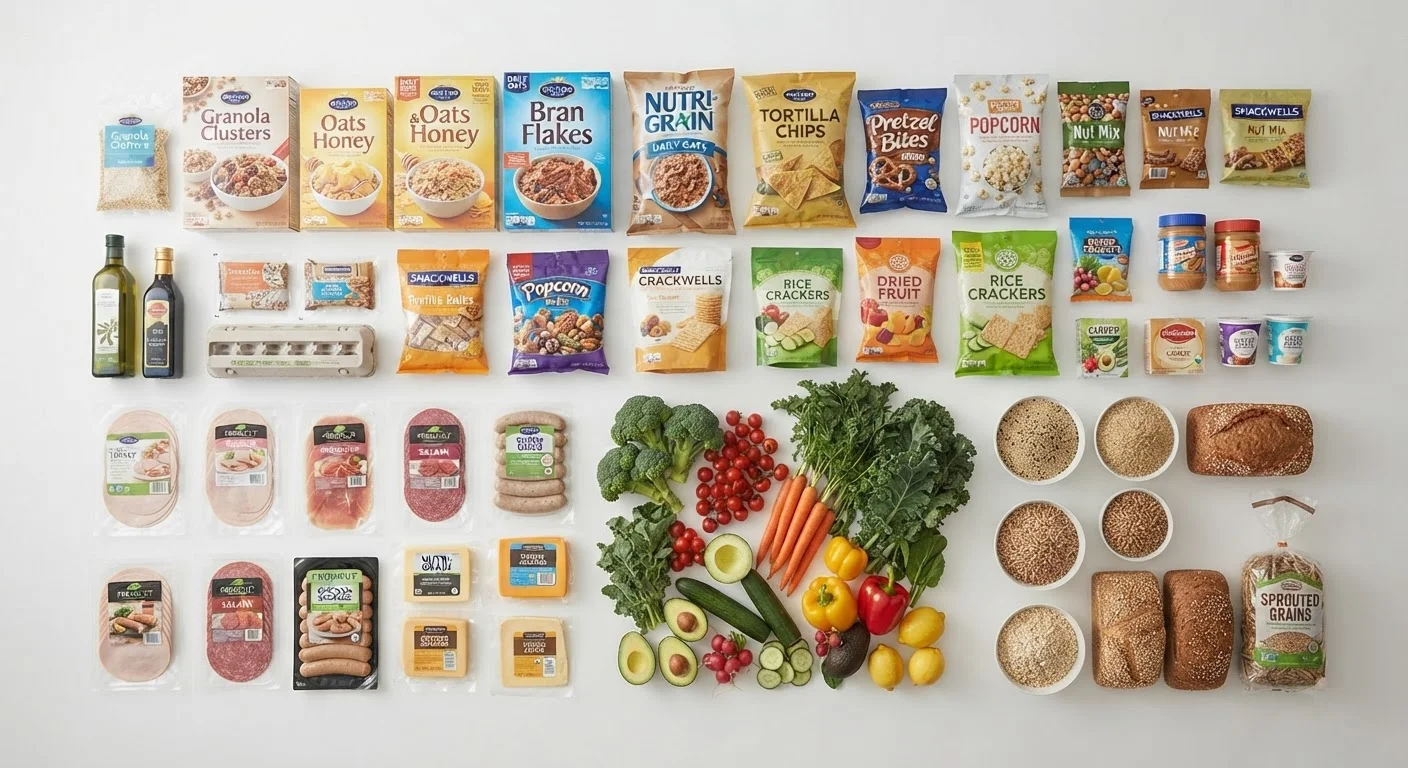
Key Takeaways
- The NOVA system classifies foods by processing method and purpose, not nutrient content alone.
- Ultra-processed foods (NOVA Group 4) are defined by industrial additives absent from standard kitchen cooking.
- Observational studies associate high ultra-processed food intake with several chronic disease risks, though causation is not established.
- Common examples include packaged snack foods, soft drinks, instant noodles, and many breakfast cereals.
- Reducing ultra-processed food intake is broadly supported by nutrition researchers, though dietary context always matters.
- A qualified healthcare or nutrition professional can help translate these findings into personal dietary guidance.
Ultra-Processed Foods (NOVA Group 4)
Ultra-processed foods are industrially manufactured products made mostly from refined substances - such as refined starches, oils, sugars, and proteins - with little or no whole food content. They typically contain additives like artificial flavors, colors, emulsifiers, and preservatives not found in home kitchens. The category is defined by the NOVA classification system, developed by researchers at the University of São Paulo, which groups foods by their degree and purpose of processing rather than by nutrients alone.
NOVA Group 4 is distinguished from other processed foods (Groups 2 and 3) by the use of industrial ingredients and additives specifically designed to alter texture, palatability, or shelf life in ways that mimic but differ from minimally processed whole foods.
How the NOVA Classification System Works
Most people think of food processing as a spectrum from "natural" to "artificial," but the NOVA classification system - developed by researchers at the University of São Paulo - offers a more structured framework. It organizes all foods into four groups based on the extent and purpose of industrial processing applied to them.
- Group 1 (Minimally processed): Whole or near-whole foods altered only by cleaning, freezing, fermenting, or drying - such as fresh produce, plain dried legumes, and unseasoned frozen vegetables.
- Group 2 (Processed culinary ingredients): Substances extracted from whole foods and used in cooking, including oils, flours, and sugars.
- Group 3 (Processed foods): Products made by combining Group 1 and 2 items, such as canned fish in brine, simple cheeses, and cured meats with few added ingredients.
- Group 4 (Ultra-processed foods): Industrial formulations containing little whole food, built largely from refined ingredients and a range of additives designed to enhance flavor, texture, appearance, or shelf stability.
The key distinction of Group 4 is not caloric density or a single nutrient - it is the systematic use of ingredients and additives that are not found in ordinary home cooking, such as maltodextrin, carrageenan, hydrogenated oils, and artificial flavors.
NOVA Is a Research Tool, Not a Regulatory Standard
The NOVA classification is widely used in academic nutrition epidemiology and has been adopted by several national dietary guidelines internationally, but it is not an official regulatory category in the United States. The FDA does not formally classify foods using NOVA terminology, and food labels do not indicate NOVA group. Researchers apply NOVA retroactively to dietary recall data to study population-level patterns.
What Research Associates With High Consumption
A substantial and growing body of observational research has examined associations between ultra-processed food intake and health outcomes. Because these studies track large populations over time rather than conducting controlled experiments, they identify correlations rather than confirmed causal relationships - an important distinction when interpreting findings.
Across multiple large cohort studies conducted in Europe, the United States, and Brazil, researchers have found associations between high ultra-processed food consumption and elevated risk of:
- Cardiovascular disease and related mortality
- Type 2 diabetes
- Obesity and excess weight gain
- Colorectal cancer (among other cancer types in some studies)
- Depression and poorer mental health outcomes
~57%
Share of US daily calories from ultra-processed foods
Analysis of National Health and Nutrition Examination Survey (NHANES) data, published in the British Medical Journal, estimated that ultra-processed foods account for roughly 57% of energy intake in the average American diet.
12%
Increased cardiovascular disease risk per 10% more UPF intake
A large prospective cohort study published in The BMJ found that each 10-percentage-point increase in ultra-processed food consumption was associated with a roughly 12% higher rate of cardiovascular disease events, after adjustment for measured confounders.
500 kcal/day
Excess calories consumed on ultra-processed diet
A randomized controlled trial conducted by the National Institutes of Health found participants assigned to an ultra-processed diet consumed approximately 500 more calories per day compared to those on a minimally processed diet matched for offered macronutrients.
Researchers have proposed several biological mechanisms to explain these associations. Ultra-processed products tend to be highly palatable and energy-dense, potentially disrupting appetite-regulation signals. They are also typically low in dietary fiber, which plays a role in gut microbiome health and glycemic response. Some specific additives - such as certain emulsifiers - are under active laboratory investigation for effects on intestinal barrier function, though human evidence remains preliminary.
It is worth noting that dietary pattern studies face an inherent challenge: people who consume more ultra-processed foods often differ from those who consume fewer in ways that independently affect health, including physical activity levels, socioeconomic status, and access to fresh food. Researchers attempt to account for these confounders statistically, but complete adjustment is not possible.
Recognizing Ultra-Processed Foods in Practice
Applying NOVA Group 4 criteria in a grocery store requires looking beyond marketing claims. A product labeled "whole grain," "natural," or "high protein" can still be ultra-processed if its ingredient list includes multiple industrial additives.
A practical approach is to scan ingredient lists for substances that would not be used in a home kitchen: modified starches, protein isolates, interesterified fats, artificial sweeteners, flavor enhancers (such as disodium inosinate), and synthetic colorants. The presence of several such ingredients - not just one - is the distinguishing signal of a Group 4 product.
Ultra-processed foods are not limited to obviously indulgent items. Mass-market flavored yogurts, packaged deli meats containing stabilizers, infant formulas with synthetic additives, and many "health" bars fall within NOVA Group 4 depending on their formulation. This complexity is one reason nutrition researchers advocate reading full ingredient lists rather than relying on front-of-pack claims.
For a broader look at how dietary patterns interact, see the research on plant-based and omnivorous diets and consider how food quality - not just macronutrient ratios - factors into long-term outcomes.
Use Ingredient Lists, Not Front Labels
Marketing claims on the front of packaging - such as 'natural,' 'wholesome,' or 'made with real ingredients' - are not regulated in a way that excludes ultra-processed formulations. Flipping to the ingredient list and looking for substances you would not find in a home kitchen is a more reliable way to identify NOVA Group 4 products. A shorter ingredient list with recognizable items generally indicates less industrial processing.
Putting the Evidence in Context
The NOVA framework has gained wide adoption in nutrition epidemiology, but it also has critics. Some researchers argue that classifying foods by processing level rather than nutrient content can be misleading - a plain pasteurized skim milk is minimally processed, while a high-quality fortified plant milk may rate as ultra-processed due to added stabilizers, even if its nutritional profile is comparable.
Others point out that food access and affordability are critical equity issues: ultra-processed foods are frequently cheaper, more shelf-stable, and more accessible than fresh whole-food alternatives in many US communities. Nutrition guidance that does not account for these realities may not translate into actionable change for all populations.
Understanding grain processing offers a useful parallel: the structural changes that occur when grains are refined illustrate how processing affects fiber, vitamins, and starch - reinforcing why processing method matters nutritionally, independent of added additives.
The current scientific consensus supports reducing ultra-processed food intake as part of a broadly healthful dietary pattern. However, no single food category determines health outcomes in isolation. Eating patterns over time, physical activity, sleep, and stress all contribute. Readers interested in applying this research to their own diets are encouraged to consult a registered dietitian or qualified healthcare provider for individualized guidance.
This article is for general informational and educational purposes only and does not constitute medical or nutritional advice. Always consult a qualified healthcare professional before making significant changes to your diet.