

Key Takeaways
- Signaling early and consistently is the single most effective communication tool drivers have on the road.
- Mirror checks alone are insufficient - blind spot checks using a shoulder glance remain essential before every lane change.
- Matching traffic speed before merging dramatically reduces conflict points and rear-end risk.
- Most merge-related friction stems from ambiguity, not aggression - clarity in your movements prevents it.
- Zipper merging at lane closures is the traffic-safety-recommended standard, not a driver courtesy.
Why Merging Feels Contentious - and Why It Doesn't Have to Be
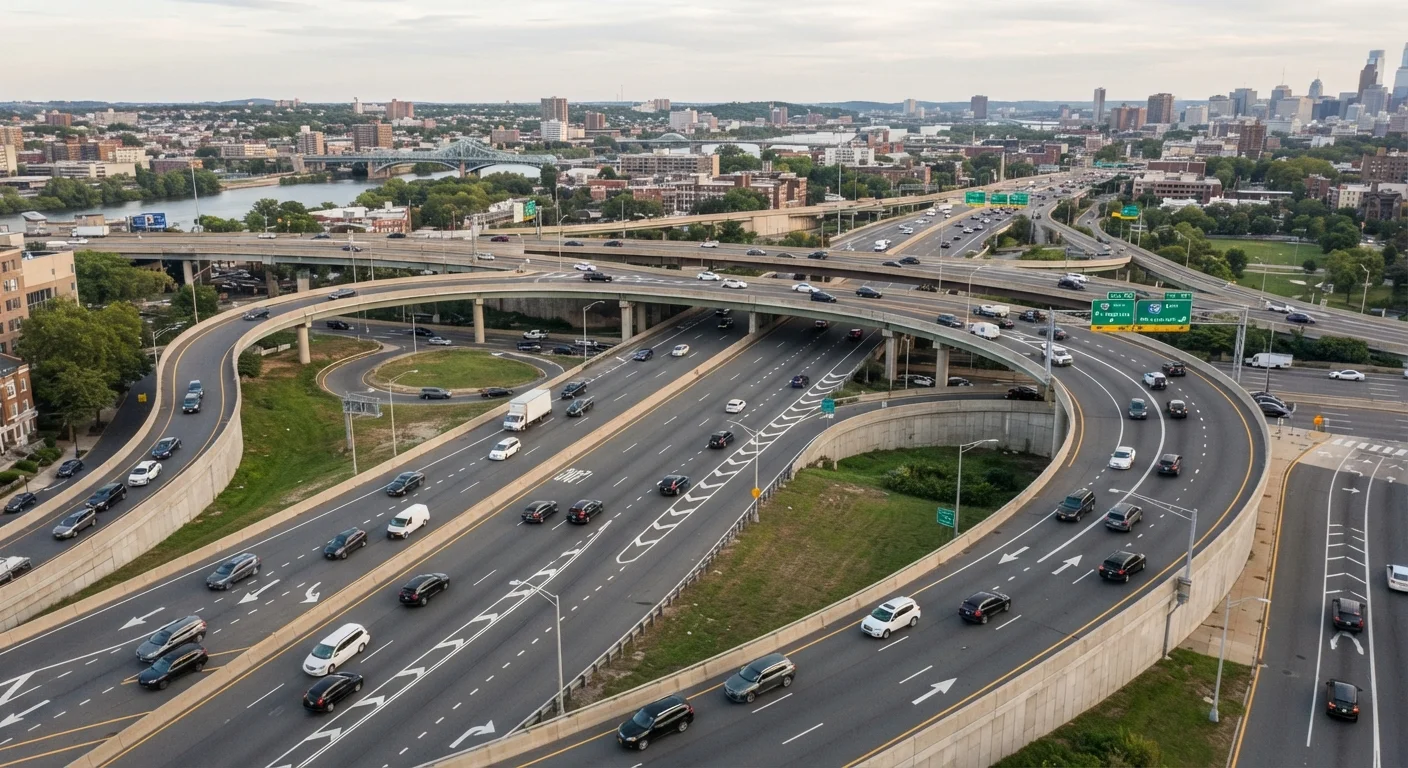
Few highway moments create more tension than a lane change or a merge. A driver cuts across two lanes without signaling; another holds a gap closed just long enough to force a near-miss. In most cases, the underlying cause is not aggression - it's a communication gap. Drivers are operating on assumptions about what the other person will do, with no shared language beyond turn signals and body language read at 65 mph.
Understanding how that communication gap forms - and how to close it - is what separates drivers who navigate traffic fluidly from those who generate friction. This article focuses on the practical habits that make lane changes and merges predictable, clear, and safer for everyone involved. If you want to understand how these dynamics escalate when communication repeatedly fails, our piece on road rage and aggressive driving explores that pattern in detail.
Best Practices for Safer Lane Changes and Merges
The following practices reflect guidance consistent with defensive driving curricula and traffic safety research. None of them require advanced skill - they require intention and repetition until they become habit.
Signal at least three to five seconds before initiating a lane change.
A turn signal gives surrounding drivers time to process your intent and adjust their own speed or position. Signaling simultaneously with steering - or after - removes that buffer entirely and creates the surprise that causes near-misses.
Always perform a physical shoulder check before completing a lane change.
Mirrors have geometric blind spots that side-mirror adjustments reduce but don't eliminate. A brief glance over the appropriate shoulder confirms what mirrors cannot show. Relying solely on mirrors is one of the most common precursors to sideswipe collisions.
Match the speed of the lane you are entering before completing the merge.
Merging at a speed significantly slower than surrounding traffic creates a conflict point that forces other drivers to brake suddenly. Speed matching is especially critical on highway on-ramps, where the speed differential between entering and through traffic is largest.
Choose gaps that provide adequate following distance in the target lane, not just clearance alongside.
Many drivers judge a lane-change gap by what is immediately beside them, ignoring how quickly the vehicle behind them is closing. A safe gap means you can complete the move without the trailing vehicle needing to brake.
Avoid lingering in other drivers' blind spots during highway travel.
Positioning your vehicle in a truck's or car's blind spot for extended periods raises the risk of being hit during their unannounced lane change. Either pass through the zone promptly or fall back to a position where you're clearly visible in their mirrors.
Use two-second following distance as a baseline, extending it when conditions change.
Adequate following distance gives you the reaction time to absorb another driver's unexpected move - including a sudden lane change into your path. Tight following leaves no buffer for error.
Quick Wins You Can Apply on Your Next Drive
Habit change doesn't require a major overhaul. Start with these specific, low-effort adjustments that pay dividends immediately.
For new drivers still building confidence in traffic, these fundamentals pair well with the broader skill-development guidance in our new driver's road to confidence article.
The Zipper Merge: Correcting a Common Misconception
When a lane is closed ahead due to construction or an incident, most drivers instinctively merge as early as possible - believing that waiting is rude or selfish. Traffic safety researchers and transportation engineers generally recommend the opposite: use the full length of the merging lane and take turns at the merge point like a zipper. This approach reduces overall queue length and, in most cases, improves throughput.
Zipper Merging Is the Recommended Standard
Transportation engineers and traffic safety organizations in the US generally endorse late merging - also called zipper merging - as the more efficient and equally safe approach when a lane ends. Drivers who use the full closing lane are following recommended practice, not cutting in line. Understanding this distinction can reduce the frustration that fuels unnecessary horn use and retaliatory behavior in merge zones.
The discomfort with late merging stems from a social norm, not a safety principle. Changing this habit requires understanding that staying in a closing lane until the designated merge point is the intended behavior - not jumping the queue.
Lane discipline on highways is just one part of a broader risk picture. See how highway driving compares to surface streets in terms of risk profiles and required driver behaviors.
What Your Movements Communicate to Other Drivers
Every vehicle position, speed adjustment, and signal you make sends a message. The problem is that ambiguous messages are interpreted differently by different drivers - and that ambiguity is where conflicts originate.
~9%
Lane-change crashes among all US crash types
Federal Highway Administration data indicate that improper lane changes account for a meaningful share of non-intersection crash events on US roads.
Under 2 sec
Average driver reaction time to unexpected inputs
Research on driver response time consistently finds that unexpected events require roughly 1.5-2 seconds before a corrective action is initiated - making advance signaling essential.
Moving with deliberate, smooth inputs - gradual speed changes, early signals, steady lane positioning - projects predictability. Abrupt inputs create uncertainty. Other drivers respond to uncertainty defensively, which compounds the original problem. Consistent communication through vehicle behavior is as important as the use of turn signals.
For drivers dealing with reduced visibility conditions, where reading and sending these cues becomes even more critical, our guide on driving in fog, ice, and heavy rain covers how to adapt.