

Key Takeaways
- A consistent pre-trip check takes less than ten minutes and can prevent breakdowns or accidents.
- Tires, lights, mirrors, and fluid levels are the highest-priority items to inspect before driving.
- Many pre-trip issues are visible to the naked eye - no tools or mechanical expertise required.
- Building this habit is especially important before long trips, bad weather, or driving an unfamiliar vehicle.
- Persistent warning lights or abnormal sounds should be evaluated by a qualified mechanic before driving.
Summary
18 items · 5-10 minutes per trip
Why a Pre-Trip Routine Matters
Most vehicle problems that lead to breakdowns or accidents don't appear without warning - they develop gradually, and a quick visual check is often enough to catch them early. Professional drivers operating commercial vehicles are required by federal regulation to perform pre-trip inspections before every run. While private drivers face no such mandate, the underlying logic applies equally: catching a low tire, a burnt-out brake light, or a fluid leak in the driveway is far safer and cheaper than discovering it on the highway.
This walkthrough is organized to cover the full vehicle in a logical sequence, moving from the exterior to the engine bay to the cabin. Done consistently, the complete routine should take between five and ten minutes. Over time, most steps become second nature and take far less conscious effort. For deeper guidance on fluid checks specifically, see our guide to fluid checks every driver should know. You'll also find broader context on car maintenance if you're building out a full upkeep routine.
Never Ignore Dashboard Warning Lights
Illuminated warning lights - especially for oil pressure, brake system, or engine temperature - can indicate serious mechanical issues that worsen quickly with continued driving. If a red warning light activates while the vehicle is running, pull over safely as soon as possible. Consult a qualified mechanic before resuming normal driving.
Brake or Tire Problems Warrant Immediate Attention
If your vehicle pulls to one side when braking, you hear grinding or squealing from the wheels, or a tire appears significantly underinflated or damaged, do not dismiss it as minor. These conditions can directly affect your ability to control the vehicle. Have the issue inspected by a professional before driving further than necessary.
Tools to Have Ready
You don't need a garage full of equipment to run through this checklist reliably. A small handful of low-cost items cover the basics for most drivers.
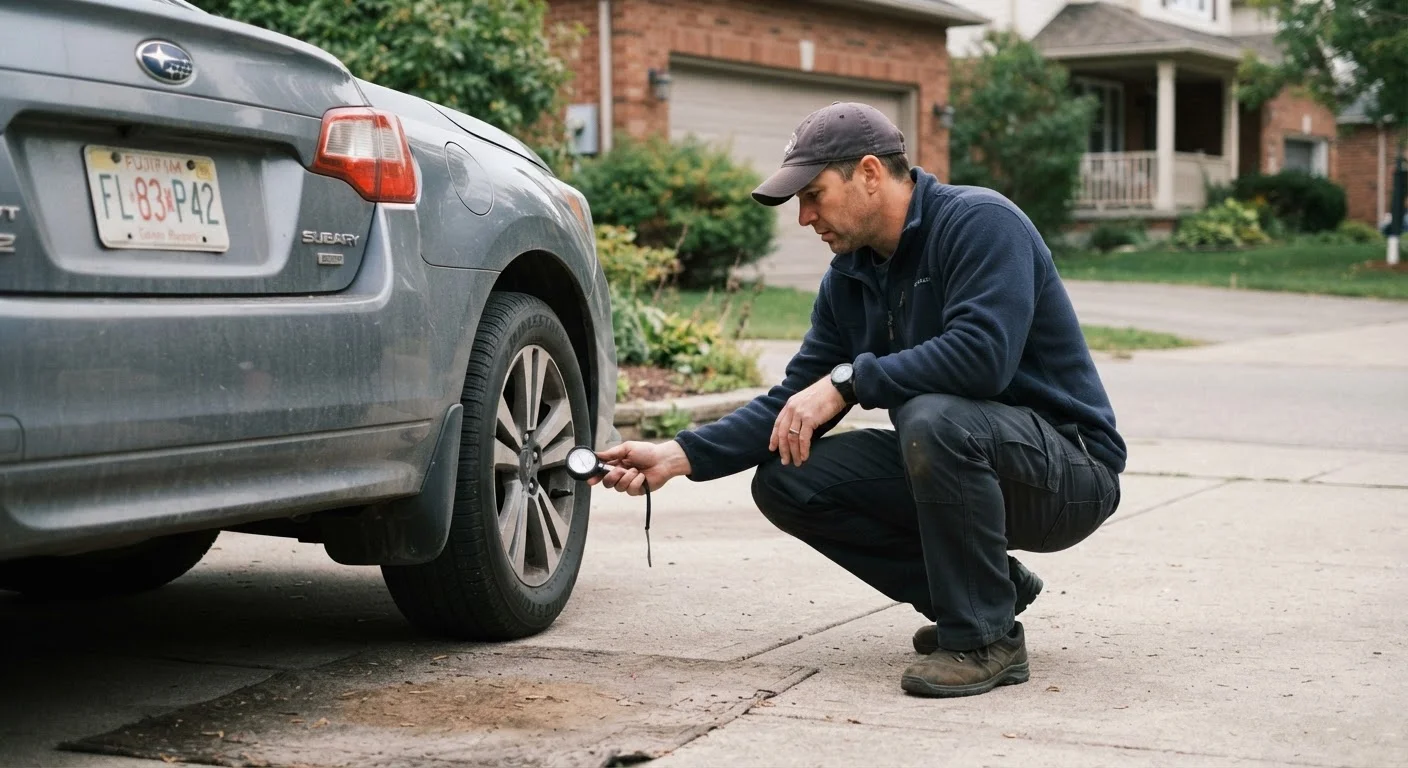
Tire pressure gauge
Accurately measures tire inflation so you can compare against your vehicle's recommended PSI, found on the driver's door jamb sticker.
Portable air compressor or pump
Allows you to inflate underinflated tires at home without a trip to a gas station.
Flashlight or work light
Helps you inspect tires, undercarriage, and under the hood in low-light conditions such as early mornings or garages.
Clean lint-free rag
Needed to wipe the oil dipstick cleanly so you can get an accurate reading.
Vehicle owner's manual
Contains your car's specific fluid capacities, warning light meanings, and manufacturer-recommended maintenance intervals.
If you're new to vehicle ownership and still setting up your baseline kit, our article on what to set up in your first month as a car owner covers roadside assistance, insurance verification, and other essentials to organize early.
The Pre-Trip Checklist
Work through the checklist below in order - exterior first, then under the hood, then the cabin, and finally trip-specific items. Flag anything that needs attention before you leave rather than hoping it holds until you return.
Exterior Walkround
Under the Hood (Weekly or Before Long Trips)
In-Cabin Checks
Trip Readiness
Tire Pressure Matters More Than It Looks
A tire can lose up to 50% of its pressure and still appear visually normal. Always use a gauge rather than relying on the tire's appearance. Your vehicle's recommended tire pressure is on the driver's door jamb sticker - not on the tire sidewall, which shows the tire's maximum rated pressure, a different figure.
For tires specifically, understanding pressure, tread depth, and rotation intervals can help you stay ahead of wear. Our tire pressure and tread basics guide explains what the numbers mean and when to act. Seasonal conditions also change what you should prioritize - the seasonal car care checklist covers what shifts as temperatures rise and fall.
Making This a Consistent Habit
Consistency is what converts a one-time inspection into a safety habit. Anchoring the walkround to something you already do - unlocking the car, placing a bag in the back seat, or putting on a seatbelt - makes it easier to sustain without relying on discipline alone. Keep a tire pressure gauge in a consistent location, such as the glove compartment, so it's always on hand when needed.
For longer drives or unfamiliar vehicles, give yourself extra time to complete the under-hood checks thoroughly. If you're borrowing or renting a vehicle, run the full checklist regardless of assumptions about recent servicing. And if the vehicle belongs to you, tracking when you last checked each item - even informally in a notes app - helps you avoid skipping steps out of overconfidence.
The goal isn't perfection on every item every day - it's building enough awareness to catch serious issues before they compound. A flat tire caught in the driveway is an inconvenience. The same flat discovered at highway speed is a potential emergency. The few minutes this routine requires are a straightforward investment in reducing that risk.
This article provides general vehicle safety information for educational purposes. It is not a substitute for guidance from a qualified mechanic. If you observe warning lights, abnormal sounds, or other signs of a mechanical issue, consult a certified automotive professional before driving.