

| Typical battery lifespan | 3-5 years (General industry guidance; varies by climate and usage) |
| Most common failure cause | Age and heat degradation |
| Recommended test type | Load test or conductance test |
| Cold cranking amps (CCA) | Rated capacity that drops with age (CCA is the standard measure of battery starting power) |
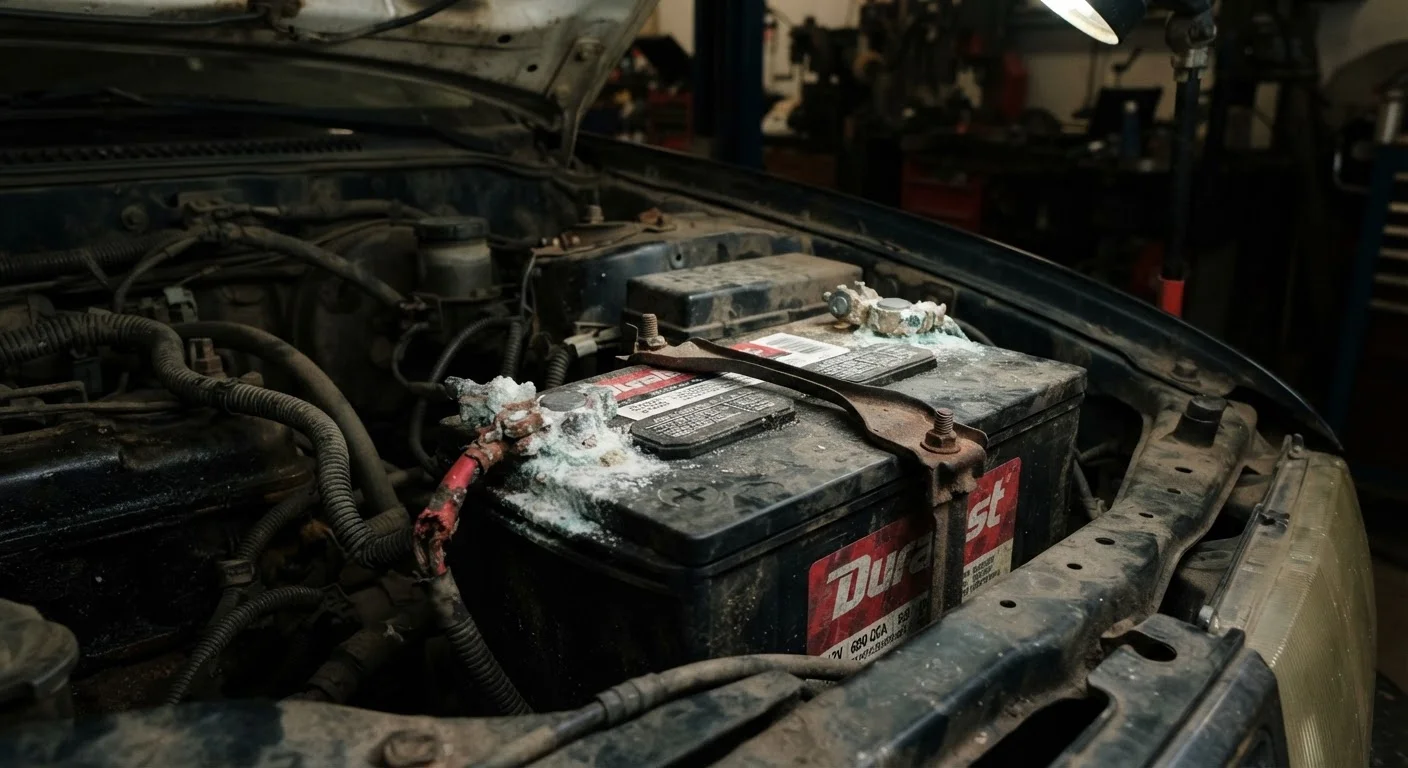
| Terminal corrosion indicator | White or blue-green powdery buildup |
How to Tell Your Battery Is Losing Its Charge
A car battery rarely fails without giving some advance notice. Knowing what to look and listen for can mean the difference between a quick swap at a shop and being stranded in a parking lot. Most lead-acid batteries last three to five years under normal conditions - and the symptoms below often surface in the final months of that window.
| Typical battery lifespan | 3-5 years (General industry guidance; varies by climate and usage) |
| Most common failure cause | Age and heat degradation |
| Recommended test type | Load test or conductance test |
| Cold cranking amps (CCA) | Rated capacity that drops with age (CCA is the standard measure of battery starting power) |
| Terminal corrosion indicator | White or blue-green powdery buildup |
The most recognizable warning is a slow, labored crank when you turn the key or press the start button. If the engine sounds like it's struggling to turn over - especially on a mild-temperature morning - the battery may no longer be holding a full charge. This is different from a dead battery: the car still starts, but with noticeably less authority than before.
Electrical gremlins are another telling sign. Dim headlights at idle, a sluggish power window, or a dashboard that flickers when the car is running at low RPM all point to a battery that isn't supplying consistent voltage. Your vehicle's charging system is designed to compensate, but an aging battery increasingly struggles to meet demand. You may also notice that dashboard warning lights - particularly the battery or check-engine light - illuminate more frequently as the battery weakens.
Physical Warning Signs and What They Mean
A visual inspection of the battery itself can reveal a lot. Open the hood and look for these physical indicators:
- Corrosion on terminals: A white, blue, or greenish powdery buildup around the positive and negative posts signals electrolyte leakage and oxidation. This buildup increases electrical resistance and can accelerate battery failure.
- Swollen or bloated case: Heat causes the battery casing to expand. A visibly bulging battery is a safety concern and should be inspected by a qualified mechanic promptly.
- Sulfur or rotten-egg odor: This smell indicates a battery that is overcharging or leaking hydrogen sulfide gas - both require immediate professional attention.
- Cracks or leaking fluid: Physical damage to the casing can allow battery acid to escape, which poses a corrosion risk to nearby components.
When to See a Mechanic Immediately
A swollen battery case, a sulfur smell, or visible acid leakage are not symptoms to monitor over time - they require prompt professional inspection. These conditions can pose safety risks and may indicate damage beyond the battery itself. Do not attempt to handle a leaking or bloated battery without proper protective equipment and guidance from a qualified technician.
Even without obvious physical damage, age alone is a legitimate reason to have a battery tested. Most auto parts shops and service centers offer free battery load tests. A load test measures how well the battery performs under real electrical demand - and it's one of the most reliable ways to assess remaining life before a failure occurs.
Extreme temperatures accelerate battery wear on both ends of the thermometer. Cold weather reduces a battery's available cranking power, while sustained heat degrades internal components faster. Seasonal vehicle preparation should include a battery check, particularly heading into winter or after a long hot summer.
What to Do When You Suspect a Failing Battery
If you recognize two or more of the signs above, take action before the battery fails completely. Here's a practical approach:
- Get a professional battery test. A load test or conductance test gives objective data on battery health. A voltage reading alone isn't sufficient - a battery can show 12.6 volts at rest but still fail under load.
- Check the alternator too. A weak battery and a failing alternator share overlapping symptoms. A mechanic can test both at the same time. Replacing a battery without addressing a faulty alternator often leads to premature failure of the new battery.
- Address terminal corrosion. Light corrosion can be cleaned by a technician as part of a service visit. This improves the connection and can extend the remaining useful life of a marginal battery.
- Review your driving habits. Frequent short trips prevent the alternator from fully recharging the battery. If most of your driving is under 20 minutes, consider a periodic longer drive or a battery maintainer for vehicles that sit for extended periods.
Battery replacement is a routine service item - not an emergency repair. Staying proactive keeps it straightforward. For a broader look at maintenance tasks that often go unnoticed, see overlooked maintenance tasks that quietly affect your car's performance.
Cold cranking amps (CCA)
A rating that measures a battery's ability to start an engine in cold temperatures. Higher CCA means more starting power available when the engine is cold.
Load test
A diagnostic test that measures battery performance under simulated electrical demand, rather than just resting voltage. It reveals whether the battery can deliver adequate power when the engine starts.
Alternator
The component that recharges the battery while the engine runs and powers the vehicle's electrical systems. A failing alternator can drain or damage a battery.
Sulfation
A process where lead sulfate crystals build up on a battery's internal plates over time, reducing its capacity to hold and deliver a charge. It is a primary cause of battery aging.