

Key Takeaways
- Applying moisturizer within a few minutes of showering significantly improves absorption and effectiveness.
- Water temperature and how you dry off both influence how well your skin retains moisture afterward.
- Humectants, emollients, and occlusives work differently - understanding them helps you choose the right formulation.
- Consistent timing and technique matter more than switching products when results feel lacking.
Why Timing Is the Most Underrated Variable
Most people treat moisturizing as an afterthought - something done whenever, if at all. But dermatology research consistently points to one window that makes a measurable difference: the first few minutes after stepping out of the shower.
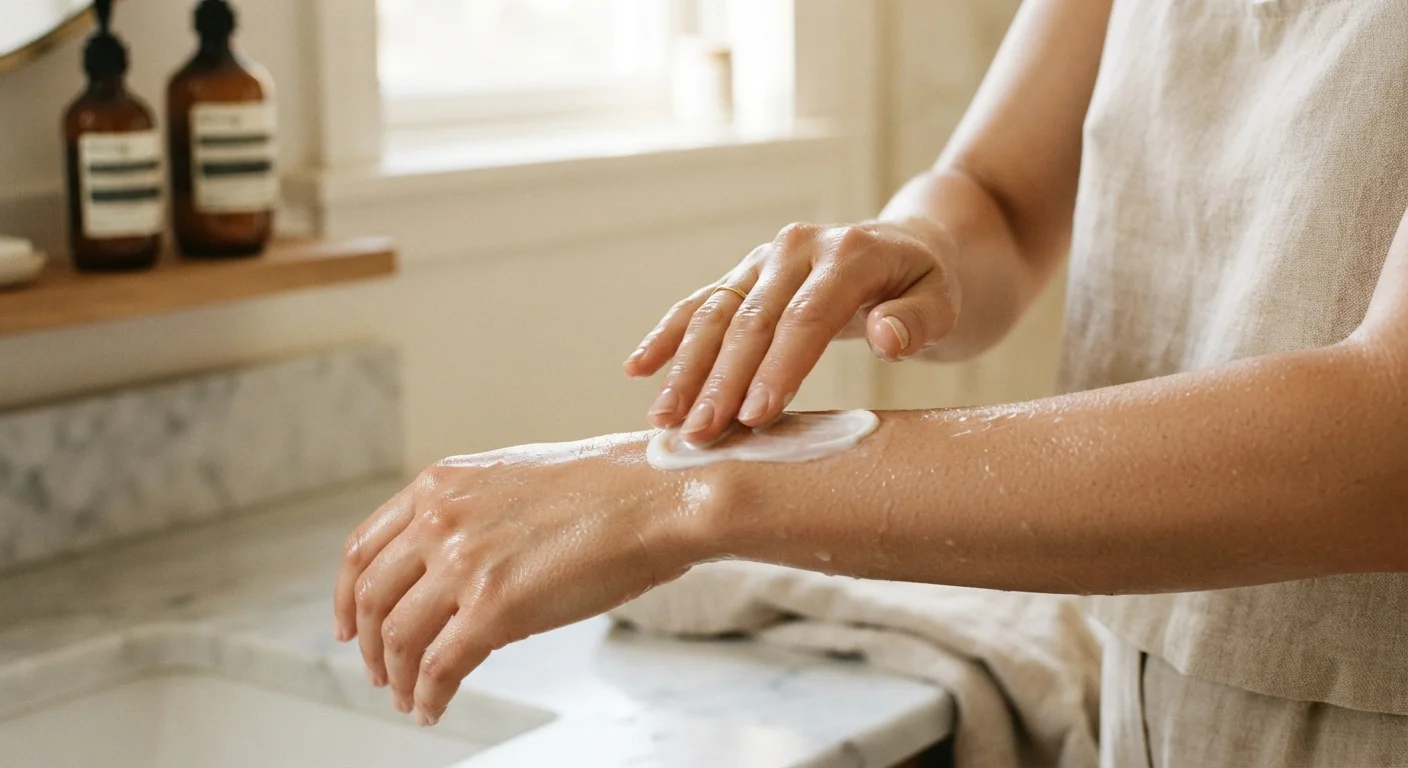
When skin is still slightly damp, the outermost layer - the stratum corneum - is temporarily more permeable and already holding surface water. Applying a moisturizer at this point helps seal that moisture in before it evaporates. Waiting too long, particularly in a dry environment, can leave skin drier than before showering because the evaporation process draws moisture from deeper layers.
A practical target is within two to three minutes of patting dry. This isn't a rigid rule, but it reflects the underlying biology: you're working with transient skin hydration rather than against it. If your current routine isn't delivering results, adjusting timing alone is often the first meaningful change to make - before reconsidering your product. For a broader framework on building this into a consistent habit, see Building a Body Care Routine That Actually Sticks.
What Happens in the Shower Also Matters
Your moisturizer doesn't work in isolation. Two in-shower choices directly affect what you're dealing with when you step out.
Two Shower Habits Worth Adjusting
The conditions you create during your shower shape how receptive your skin is to moisturizer afterward. Moderately warm water - rather than hot - preserves more of the skin's natural lipid layer, giving your moisturizer more to work with. Gentle patting with a towel, rather than vigorous rubbing, also leaves a small amount of beneficial surface moisture intact. These habits take almost no extra effort but make a real difference in outcomes.
Water temperature: Hot water is more disruptive to the skin barrier than warm water. It strips away natural lipids - the oils that help skin retain moisture between washes - more aggressively than lukewarm temperatures. This doesn't mean cold showers are required; moderately warm water is sufficient for most people.
How you dry off: Rubbing vigorously with a towel creates friction that can irritate already-softened skin and removes more surface water than necessary. Patting the skin gently - and stopping while a slight dampness remains - sets up better conditions for absorption. Leaving the skin completely bone-dry before moisturizing eliminates one of the main advantages of a post-shower routine.
If you have reactive or easily irritated skin, these two variables can account for persistent dryness even when you're moisturizing consistently. More on building a gentle approach can be found in Building a Routine for Sensitive Skin.
Best Practices for Effective Post-Shower Moisturizing
Technique and product choice together determine how much of the benefit you actually capture. The following practices reflect both the science of skin barrier function and practical, sustainable habits.
Apply moisturizer to skin that is still slightly damp, not fully dry.
Damp skin allows moisturizing ingredients - particularly humectants like glycerin and hyaluronic acid - to bind surface water to the skin rather than drawing from deeper layers. This is the single most impactful timing adjustment most people can make.
Understand the three ingredient categories and match them to your skin's needs.
Humectants attract water, emollients smooth and soften skin texture, and occlusives (such as petrolatum or shea butter) form a physical barrier that locks moisture in. Most effective moisturizers combine at least two of these. Knowing which your skin needs most prevents you from chasing products that aren't addressing the actual issue.
Use enough product to cover the area generously without rubbing aggressively.
Under-application is common - many people use far less product than needed to achieve meaningful coverage. Skin that isn't fully coated won't benefit from even an excellent formulation. At the same time, harsh rubbing creates friction that counteracts the calming effect of moisturizing.
Keep shower temperature at warm, not hot.
High water temperatures strip the skin's natural lipid barrier more thoroughly, leaving less for moisturizer to work with. A consistent habit of moderately warm showers reduces the baseline damage that moisturizer is trying to repair.
Be consistent across the week, not just on days skin feels tight.
Skin barrier repair is cumulative. Applying moisturizer only when discomfort is noticeable means you're always playing catch-up. Daily application - even a brief one - maintains the barrier in better baseline condition so it needs less recovery.
It's also worth distinguishing whether your skin is dry or dehydrated - they look similar but respond to different approaches. Dry Skin vs. Dehydrated Skin on the Body explains the difference clearly.
Quick Wins You Can Apply Tonight
Improving your moisturizing routine doesn't require overhauling anything. Several changes can be made immediately and will produce noticeable results within days for most skin types.
This article is for general informational purposes only and does not constitute medical or dermatological advice. Consult a qualified healthcare professional if you have concerns about a skin condition or persistent skin issues.