

Key Takeaways
- An EOB is a summary document from your insurer - not a request for payment.
- It shows the billed amount, the insurer's negotiated rate, and your share of the cost.
- Billing errors and duplicate charges can appear on EOBs, making review worthwhile.
- The actual bill, if you owe anything, comes separately from your provider.
- Comparing your EOB to provider bills helps you catch overcharges before paying.
Explanation of Benefits (EOB)
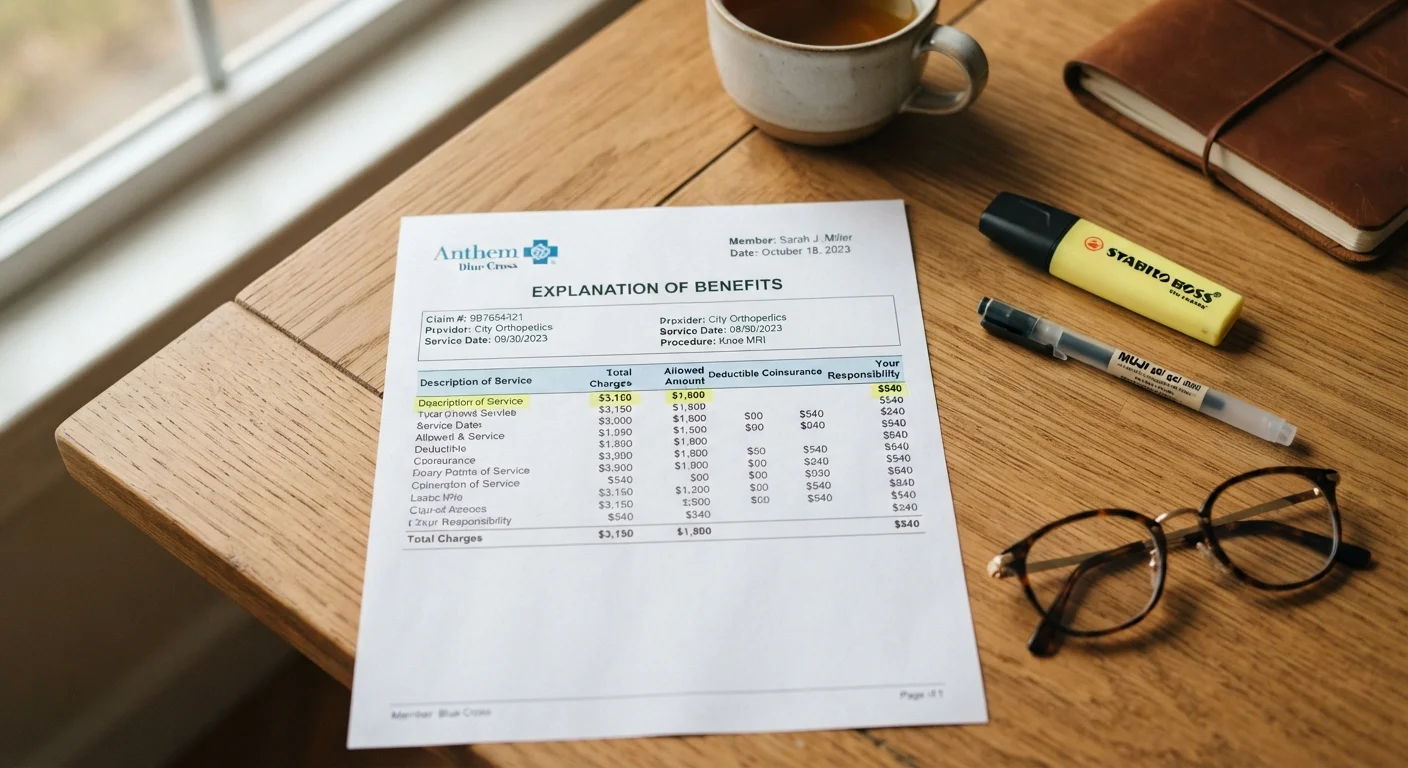
An Explanation of Benefits, or EOB, is a document your health insurance company sends you after a medical claim has been processed. It summarizes what your provider charged, what your insurer agreed to pay, and what portion - if any - remains your responsibility. It is not a bill, and you are typically not expected to send money in response to receiving one.
EOBs are required under the Employee Retirement Income Security Act (ERISA) for employer-sponsored plans, and under ACA regulations for marketplace plans. The format varies by insurer but must include specific cost-sharing disclosures.
Why the EOB Confuses So Many People
Millions of Americans receive an Explanation of Benefits after nearly every medical visit, yet surveys consistently find that most people either ignore the document or mistake it for a bill. That confusion is understandable: the EOB arrives on official-looking paper, includes dollar amounts, and references a recent healthcare encounter. It looks like something that demands a response.
It doesn't. The EOB is your insurer's record of what happened with your claim - a transparency document, not an invoice. Understanding this distinction is the first step toward using the EOB as the financial tool it's meant to be. If you're new to health insurance terminology more broadly, our plain-English guide to health insurance covers the foundational concepts that make an EOB easier to parse.
80%
Americans who have received an EOB
Industry estimates suggest the vast majority of insured Americans receive EOBs regularly, yet consumer research repeatedly finds low comprehension of the document's purpose.
1 in 5
Medical bills containing an error
Patient advocacy organizations and billing auditors have long cited error rates in medical billing that underscore the value of cross-checking EOBs against provider invoices.
40%+
Denied claims overturned on appeal
According to analyses of marketplace plan data, a substantial share of internally appealed claim denials are reversed, highlighting the value of reviewing EOB denial codes.
Breaking Down Each Section of an EOB
While formats vary by insurer, most EOBs share the same core sections. Learning what each one means turns an intimidating document into a straightforward ledger.
Billed Amount
This is what your provider charged for the service before any adjustments. It often appears alarmingly high - and that's partly by design. Providers and insurers negotiate contracted rates that are almost always lower than the listed charge.
Allowed Amount (or Negotiated Rate)
This is the maximum your insurer has agreed to pay for that service under its network contract. In-network providers accept this figure as payment in full; any excess is written off. Out-of-network providers may not be bound by this limit, which is one reason out-of-network care can lead to larger out-of-pocket costs. See why out-of-pocket costs sometimes exceed expectations for more on this dynamic.
Plan Paid
The dollar amount your insurer actually paid toward the claim, after applying your deductible, co-insurance, and any other cost-sharing provisions.
Your Responsibility
The remaining balance assigned to you - covering your deductible contribution, co-insurance percentage, or co-pay for that visit. This is the number to watch, but it's still not a bill. Wait for the provider's statement before making any payment.
Reason Codes
Every adjustment or denial on an EOB is accompanied by a short code and a plain-language explanation. Common codes indicate things like "deductible applied" or "service requires prior authorization." These codes are your starting point if you want to question or appeal a decision.
Keep EOBs Until the Bill Arrives
Don't discard an EOB after a quick glance. File it somewhere accessible - physical or digital - until you've received and paid the corresponding provider bill. Matching these two documents is your best protection against overpaying or paying for a claim your insurer already covered.
How to Use Your EOB to Spot Errors
Medical billing errors are not rare. Duplicate charges, incorrect procedure codes, and services billed for the wrong patient do appear - and they show up on EOBs before they become collection problems. Reviewing your EOB carefully is one of the most practical financial-health habits you can develop.
When an EOB arrives, match it against your visit: Was the date of service correct? Does the procedure listed align with what you actually received? Does the provider name match the clinician you saw? If anything looks off, call your insurer's member services line using the number on your insurance card. You can also compare the EOB to your Summary of Benefits and Coverage to confirm that the service should have been covered at the rate shown.
Only after you've reviewed the EOB and received a matching bill from your provider should you consider making a payment. If the provider's bill differs significantly from the "your responsibility" figure on the EOB, contact both the provider's billing department and your insurer before paying anything.
When an EOB Leads to an Appeal
If your EOB shows a denial or an unexpectedly high patient responsibility, you have the right to appeal. Under federal law, insurers must provide a clear appeals process, and EOBs are required to explain how to initiate one. The reason codes on your EOB are your evidence: they tell you exactly what the insurer's stated reason for the denial was.
Gather the EOB, any related provider notes or referrals, and your plan documents before filing. Many denials are overturned on appeal, particularly when additional clinical documentation is submitted. Your plan's Summary of Benefits and Coverage - a separate document explained in detail in our guide to reading an SBC - outlines what services are covered and at what cost-sharing levels, which can strengthen your case.
Appeals Deadlines Are Strict
Most health plans impose a firm deadline for filing an internal appeal - commonly 180 days from the date of the denial notice, though this varies by plan and state. Check your EOB and plan documents for the specific timeframe. Missing the deadline can forfeit your right to appeal that claim.
This article is for general informational and educational purposes only and does not constitute personalized insurance, legal, or financial advice. Coverage terms, cost-sharing rules, and appeal procedures vary by plan and state. Always review your actual policy documents and consult a licensed insurance professional for guidance specific to your situation.