
Formularies, Tiers, and Step Therapy: How Health Plans Manage Prescription Coverage

Key Takeaways
- Your health plan's formulary lists which drugs are covered and at what cost-sharing level.
- Drugs are sorted into tiers - lower tiers generally mean lower out-of-pocket costs for you.
- Prior authorization requires insurer approval before coverage kicks in for certain medications.
- Step therapy means you must try a lower-cost drug first before your plan will cover a higher-cost alternative.
- You can request a formulary exception if your prescribed drug isn't covered or is placed on a high-cost tier.
- Reviewing the formulary before enrolling in a plan can prevent costly surprises at the pharmacy.
Drug Formulary
A drug formulary is a list of prescription medications that a health insurance plan agrees to cover. Every plan organizes this list into tiers, with each tier carrying a different cost-sharing level for the member. Knowing whether your medication appears on your plan's formulary - and at which tier - directly determines what you'll pay at the pharmacy counter.
Formularies are reviewed and updated periodically by a Pharmacy and Therapeutics (P&T) committee, which evaluates drugs based on clinical evidence, safety, and cost-effectiveness. A drug's tier placement can change at plan renewal.
What the Formulary Actually Tells You
When you enroll in a health plan, the insurer doesn't cover every drug on the market equally - or at all. The formulary is the master list that defines the plan's prescription drug benefit. It tells you three essential things: whether a drug is covered, how much you'll pay for it, and whether any restrictions apply before coverage kicks in.
Formularies are shaped by a plan's Pharmacy and Therapeutics committee, which weighs clinical guidelines and cost data to decide which drugs earn a place on the list and at what tier. This means two plans with the same monthly premium can have meaningfully different drug costs depending on how they've structured their formularies.
For a broader look at how health plan costs work together, see our plain-English health insurance guide and our breakdown of deductibles, copays, and coinsurance.
How Drug Tiers Determine Your Cost
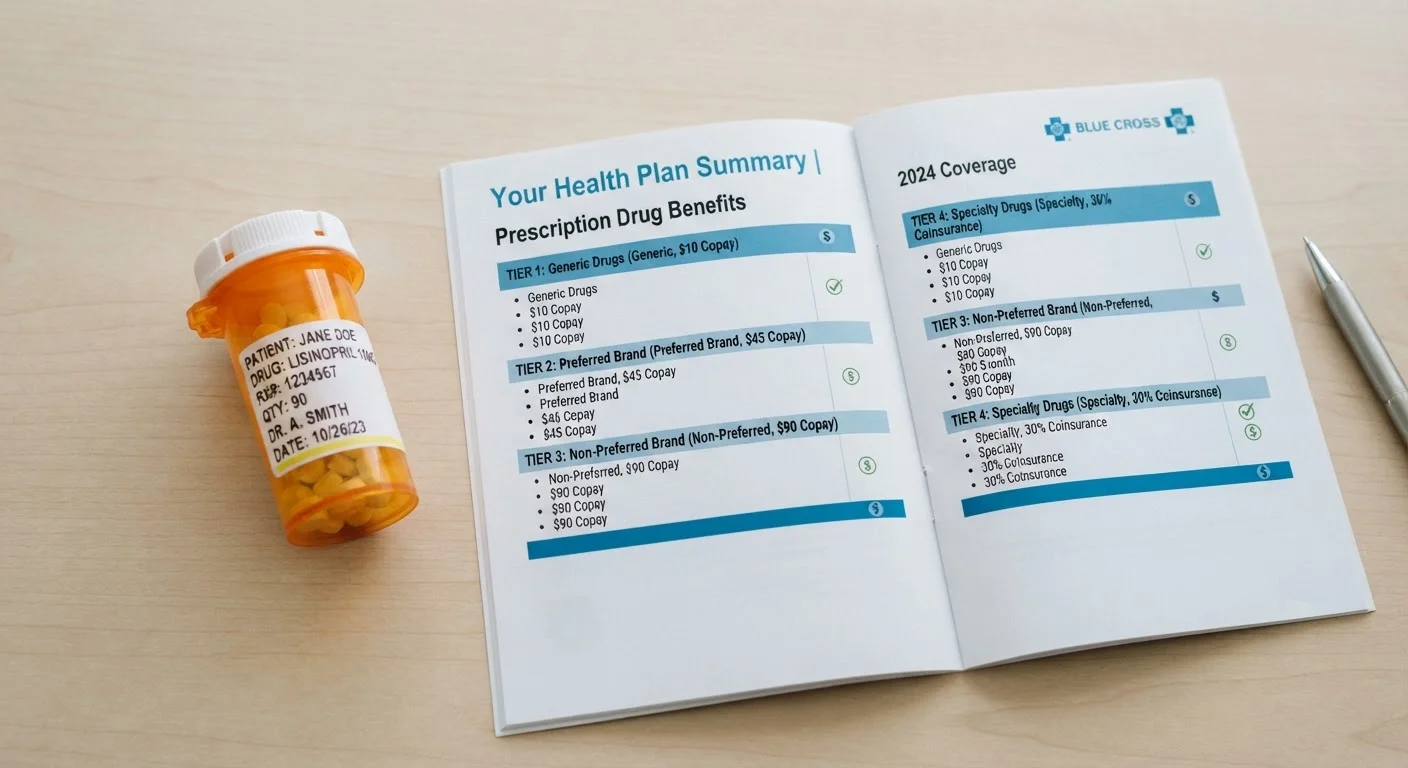
Most commercial plans organize their formulary into three to six tiers. The lower the tier, the lower your cost-sharing. A typical structure looks like this:
- Tier 1 - Preferred generics: The lowest copay, often a few dollars per fill.
- Tier 2 - Non-preferred generics or preferred brand-name drugs: Moderate copay or coinsurance.
- Tier 3 - Non-preferred brand-name drugs: Higher cost-sharing, sometimes coinsurance rather than a flat copay.
- Tier 4-5 - Specialty drugs: Biologics and complex therapies that can carry significant coinsurance, sometimes 20-30% of the drug's list price.
Tier placement is a major driver of out-of-pocket spending. A brand-name drug on Tier 4 might cost hundreds of dollars per fill, while a therapeutically similar generic on Tier 1 costs far less. Understanding this structure is key to comparing plans accurately - not just by premium.
Prior Authorization and Step Therapy Explained
Two coverage tools that frequently catch policyholders off guard are prior authorization (PA) and step therapy.
Prior authorization means the insurer must approve coverage for a specific drug before you fill it. Your doctor's office typically submits clinical information to justify the prescription. PA is commonly required for brand-name drugs, specialty medications, and drugs with significant misuse potential. Without approval, the claim will be denied and you'd pay out of pocket.
Step therapy - sometimes called a "fail-first" protocol - requires you to try one or more lower-cost alternatives before the plan will cover the drug your doctor originally prescribed. For example, if your physician recommends a newer biologic, your plan may require a trial of an older, less expensive medication first. If that drug proves ineffective or causes side effects, your doctor can document the failure and request coverage of the original prescription.
Both PA and step therapy exist to manage costs, but they can also create friction when a patient genuinely needs a specific medication. Most states have enacted laws setting maximum timeframes for PA decisions and allowing exceptions to step therapy protocols when clinically appropriate.
Using Formulary Knowledge to Your Advantage
Checking the formulary before you enroll in a plan - not after - is one of the most effective ways to avoid prescription cost surprises. Most insurers publish their formularies publicly. Search for the drug by name and note its tier, any PA requirements, and quantity limits.
If your current medication isn't covered or sits on a high tier, you have several options:
- Request a formulary exception: Your doctor submits a letter of medical necessity explaining why covered alternatives are unsuitable for your condition.
- Ask about therapeutic alternatives: A drug in the same class placed on a lower tier may work equally well for you - your doctor can advise.
- Appeal a denial: Federal law gives you the right to appeal coverage denials, including those tied to PA or step therapy decisions.
Understanding these tools can also help you spot situations where you may end up paying more than you expected. See our article on why policyholders often pay more than their plan suggests for related scenarios.
This article provides general health insurance information for educational purposes only. It is not a substitute for personalized advice from a licensed insurance agent or healthcare professional. Coverage terms, formulary contents, and regulations vary by plan and state.