

Smart Insurance

Reviewing Your Insurance Policies Annually: What to Look For

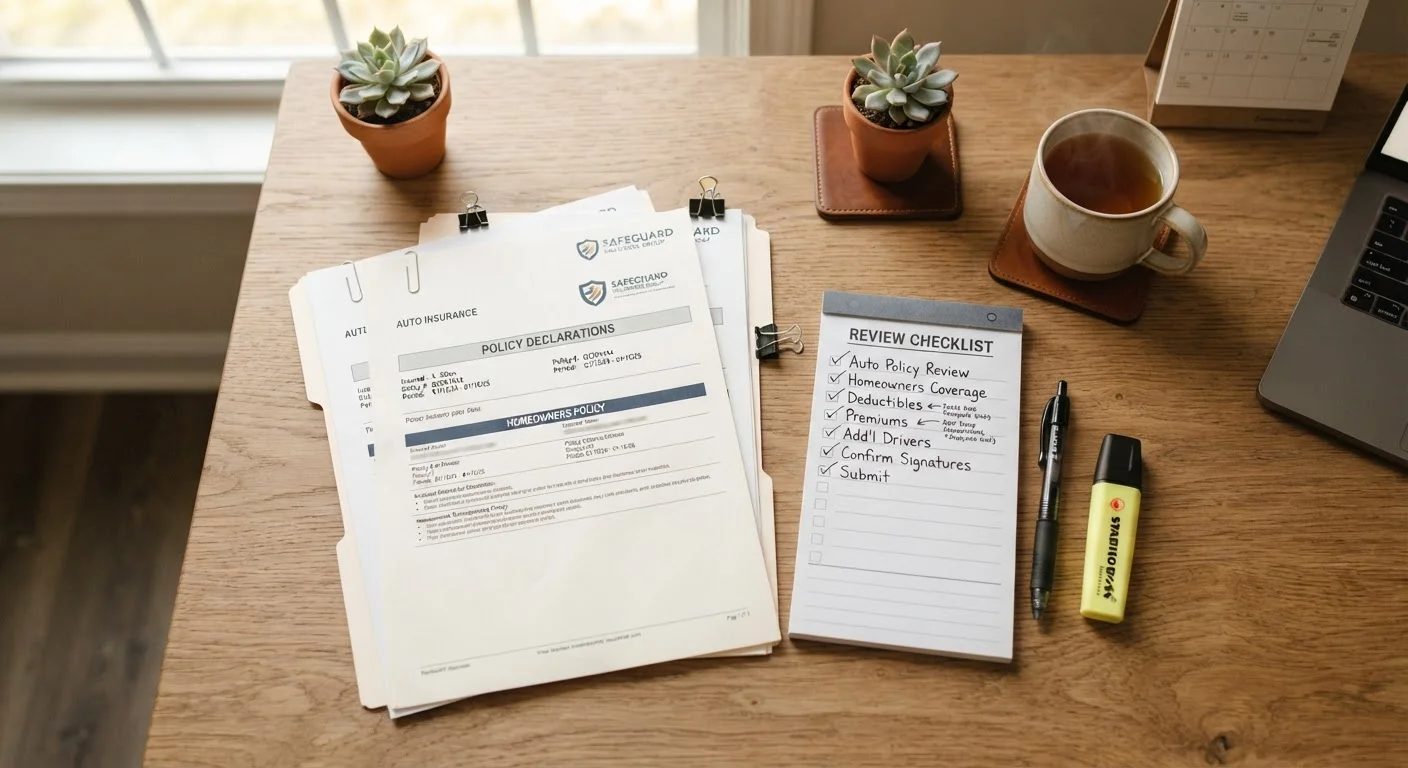
Insurance policy documents spread on a desk alongside a checklist and pen

Key Takeaways

  • Life changes — a move, renovation, or new vehicle — can silently render existing coverage inadequate.
  • Coverage limits that seemed sufficient years ago may no longer reflect the replacement cost of your assets.
  • Unnecessary riders or duplicate coverages may be costing you premiums you don't need to pay.
  • Your liability exposure can increase over time, yet liability limits often go unreviewed.
  • An annual review is general financial self-care, not a substitute for advice from a licensed insurance professional.
30–60 min

Summary

22 items · 30–60 minutes

Why an Annual Insurance Review Actually Matters

Most people set up their auto and home policies and forget them — sometimes for years. That approach can leave you over-insured in some areas, dangerously under-insured in others, and paying for coverage that no longer fits your life. A structured annual review takes less than an hour and can surface real problems before a claim does it for you.

Think of it the way you might think of a yearly budget review. Just as you'd revisit spending and saving habits (see your monthly budget review checklist for a useful framework), your insurance picture deserves the same periodic attention. And if your situation involves major life events, a parallel review of life coverage is also worth scheduling — reviewing your life insurance after a major life change walks through exactly when that review is most urgent.

The checklist below covers the most common gaps and mismatches. Use it with your actual policy documents in front of you — declarations pages, endorsements, and any recent renewal notices.

Required

Current declarations pages

Lists your coverage types, limits, deductibles, and premiums in one summary — the starting point for every review item.

Required

Policy endorsements and riders

Documents that modify your base coverage; without these, your review will miss scheduled property, exclusion changes, or added protections.

Optional

Home inventory or asset list

Helps you cross-check personal property limits against the actual replacement value of your possessions.

Required

Licensed insurance agent contact

Provides personalized guidance to address gaps, adjust limits, or add endorsements identified during your review.

Your Annual Policy Audit Checklist

Work through each group below. Flag any item where your current policy doesn't give you a clear, satisfactory answer. Those flags are your follow-up list for a conversation with your licensed agent or insurer.

Gather Your Documents

Pull the current declarations page for every active policy — auto, home or renters, umbrella, and any specialty coverage. Must
Locate any endorsements or riders attached to each policy, as these modify base coverage in ways the declarations page may not summarize. Must
Note each policy's renewal date so you know your window for requesting changes without a mid-term endorsement fee. Should

Home or Renters Policy

Confirm your dwelling coverage limit reflects current local rebuilding costs, not the market value or original purchase price of the home. Must
Check whether any home improvements — a finished basement, added bathroom, or new roof — have been reported to your insurer and factored into your coverage limit. Must
Review your personal property limit and confirm it covers the replacement cost (not just actual cash value) of your belongings. Should
Verify that high-value items — jewelry, electronics, musical instruments, art — are either covered under a scheduled endorsement or noted as needing one. Should
Check whether flood or earthquake coverage is included or excluded — standard homeowners policies typically exclude both, and separate policies may be needed. Must
Review your loss of use or additional living expenses limit to confirm it would meaningfully cover temporary housing in your area. Should

Auto Policy

Confirm all vehicles you currently own or regularly drive are listed on the policy, including any recently purchased or inherited vehicles. Must
Verify that all licensed household members who drive your vehicles are listed as rated drivers. Must
Assess whether comprehensive and collision coverage still makes financial sense given the current market value of older vehicles. Should
Check your uninsured and underinsured motorist limits — these protect you when the at-fault driver carries inadequate coverage. Must
Review any usage-based or telematics programs on your policy and confirm the recorded mileage still reflects your actual driving habits. Nice to have

Liability Coverage

Review your personal liability limit on your home policy and consider whether it has kept pace with your overall net worth or exposure. Must
Check your auto bodily injury and property damage liability limits against your state's minimums and your actual financial exposure. Must
Determine whether an umbrella liability policy is appropriate — umbrella coverage extends liability limits across both home and auto above their base caps. Should

Life Changes to Flag

Note any major changes since your last renewal: marriage, divorce, a new child, a home purchase, a significant income change, or a new pet. Must
Confirm that beneficiary designations on any associated life policies remain accurate and current. Must
If you've started a home-based business, verify whether your home policy covers business equipment and liability — most standard policies do not. Should

Final Check and Follow-Up

List every flagged item from the review and schedule a call with your licensed agent to address gaps, update limits, or clarify policy language. Must
Ask your insurer whether any available discounts — multi-policy, claims-free, or safety feature credits — are currently applied to your account. Nice to have
File all updated policy documents in a secure, accessible location and share the location with a trusted household member or emergency contact. Should

Don't Rely Solely on Online Estimates

Rebuilding cost calculators and online tools can give a rough starting point, but they vary widely in accuracy and don't account for local labor costs, custom features, or recent construction inflation. Always confirm dwelling and property limits with a licensed agent who understands your specific home and local market conditions.

If your auto policy is approaching a renewal milestone, it's also worth revisiting the broader financial picture around your vehicle. Financial factors to revisit every year you own a car covers depreciation, loan payoff strategy, and how both affect the coverage decisions that make sense for your situation.

This article provides general insurance information and education only. It is not personalized insurance, legal, or financial advice. Coverage terms, limits, exclusions, and regulations vary by provider and state. Always read your actual policy documents and consult a licensed insurance agent or adviser before making decisions about your coverage.

Smart Insurance Editorial Team is the collective byline for our editorial team and contributor network. Articles published under this byline or an editorial pen name are researched, written, and reviewed according to our editorial standards for clarity, consistency, and independence before publication.

View all articles by Smart Insurance Editorial Team →
Disclaimer: The content on this site is for informational purposes only and is not a substitute for professional advice. Always consult a qualified professional for guidance specific to your situation.