
Dental Disease in Dogs and Cats Is Vastly Underestimated - Here's What Owners Miss

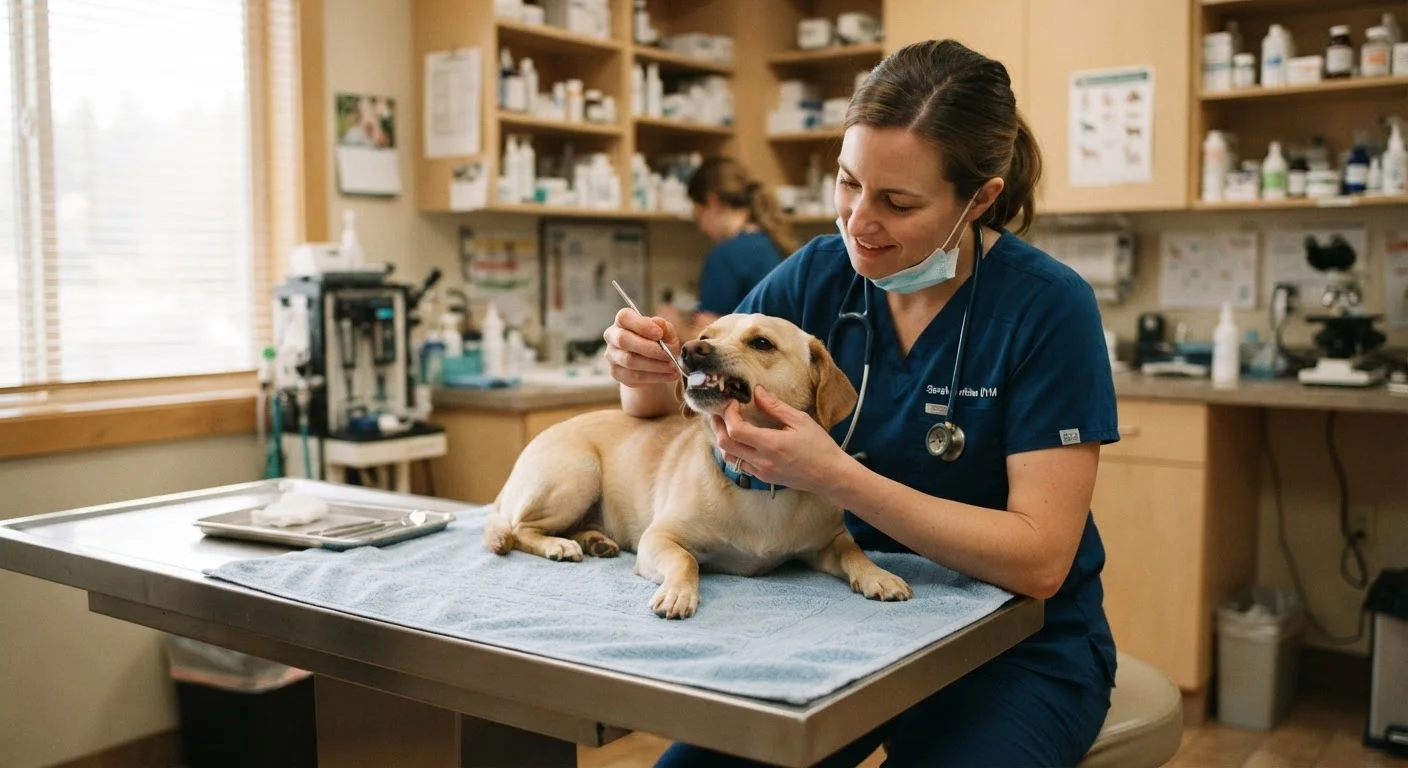
Key Takeaways
- Periodontal disease affects an estimated 80% of dogs and 70% of cats by age three.
- Pets rarely show obvious signs of dental pain, making owner-led monitoring critical.
- Untreated dental disease can affect the heart, kidneys, and liver through bacterial spread.
- Home brushing and professional cleanings together form the most effective prevention strategy.
- Bad breath is not normal - it is often the first detectable sign of disease.
Why Dental Disease Is So Consistently Overlooked
Periodontal disease - infection and inflammation of the structures that support the teeth - is among the most common conditions diagnosed in companion animals, yet it remains one of the least-addressed by owners. The disconnect exists for a straightforward reason: pets do not communicate oral pain the way humans do, and early disease produces few visible clues at home.
The disease begins with plaque, a soft bacterial film that accumulates on tooth surfaces within hours of a meal. When plaque mineralizes, it becomes tartar (calculus) - a hard deposit that irritates the gums and provides a surface for further bacterial growth. Left unmanaged, bacteria migrate below the gumline, destroying the periodontal ligament and alveolar bone that anchor each tooth.
What makes this especially consequential is the systemic reach of oral bacteria. Research has identified associations between severe periodontal disease and pathological changes in the kidneys, liver, and cardiac muscle in dogs and cats. Dental care, in this context, is not optional maintenance - it is preventive medicine.
Dental Disease Has Whole-Body Consequences
Bacteria from infected gum tissue can enter the bloodstream and contribute to damage in the heart, kidneys, and liver - organs far removed from the mouth. This is not a theoretical risk; veterinary research has identified associations between severe periodontal disease and systemic organ changes in companion animals. Treating dental disease is not cosmetic care - it is a core component of your pet's overall health management.
Good nutrition also plays a supporting role: diets that promote chewing and avoid excessive fermentable sugars can modestly slow plaque accumulation, though they do not replace mechanical cleaning.
The Mistakes That Allow Dental Disease to Advance
Most cases of advanced periodontal disease in pets reach that stage not because treatment was unavailable, but because the warning signs were misread or rationalized away. The following common owner errors allow disease to progress silently for months or years.
Assuming bad breath is normal for dogs and cats.
Why it happens: Many owners accept 'dog breath' as an inevitable trait rather than recognizing it as a clinical symptom of bacterial overgrowth and gum inflammation.
Waiting for visible signs of pain before seeking dental care.
Why it happens: Owners expect a pet in dental pain to stop eating or cry out. Because pets instinctively mask discomfort, most continue eating despite significant oral disease. See our guide to recognizing hidden pain for behavioral cues owners often overlook.
Relying solely on dental chews or water additives as a prevention plan.
Why it happens: These products are heavily marketed and feel like a convenient substitute for brushing, which many owners find difficult or time-consuming.
Skipping professional cleanings because the pet's teeth 'look okay.'
Why it happens: Owners assess their pet's mouth visually at home, but the most destructive periodontal disease occurs below the gumline where it is invisible without probing and radiographs under anesthesia.
Believing senior pets are too old for dental procedures.
Why it happens: Age-related anesthesia concerns lead owners to decline cleanings for older animals, often leaving painful, infected teeth untreated for years. This connects to broader misconceptions about senior pet care.
80%
Dogs with periodontal disease by age 3
The American Veterinary Dental College estimates that most dogs show signs of periodontal disease before reaching middle age.
2%
Pet owners who brush their pet's teeth daily
Surveys consistently show that daily tooth brushing - the gold-standard preventive measure - is performed by only a small fraction of pet owners.
Stage 1-4
Graded severity of periodontal disease
Veterinary dentistry uses a four-stage grading system; stages 3 and 4 involve irreversible bone and tissue loss requiring extraction.
Owners who understand these patterns are better positioned to recognize early disease and maintain consistent prevention. For context on how masking pain intersects with dental discomfort specifically, see our article on why pets hide pain.
Never Skip the Pre-Anesthetic Exam
Professional dental cleanings in pets require general anesthesia. Some owners avoid scheduling cleanings because of anesthesia concerns, but skipping necessary cleanings allows disease to advance unchecked. A pre-anesthetic workup - including bloodwork and a physical exam - significantly reduces anesthetic risk. Discuss your specific pet's health status with your veterinarian to make an informed decision rather than avoiding the procedure outright.
Building a Realistic Home Care Routine
Daily tooth brushing remains the single most effective home intervention for reducing plaque accumulation. The technique matters: use a soft-bristled brush or finger brush designed for pets, and only use toothpaste formulated for animals - human toothpaste contains ingredients toxic to pets. Focus on the outer surfaces of the upper back teeth, where tartar accumulates fastest.
Introduce brushing gradually. Begin by letting the pet sniff and lick the toothpaste, then progress to gentle lip lifts and brief gum contact before introducing the brush. Most pets tolerate brushing well when desensitized over two to four weeks, though individual patience varies.
Supplemental tools - dental chews carrying the VOHC seal, prescription dental diets, and enzymatic rinses - add modest benefit when brushing is performed inconsistently. They are best understood as a supporting layer, not a primary strategy.
Owners of dogs with specific nutritional needs may find that dietary choices also influence oral health indirectly; our article on key dog nutrients explains how diet affects overall systemic health, which in turn supports immune response to oral bacteria.
This article is for general informational and educational purposes only and does not constitute veterinary medical advice. Always consult a licensed veterinarian for guidance specific to your pet's health needs.