
Decoding Pet Food Labels: Ingredients, Guaranteed Analysis, and What to Ignore

| Minimum crude protein listed in GA | A floor, not an average (AAFCO Model Regulations) |
| Maximum moisture for dry kibble | 12% or less (AAFCO Pet Food Labeling Guidelines) |
| Moisture content of typical wet/canned food | 75-82% (General industry standard) |
| "With [ingredient]" minimum content requirement | 3% of named ingredient (AAFCO ingredient labeling rules) |
| "[Ingredient] Formula" minimum content requirement | 25% of named ingredient (AAFCO ingredient labeling rules) |
| Single-named ingredient (e.g., "Chicken") minimum | 95% by weight, excluding water (AAFCO ingredient labeling rules) |
How the Ingredient List Actually Works
Pet food ingredients are listed by weight before processing - heaviest first. This means a food listing "chicken" as the first ingredient may still contain more grain or plant material overall, because ingredients like chicken lose significant weight when cooked (water is removed). A "chicken meal," by contrast, is already dehydrated and concentrated, so it delivers more protein per pound.
Ingredients are also sometimes split to appear lower on the list. For example, "ground corn," "corn gluten meal," and "corn flour" are all corn - listed separately, they each rank lower than they would combined. This practice is allowed under current labeling rules and is worth recognizing when scanning labels.
For a deeper look at specific ingredient types and what they signal about quality, see our guide to reading pet food ingredient labels.
Guaranteed Analysis
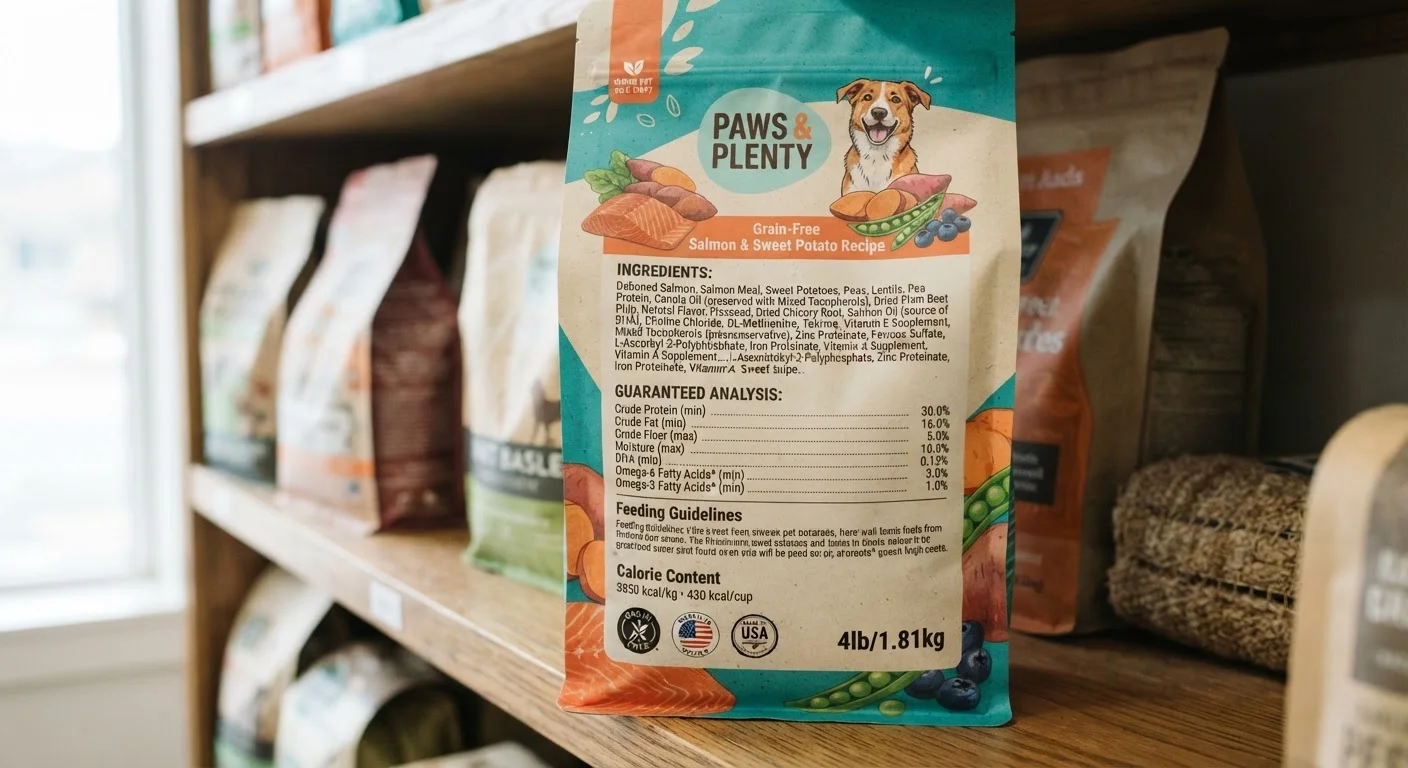
A required panel on pet food labels listing minimum crude protein, minimum crude fat, maximum crude fiber, and maximum moisture. These are regulatory limits, not average values.
Dry-Matter Basis
A method of comparing nutrients across wet and dry foods by removing the effect of moisture. Divide a nutrient's percentage by the food's dry-matter percentage (100 minus moisture %).
AAFCO Nutritional Adequacy Statement
A statement from the Association of American Feed Control Officials indicating whether a food meets established nutrient profiles for a life stage, either by formulation or by feeding trial.
Ingredient Splitting
A labeling practice where a single ingredient source is listed under multiple names, causing each to appear individually lower on the ingredient list than they would if combined.
Crude Protein
A measurement of total nitrogen-containing compounds in a food, used to estimate protein content. It does not reflect protein digestibility or amino acid completeness.
Meat Meal
A rendered, dehydrated protein concentrate made from animal tissues. Because moisture is already removed, it provides more protein per pound than fresh meat listed by equivalent weight.
The Guaranteed Analysis: What the Numbers Mean
The guaranteed analysis (GA) panel lists minimum percentages for crude protein and crude fat, and maximum percentages for crude fiber and moisture. These are regulatory minimums and maximums - not precise averages of what's in the bag.
| Minimum crude protein listed in GA | A floor, not an average (AAFCO Model Regulations) |
| Maximum moisture for dry kibble | 12% or less (AAFCO Pet Food Labeling Guidelines) |
| Moisture content of typical wet/canned food | 75-82% (General industry standard) |
| "With [ingredient]" minimum content requirement | 3% of named ingredient (AAFCO ingredient labeling rules) |
| "[Ingredient] Formula" minimum content requirement | 25% of named ingredient (AAFCO ingredient labeling rules) |
| Single-named ingredient (e.g., "Chicken") minimum | 95% by weight, excluding water (AAFCO ingredient labeling rules) |
One important limitation: the GA reports values as fed, meaning moisture content affects the numbers significantly. Wet food might show 10% protein, while dry food shows 30% - but on a dry-matter basis (with moisture removed), the wet food may actually be higher in protein. To compare foods accurately, use the dry-matter basis calculation: divide the nutrient percentage by the percentage of dry matter (100 minus moisture percentage).
Crude protein also doesn't tell you about digestibility or amino acid completeness - factors that matter significantly for your pet's actual nutritional benefit. Protein quality varies considerably depending on the source, not just the quantity listed.
The AAFCO Statement: What It Confirms (and What It Doesn't)
The AAFCO nutritional adequacy statement is one of the most meaningful pieces of information on a pet food label. It tells you whether a food is formulated to meet established nutrient profiles for a specific life stage, or whether it was tested through actual animal feeding trials.
Look for one of two phrases: "formulated to meet the nutritional levels established by AAFCO" or "animal feeding tests using AAFCO procedures." A feeding-trial claim generally indicates a higher standard of real-world validation. Foods labeled for "all life stages" must meet the most demanding profile - that of growth and reproduction - which may mean they're higher in calories and certain nutrients than an adult pet requires.
Foods marked "for supplemental or intermittent feeding only" are not complete diets and should not be your pet's sole food source. Use this structured checklist for evaluating nutritional soundness to apply these criteria consistently.
This article provides general educational information about pet food labeling and is not a substitute for guidance from a licensed veterinarian or veterinary nutritionist.
Label Claims You Can Mostly Ignore
Front-of-pack marketing terms are not regulated the same way as the ingredient list or GA panel. Words like "natural," "holistic," "premium," and "human-grade" have limited or no standardized legal definitions in pet food labeling, so they convey little about actual nutritional value.
"Grain-free" indicates an ingredient substitution - typically legumes or potatoes replace grains - but does not imply lower carbohydrate content or superior nutrition. The FDA has investigated a possible association between certain grain-free diets and dilated cardiomyopathy in dogs, though research is ongoing and no definitive causal link has been confirmed. If you have concerns about your pet's diet and heart health, consult your veterinarian directly.
"With real chicken" or "chicken flavor" are also regulated claims: "with" requires only 3% of that ingredient; "flavor" requires only enough to be detectable. These are meaningfully different from a food simply named "Chicken Formula," which must contain at least 95% chicken by weight (excluding water). For a broader framework on nutrition across the pet nutrition hub, these label-reading skills are a practical starting point.