

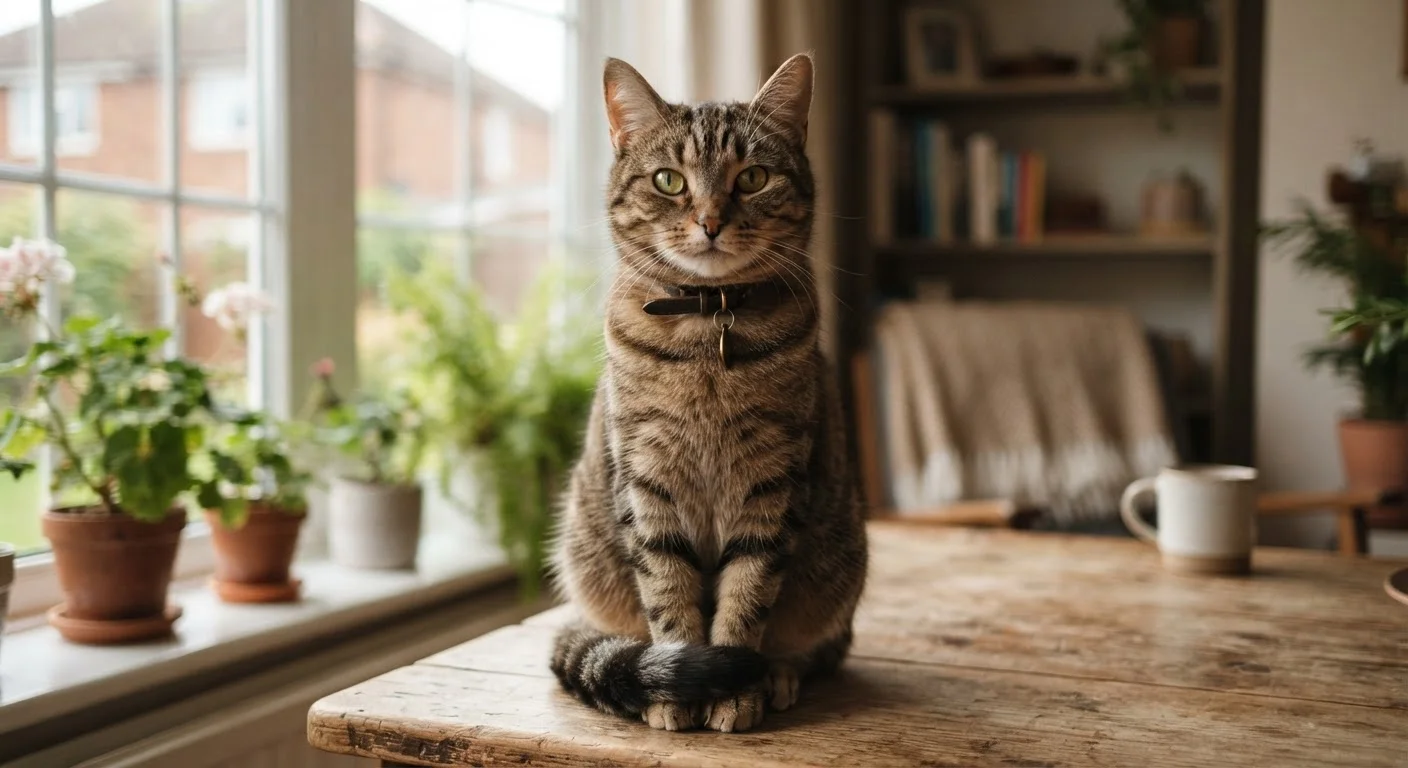
Why Feline Body Language Is Worth Learning
Cats communicate constantly - just not in ways that map neatly onto human or even canine expression. Unlike dogs, cats evolved as both predator and prey, which makes their signaling system layered and sometimes counterintuitive. A tail held high signals confidence; that same tail tucked low signals fear. Reading the signals accurately means observing the whole body, not a single cue in isolation.
Understanding what your cat is telling you isn't just an interesting exercise - it's a practical tool. Owners who recognize early stress signals can intervene before a situation escalates, whether that's a tense introduction to another pet or an anxiety response to a new environment. For related behavioral context, see why cats avoid the litter box - many cases begin with overlooked stress signals.
Key Signals: Eyes, Ears, and Tail
These three body regions are your primary reference points for reading a cat's emotional state.
Eyes
- Slow blink: A deliberate, unhurried blink directed at you is widely interpreted by feline behaviorists as a sign of relaxed trust. Returning a slow blink can reinforce a sense of safety.
- Dilated pupils: Wide pupils can mean excitement, fear, or low light - context matters enormously. A fully dilated pupil in a bright room during a perceived threat signals high arousal or fear.
- Hard stare: Sustained, unblinking eye contact is a challenge signal between cats. In human interaction, it can feel threatening to a cat that isn't yet comfortable with you.
Ears
- Forward and upright: Alert and engaged - the cat is curious or interested.
- Rotated sideways ("airplane ears"): Early sign of irritation or overstimulation. A useful warning before more overt signals appear.
- Flattened back against the head: Fear or aggression - the cat feels threatened and may escalate.
Tail
- Held high with a slight curl at the tip: Confident, friendly greeting posture.
- Puffed up (piloerection): Fear response; the cat is trying to appear larger.
- Low and tucked: Submission, discomfort, or fear.
- Lashing side to side: Agitation or intense focus - not the same as a dog's wagging tail.
Piloerection
The involuntary raising of fur along the back and tail, triggered by the nervous system during fear or aggression. It makes the cat appear larger as a defensive display.
Bunting
The act of pressing the forehead or cheeks against a person, object, or other animal. It transfers scent from facial glands and is a social bonding behavior in cats.
Affiliative behavior
Actions that promote social bonds and reduce tension, such as grooming, head rubbing, and slow blinking. These behaviors signal that a cat is comfortable and non-threatening.
Overstimulation
A state in which a cat's arousal level from petting or play exceeds its comfort threshold, often signaled by tail lashing, skin twitching, or sudden biting. It can escalate quickly.
Displacement behavior
An out-of-context action (such as grooming during a tense encounter) that indicates internal conflict or anxiety. It serves as a pressure-release mechanism.
Posture and Touch Signals
Whole-body posture tells you whether a cat is approaching a situation from a place of security or threat.
Affiliative (friendly) postures
- Slow approach with tail up: The feline equivalent of a friendly wave.
- Head bunting and cheek rubbing: Cats have scent glands on their face; rubbing against you deposits scent and signals social bonding.
- Showing the belly: Exposing the abdomen signals trust, but it is not always an invitation to touch. Many cats will reflexively grab and bite a hand that reaches for their belly - the position conveys vulnerability and trust, not a request for petting.
- Kneading: A behavior originating in kittenhood, associated with comfort and contentment.
Defensive and stressed postures
- Crouching low with weight shifted back: Defensive readiness - the cat wants to escape or is preparing to defend itself.
- Arched back with piloerection: Classic fear-aggression display.
- Hiding or withdrawal: A cat that consistently retreats and avoids contact may be stressed or unwell. Persistent hiding can be a pain indicator - see signs your pet is in pain for a broader overview.
Cats that live with other animals express territorial behavior through many of these same signals - stiffening, staring, and blocking access to resources are common patterns worth recognizing early.
Putting It All Together
No single signal tells the full story. A cat with ears rotated sideways, a low-lashing tail, and dilated pupils in a bright room is clearly overstimulated - even if it's been purring moments before. Purring itself is context-dependent: cats purr when content, but also when anxious or in pain, making it an unreliable standalone indicator of wellbeing.
The goal isn't to memorize a lookup table but to build a baseline for your specific cat. Individual cats vary. A highly social cat might hold eye contact comfortably; a more reserved cat might find the same gaze uncomfortable. Consistent observation over time - noting what precedes a hiss, a bite, or a retreat - is more reliable than any universal rule.
For owners curious about how stress signals compare across species, reading stress signals in small pets offers a useful contrast. And if your cat's behavior shifts noticeably without an obvious environmental trigger, consulting a veterinarian is always appropriate - behavioral changes can be early indicators of underlying health issues.
When Behavior Changes Suddenly
A cat that abruptly becomes withdrawn, stops grooming, or starts reacting aggressively to touch may be experiencing pain rather than a purely behavioral shift. Behavioral changes with no clear environmental cause warrant a veterinary evaluation. Do not assume that a new behavior is simply a personality quirk without ruling out physical causes first.
This article is for general informational purposes only and does not constitute veterinary or behavioral advice. If you have concerns about your cat's behavior or health, please consult a licensed veterinarian or certified feline behaviorist.