

Key Takeaways
- Envelope budgeting assigns every dollar to a category before you spend it, creating a built-in spending limit.
- The physical cash version is effective for overspenders because running out of cash is a hard stop.
- Digital alternatives - budgeting apps and separate bank accounts - replicate the envelope structure without requiring cash.
- The method works best for variable expenses like groceries, dining, and entertainment, not fixed bills.
- Consistency and regular envelope resets (usually monthly) are what make the system sustainable.
Envelope Budgeting
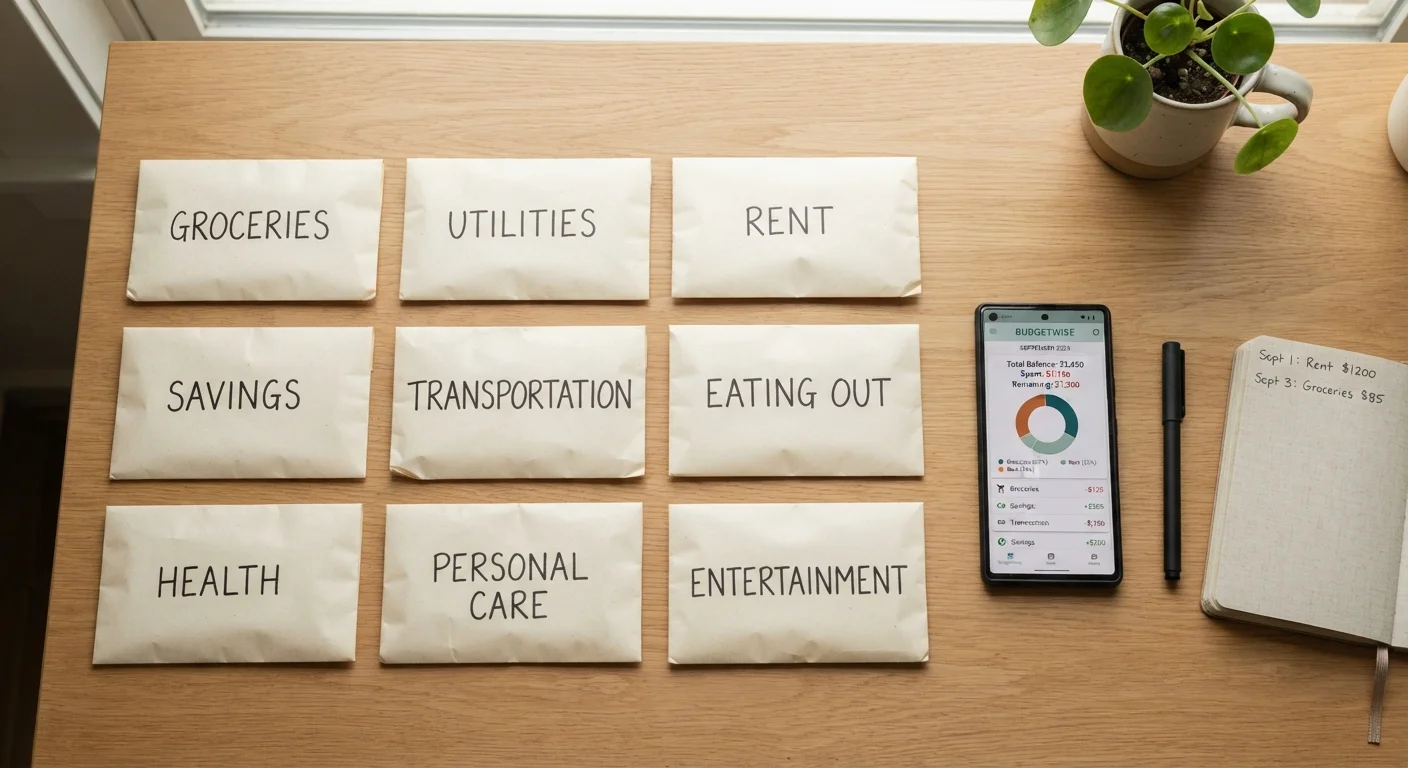
Envelope budgeting is a cash-management system where you divide your take-home income into separate physical envelopes, each labeled for a spending category - groceries, gas, dining out, and so on. You spend only what's in each envelope for that period. When an envelope is empty, spending in that category stops. Today, the same principle is applied digitally using apps and separate bank accounts instead of paper.
The method is considered a form of zero-based budgeting because every dollar of income is assigned a purpose before it is spent, leaving no unallocated funds.
How the Original Envelope Method Worked
Before direct deposit and debit cards, many households managed money by physically dividing cash into labeled envelopes after each paycheck. The grocery envelope held $300. The gas envelope held $80. Once the cash was gone, that was that - there was no overdraft, no credit card to bridge the gap, and no ambiguity about how much was left.
This constraint was the system's greatest strength. Unlike a mental budget you carry in your head, a physical envelope gives you an exact, visible limit. Behavioral economists describe this as mental accounting - the tendency to treat money differently based on how it is categorized and labeled. Envelopes made that mental accounting literal and impossible to ignore.
If you're new to budgeting entirely, our introduction to personal budgeting covers the foundational concepts before you choose a specific method.
Translating Envelopes to a Digital Workflow
The shift away from cash doesn't have to mean abandoning the envelope logic. The goal - pre-allocating income to specific categories and stopping when a category is exhausted - translates cleanly to several digital formats.
~1 in 3
U.S. adults with a written or structured budget
Surveys consistently find that a minority of American adults maintain a formal, category-based budget - suggesting most spending decisions are made reactively rather than by plan.
30%+
Average overspend in untracked discretionary categories
Behavioral finance research has found that consumers routinely underestimate their variable spending - particularly dining, entertainment, and personal care - when tracking is absent.
- Budgeting apps with virtual envelopes: Several personal finance apps are built around the envelope framework, letting you create digital categories, fund them at the start of each period, and track spending in real time against each limit.
- Separate bank accounts by category: Opening multiple checking or savings sub-accounts and transferring a fixed amount into each at the start of the month replicates the envelope structure. Many online banks allow multiple accounts with no fees and let you name them freely.
- Spreadsheet tracking: A simple spreadsheet with category columns, funded amounts, and running totals achieves the same outcome for people who prefer manual control.
Each approach requires the same starting move: deciding in advance how much each category gets. That intentionality is what separates envelope budgeting from simply hoping your bank balance covers everything.
Start with just three or four envelopes
New budgeters often set up too many categories at once, which makes tracking burdensome. Start with the two or three categories where your spending feels most out of control - usually groceries, dining, and entertainment. Once those feel manageable, add more envelopes gradually. A simpler system you actually use beats a comprehensive one you abandon.
Where the Method Works Best - and Its Limits
Envelope budgeting is particularly effective for variable discretionary spending - the categories most people struggle to control. Groceries, dining out, clothing, personal care, and entertainment are all good candidates because they fluctuate and often creep upward without a hard cap.
Fixed expenses - rent, insurance premiums, loan payments - don't benefit as much from the envelope structure because they don't require behavioral limits. Auto-paying those bills and directing envelope discipline toward the variable categories is a common and practical hybrid approach.
The method's main limitation is setup friction. Identifying categories, deciding funding amounts, and tracking each transaction takes active effort. This is less automatic than, say, a savings transfer - something explored in depth in our look at the pros and cons of automating your savings. For some people, that manual engagement is the point; for others, it becomes a reason to abandon the system after a few weeks.
Getting Started: Setting Up Your Envelopes
Setting up the system doesn't require special tools - consistency matters more than the format you choose. The steps below apply whether you use cash, an app, or a spreadsheet.
- Calculate your monthly take-home income. Work from net pay, not gross. Include all reliable income sources.
- List your fixed expenses first. Subtract rent, utilities, insurance, and loan minimums. These are funded automatically, not from envelopes.
- Identify your variable categories. Use two to three months of bank statements to understand where discretionary money actually goes, not where you think it goes.
- Assign a dollar amount to each category. The total of all envelopes plus fixed expenses should equal your take-home income. This is where envelope budgeting meets zero-based logic.
- Track and reset monthly. Review what was left over or overdrawn in each category. Adjust funding amounts for the next cycle based on reality, not optimism.
For a more detailed walkthrough of the full budget-building process, our six-step monthly budget guide covers each phase in depth. And if saving is a specific priority, building your budget around savings goals explains how to treat saving as a funded envelope rather than whatever's left over.
This article is for general informational and educational purposes only and does not constitute personalized financial advice. Consult a qualified financial professional for guidance tailored to your individual circumstances.