

Key Takeaways
- Stress triggers a hormonal cascade involving cortisol and adrenaline that affects nearly every organ system.
- Chronic stress - not occasional pressure - is what poses meaningful long-term health risks.
- The brain's structure can physically change in response to prolonged stress exposure.
- Sleep, immune function, digestion, and cardiovascular health are all measurably affected by chronic stress.
- Understanding the biology of stress is a practical first step toward managing it more effectively.
Chronic Stress
Stress is the body's automatic response to perceived threats or demands - a built-in survival system. Chronic stress occurs when that response is activated repeatedly or continuously over weeks, months, or years. Unlike short-term stress, which can sharpen focus, chronic stress maintains elevated levels of stress hormones that wear down multiple body systems over time.
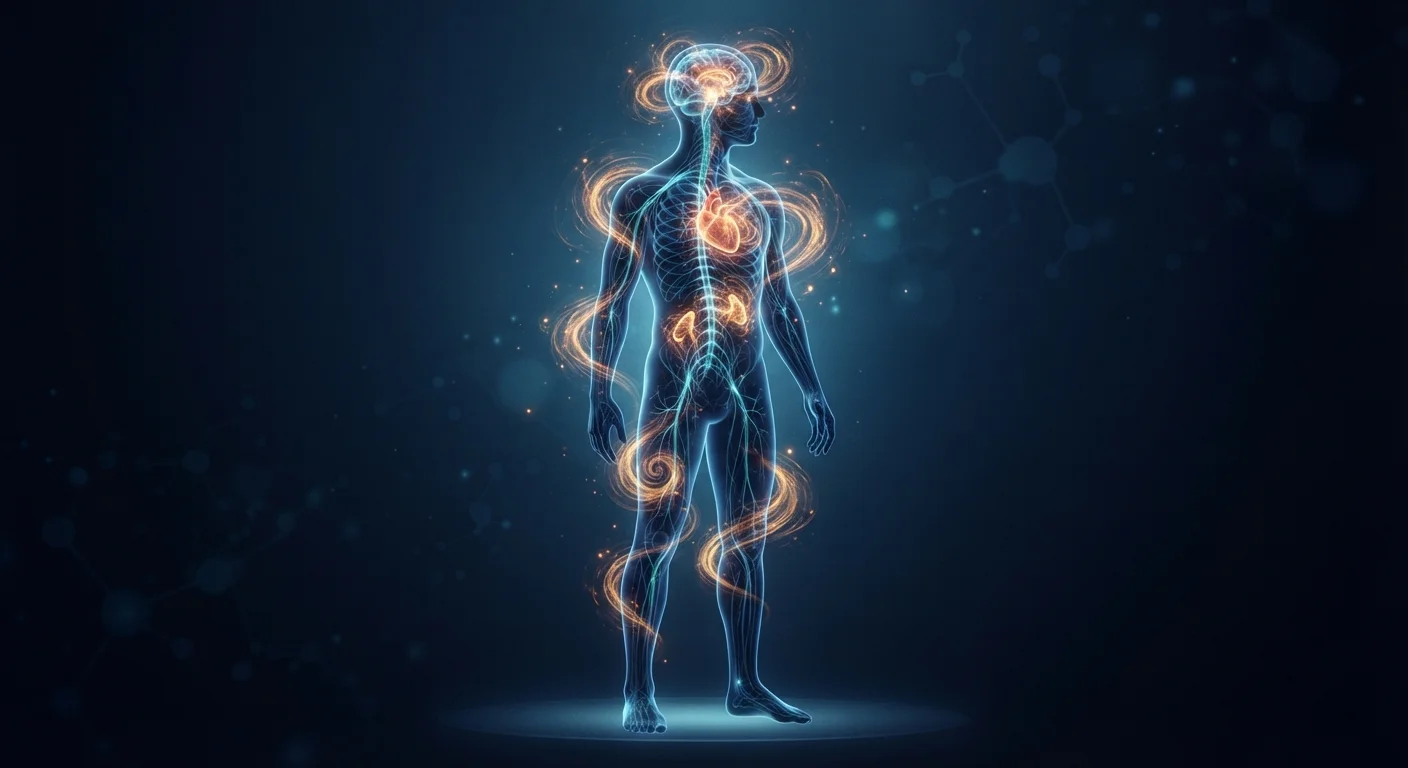
The physiological stress response is primarily coordinated through the hypothalamic-pituitary-adrenal (HPA) axis and the sympathetic nervous system, which together regulate hormone release and organ-level reactions to perceived threats.
The Stress Response: Your Body's Alarm System
When you perceive a threat - whether a near-miss in traffic or a looming work deadline - your brain's amygdala sends an alarm signal to the hypothalamus, which acts like a command center. Within seconds, the sympathetic nervous system floods the body with adrenaline, raising heart rate, tightening muscles, and sharpening attention. This is the well-known fight-or-flight response, and for acute dangers, it is genuinely life-saving.
Moments later, the HPA (hypothalamic-pituitary-adrenal) axis sustains the response by triggering the release of cortisol from the adrenal glands. Cortisol keeps blood sugar elevated, suppresses non-urgent functions like digestion and reproduction, and maintains the body's state of high alert. Under normal circumstances, once the threat passes, cortisol levels drop and the parasympathetic nervous system - sometimes called "rest and digest" - restores equilibrium.
The problem arises when stressors are persistent. Modern stressors - financial pressure, caregiving demands, job insecurity - don't resolve in seconds. The alarm stays on.
77%
Adults reporting physical stress symptoms
According to the American Psychological Association's Stress in America surveys, a substantial majority of U.S. adults report experiencing physical symptoms they attribute to stress.
2-3×
Increased infection risk under chronic stress
Research published in psychological and immunological literature suggests chronically stressed individuals show notably higher susceptibility to common respiratory infections compared to low-stress counterparts.
~20%
Hippocampal volume reduction in some cases
Neuroimaging studies have found hippocampal volume reductions in individuals with stress-related conditions, though individual variation is significant and reversibility is possible.
What Chronic Stress Does to the Brain
The brain is not a passive observer of stress - it is profoundly affected by it. The hippocampus, which plays a central role in memory formation and emotional regulation, contains a high density of cortisol receptors. Sustained cortisol exposure has been associated with reduced hippocampal volume in neuroimaging studies, which may contribute to the memory lapses and concentration difficulties that people under chronic stress commonly report.
Simultaneously, elevated cortisol can strengthen the amygdala - the brain's threat-detection hub - making it more reactive. This can create a feedback loop in which the brain becomes increasingly sensitive to potential stressors. The prefrontal cortex, responsible for rational decision-making and impulse control, shows reduced activity under prolonged stress, explaining why people often feel less able to think clearly or make sound decisions during difficult periods.
Importantly, many of these changes are considered reversible. The brain retains significant plasticity, and research into emotional recovery suggests that structured support can restore function. Explore what the science of emotional resilience shows about recovering from sustained adversity.
“The greatest weapon against stress is our ability to choose one thought over another. Understanding that stress is a physiological state - not a character flaw - opens the door to real change.”
— Robert Sapolsky, Neuroendocrinologist and author of 'Why Zebras Don't Get Ulcers'
The Body-Wide Effects: Sleep, Immunity, and the Heart
Chronic stress doesn't stay in the mind. Elevated cortisol disrupts the normal sleep-wake cycle by interfering with the natural evening drop in cortisol that signals the body to rest. This is one reason stressed individuals frequently report difficulty falling or staying asleep - and why sleep deprivation, in turn, amplifies stress reactivity. The relationship is bidirectional: understanding how sleep and mental health reinforce each other is essential to breaking the cycle.
Immune function is another casualty. While brief stress can temporarily mobilize immune cells, chronic stress suppresses immune activity by keeping cortisol elevated. Studies have linked prolonged psychological stress to slower wound healing, reduced vaccine efficacy, and increased susceptibility to respiratory infections.
Cardiovascular impact is also well-documented. Persistent sympathetic nervous system activation raises resting blood pressure and heart rate, increases inflammation, and may contribute to arterial stiffness over time - all established risk factors for cardiovascular disease. The gut-brain axis is equally affected: stress alters gut motility and microbiome composition, often manifesting as digestive complaints like nausea, bloating, or irregular bowel habits.
Recognize Your Stress Signals Early
Physical signs like persistent muscle tension, disrupted sleep, digestive changes, or frequent headaches often appear before emotional burnout becomes obvious. Treating these as data - early signals of an overactive stress response - allows for earlier, lighter intervention. Keeping a simple log of symptoms and potential triggers for even one week can reveal useful patterns to discuss with a healthcare provider.
Practical Pathways: What the Evidence Supports
Understanding the biology of stress points toward meaningful interventions. Physical activity is among the most consistently supported approaches: exercise reduces circulating cortisol, increases stress-buffering neurotransmitters like serotonin and GABA, and improves sleep quality. See an honest breakdown of what exercise can and cannot do for mental wellbeing based on current research.
Mindfulness-based stress reduction (MBSR), a structured program developed at the University of Massachusetts Medical School, has shown measurable reductions in perceived stress and cortisol reactivity in multiple clinical trials. Cognitive behavioral therapy (CBT) addresses the thought patterns that perpetuate the stress response, while social connection buffers the HPA axis response in documented ways.
Nutrition also plays a supporting role - consistent meals, adequate protein, and sufficient micronutrients contribute to hormonal regulation. For a broader look at how lifestyle choices intersect with physical health, the Body and Nutrition hub offers evidence-grounded guidance.
This article is for general informational and educational purposes only and does not constitute medical advice. If you are experiencing persistent stress or related symptoms, please consult a qualified healthcare professional.