

Key Takeaways
- Consistency over intensity is the single most important principle in building lasting exercise habits.
- Matching your routine to your real schedule prevents the all-or-nothing thinking that derails progress.
- A balanced weekly plan includes cardiovascular movement, strength work, and intentional rest days.
- Starting with two to three sessions per week is more sustainable than jumping to daily workouts.
- Tracking effort and mood - not just performance metrics - helps you adjust before burnout sets in.
What you will need
Why Most Exercise Routines Fail Within Weeks
The most common reason people abandon new routines isn't lack of motivation - it's that the routine was never designed to fit their real life. Research on exercise adherence consistently identifies three failure points: sessions that are too long to fit available time, intensity levels that leave beginners depleted rather than energized, and schedules built around an idealized version of one's week rather than the actual one.
Understanding this reframes the goal. The aim isn't to design the most effective program in theory - it's to design the most consistent one in practice. Moderate exercise performed reliably over months produces far greater health benefits than ambitious plans that collapse after two weeks. This is the central insight behind every sustainable fitness framework.
Always Consult a Professional Before Starting
This article provides general fitness education and is not a substitute for personalized medical advice. If you have a chronic health condition, recent injury, cardiovascular concerns, or are returning to exercise after a significant break, speak with your healthcare provider before beginning a new routine. Special populations - including those who are pregnant, older adults, and people managing chronic illness - should seek individualized guidance.
If you're returning to exercise after an extended period away, the approach described here will still apply - but you may want to read more about rebuilding fitness after a long break before you begin.
What you will need
How to Build Your Weekly Exercise Plan
The steps below walk you through a structured process for designing a weekly exercise routine grounded in your real schedule, current fitness level, and behavioral tendencies. Work through them sequentially - each step informs the one that follows.
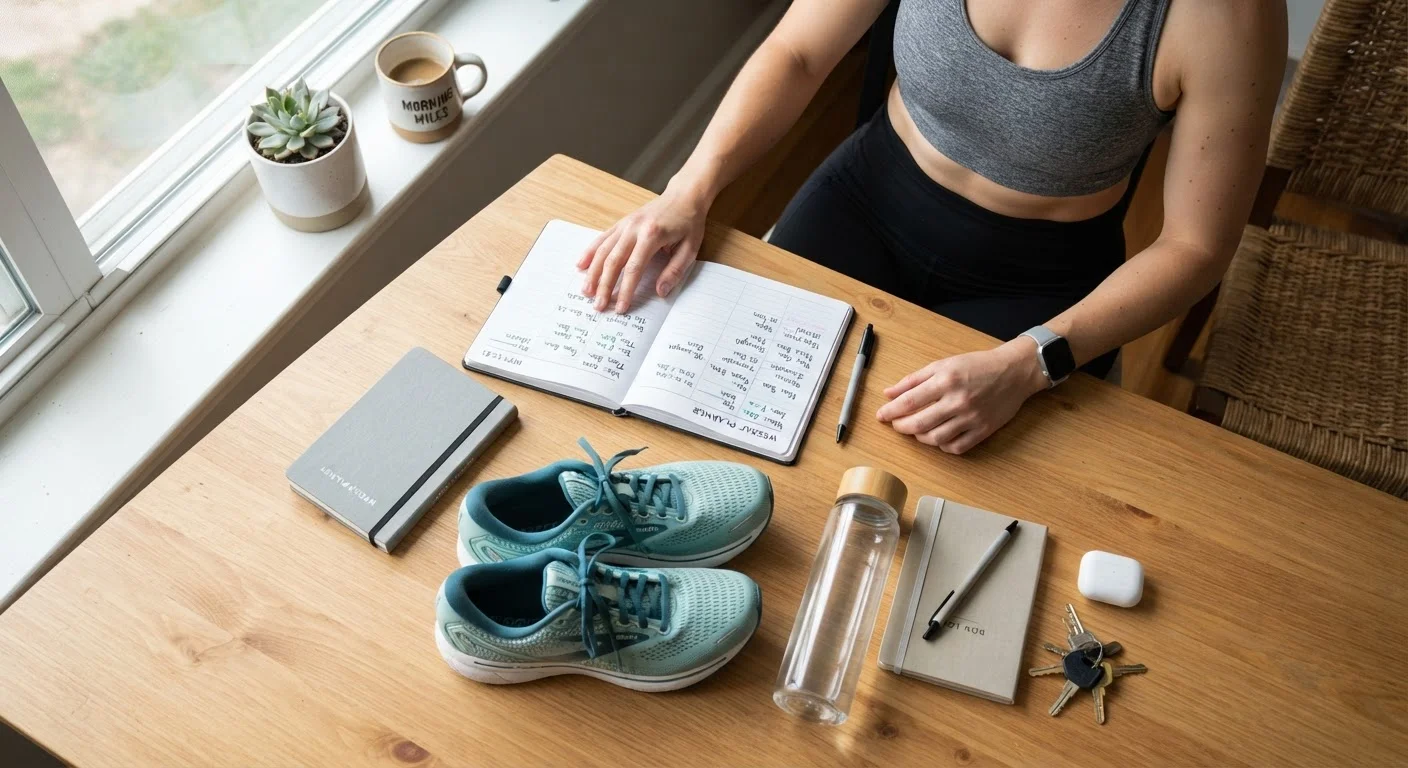
Weekly planner or calendar app
Used to map your available time slots and schedule specific workouts in advance.
Fitness journal or notes app
Used to log completed sessions, perceived effort, and how you felt after each workout.
Supportive athletic footwear
Provides cushioning and stability appropriate for your chosen movement type.
Resistance bands or light dumbbells
Enables basic strength training at home without requiring a gym membership.
Fitness tracking app or wearable
Provides optional data on movement, heart rate, and activity patterns over time.
Assess your honest starting point
Before designing any schedule, take stock of where you genuinely are - not where you think you should be. Reflect on how many days per week you currently move intentionally, what types of activity you already tolerate or enjoy, and whether any physical discomfort or injury history should shape your choices. Honesty here prevents building a plan designed for someone else's life.
Identify your genuine time windows
Open your calendar and locate time blocks that are realistically available - not ideally available. Look for windows of 20 to 45 minutes that occur at least two or three times per week with some consistency. Mark these as candidate workout slots. Morning, lunch, and evening windows each carry different tradeoffs in energy and logistics, so choose based on your actual patterns rather than popular advice.
Choose two or three movement types you can tolerate
A sustainable weekly plan typically blends cardiovascular activity (such as walking, cycling, or swimming) with muscle-strengthening exercises (bodyweight movements, resistance bands, or free weights) and flexibility or recovery work. You don't need to love every modality - you need to not dread it. Select options that are accessible to you logistically and physically right now, not aspirationally.
If structured gym workouts feel like a barrier, movement outside formal exercise can meaningfully contribute to your overall activity levels.
Draft a simple, balanced weekly template
Using your available time windows and chosen movement types, sketch a weekly template that alternates effort types and includes at least one to two full rest or active recovery days. A workable starting structure for most beginners might look like: two strength sessions, one longer cardiovascular session, and two rest or light-movement days. Write this template as a starting draft, not a permanent contract.
Set a process-based goal for the first four weeks
Outcome goals (lose weight, run a 5K) are motivating long-term but unreliable as short-term anchors. For your first month, set a process goal instead - something like "complete three scheduled sessions per week" - which is fully within your control. Research on self-determination theory and behavior change consistently shows that autonomy and perceived competence are stronger predictors of sustained exercise than external motivation alone.
Track effort and mood, not just output
After each session, spend 60 seconds noting your perceived exertion (on a simple 1-10 scale), your mood before and after, and whether the session felt too hard, manageable, or too easy. This data helps you recognize patterns - the days and session types that energize you versus drain you - before those patterns become reasons to quit. It also gives you an honest record to show a trainer or healthcare provider if needed.
This kind of self-monitoring pairs naturally with building other sustainable habits. See how a similar approach applies to emotional health in building a daily mental wellness routine.
Review and adjust after four weeks
At the end of your first month, review your tracking data with the same curiosity you'd bring to any project. Identify which sessions you completed consistently, which you skipped, and what the pattern suggests about timing, format, or intensity. Adjust your template accordingly - adding a session if you feel ready, swapping a movement type that isn't working, or shifting a time slot that repeatedly conflicts with real life.
Anchor Exercise to an Existing Habit
Behavioral science research on habit formation suggests that pairing a new behavior with an established one - called habit stacking - dramatically improves follow-through. Try scheduling your workout immediately after an existing daily anchor, such as morning coffee or arriving home from work, to reduce the friction of starting.
Avoid Doing Too Much Too Soon
One of the most common reasons new routines fail is rapid escalation. Research on overuse injuries consistently shows that sharp increases in training volume - often called "too much, too fast" - are a leading cause of setbacks. Increase weekly exercise duration or intensity by no more than roughly 10 percent from week to week to give your body time to adapt.
Nutrition and recovery play an important supporting role in how your body responds to consistent movement. Understanding the relationship between food and physical activity can help you make informed choices that complement your new routine.
This article is for general informational and educational purposes only and does not constitute medical, fitness, or professional health advice. Individual needs vary - consult a qualified healthcare provider before starting a new exercise program, particularly if you have any underlying health conditions.